Khojah Sohair M, Payne Anthony P, McGuinness Dagmara, Shiels Paul G
School of Life Sciences, Pharmacology Research Theme, University of Glasgow, Glasgow G12 8QQ, UK.
Wolfson Wohl Cancer Research Centre, Institute of Cancer Sciences, University of Glasgow, Glasgow G61 1QH, UK.
Cells. 2016 Oct 17;5(4):38. doi: 10.3390/cells5040038.
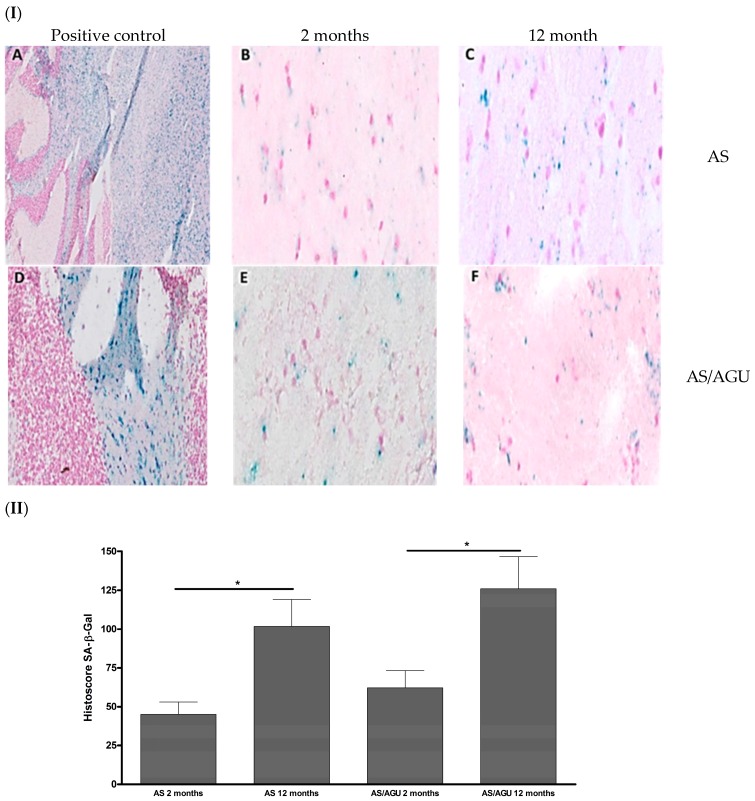
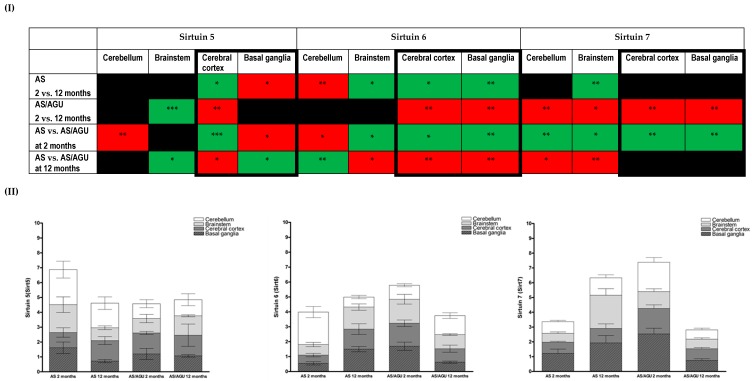
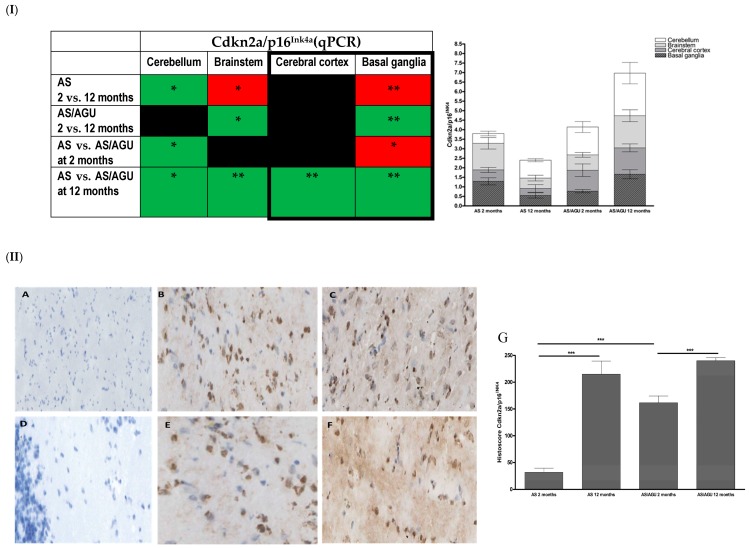
There is a paucity of information on the molecular biology of aging processes in the brain. We have used biomarkers of aging (SA β-Gal, p16, Sirt5, Sirt6, and Sirt7) to demonstrate the presence of an accelerated aging phenotype across different brain regions in the AS/AGU rat, a spontaneous Parkinsonian mutant of PKCγ derived from a parental AS strain. P16 expression was significantly higher in AS/AGU animals compared to age-matched AS controls ( 0.001) and displayed segmental expression across various brain regions. The age-related expression of sirtuins similarly showed differences between strains and between brain regions. Our data clearly show segmental aging processes within the rat brain, and that these are accelerated in the AS/AGU mutant. The accelerated aging, Parkinsonian phenotype, and disruption to dopamine signalling in the basal ganglia in AS/AGU rats, suggests that this rat strain represents a useful model for studies of development and progression of Parkinson's disease in the context of biological aging and may offer unique mechanistic insights into the biology of aging.
关于大脑衰老过程的分子生物学信息匮乏。我们使用衰老生物标志物(SA β - 半乳糖苷酶、p16、Sirt5、Sirt6和Sirt7)来证明在AS/AGU大鼠的不同脑区存在加速衰老表型,AS/AGU大鼠是源自亲代AS品系的PKCγ自发帕金森病突变体。与年龄匹配的AS对照相比,AS/AGU动物中p16表达显著更高(P < 0.001),并且在各个脑区呈现节段性表达。沉默调节蛋白与年龄相关的表达同样显示出品系之间以及脑区之间的差异。我们的数据清楚地表明大鼠脑内存在节段性衰老过程,并且在AS/AGU突变体中这些过程加速。AS/AGU大鼠的加速衰老、帕金森病表型以及基底神经节中多巴胺信号传导的破坏,表明该大鼠品系是在生物衰老背景下研究帕金森病发展和进展的有用模型,并且可能为衰老生物学提供独特的机制见解。