Kumon H, Ariyoshi Y, Sasaki K, Sadahira T, Araki M, Ebara S, Yanai H, Watanabe M, Nasu Y
Department of Urology, Okayama University Graduate School of Medicine, Dentistry and Pharmaceutical Sciences, Okayama, Japan.
Department of Pathology, Okayama University Graduate School of Medicine, Dentistry and Pharmaceutical Sciences, Okayama, Japan.
Cancer Gene Ther. 2016 Nov;23(11):400-409. doi: 10.1038/cgt.2016.53. Epub 2016 Oct 21.
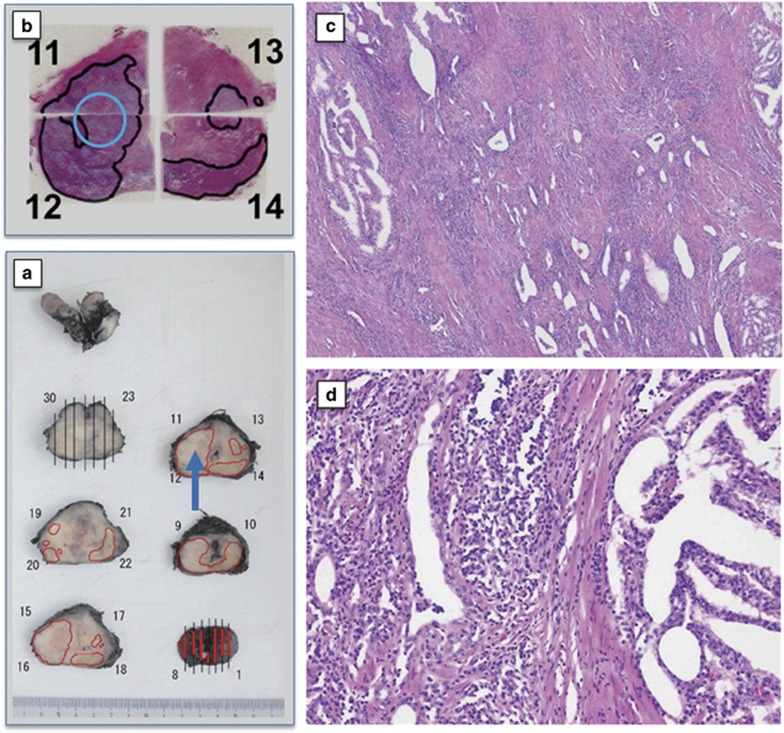
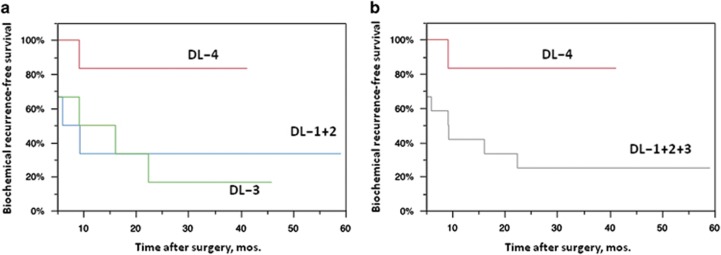
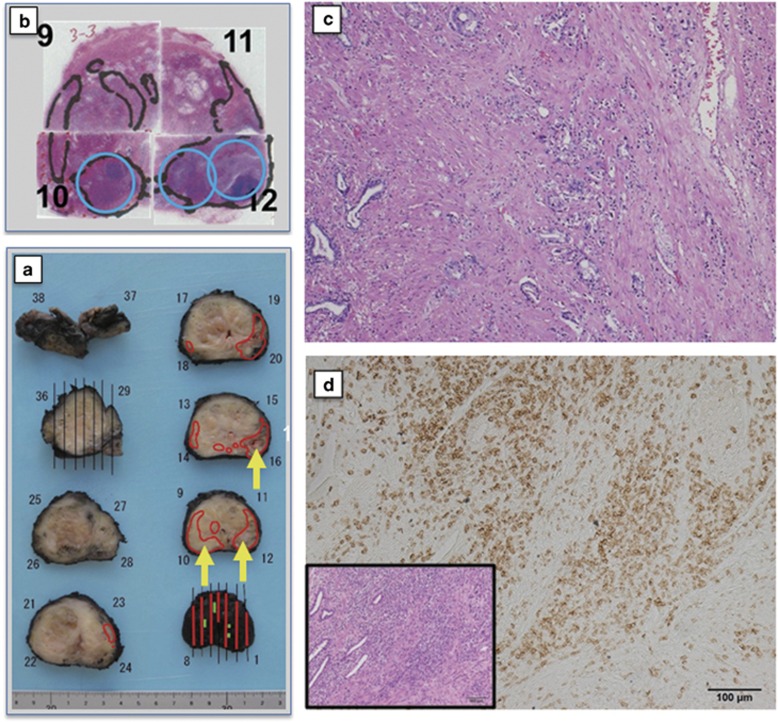
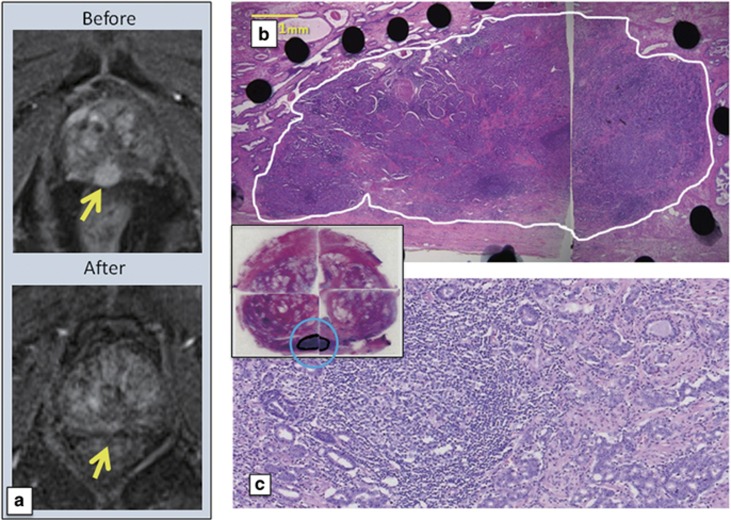
As the First-In-Human study of in situ gene therapy using an adenovirus vector carrying the human REIC (reduced expression in immortalized cell)/Dkk-3 gene (Ad-REIC), we conducted neoadjuvant intraprostatic injections in patients with high-risk localized prostate cancer undergoing radical prostatectomy (RP). Patients with recurrence probability of 35% or more within 5 years following RP, as calculated by Kattan's nomogram, were enrolled. Patients received two ultrasound-guided intratumoral injections at 2-week intervals, followed by RP 6 weeks after the second injection. After confirming the safety of the therapeutic interventions with initially planned three escalating doses of 1.0 × 10, 1.0 × 10 and 1.0 × 10 viral particles (vp) in 1.0-1.2 ml (n=3, 3 and 6), an additional higher dose of 3.0 × 10 vp in 3.6 ml (n=6) was further studied. All four DLs including the additional dose level-4 (DL-4) were feasible with no adverse events, except for grade 1 or 2 transient fever. Laboratory toxicities were grade 1 or 2 elevated aspartate transaminase/alanine transaminase (n=4). Regarding antitumor activities, cytopathic effects (tumor degeneration with cytolysis and pyknosis) and remarkable tumor-infiltrating lymphocytes in the targeted tumor areas were detected in a clear dose-dependent manner. Consequently, biochemical recurrence-free survival in DL-4 was significantly more favorable than in patient groups DL-1+2+3.
作为使用携带人REIC(永生细胞中表达降低)/Dkk-3基因的腺病毒载体(Ad-REIC)进行原位基因治疗的首次人体研究,我们对接受根治性前列腺切除术(RP)的高危局限性前列腺癌患者进行了新辅助前列腺内注射。纳入了根据卡坦列线图计算出RP后5年内复发概率为35%或更高的患者。患者每隔2周接受两次超声引导下瘤内注射,第二次注射后6周进行RP。在以1.0×10、1.0×10和1.0×10病毒颗粒(vp)的最初计划的三个递增剂量在1.0 - 1.2毫升(n = 3、3和6)中确认治疗干预措施的安全性后,进一步研究了在3.6毫升中3.0×10 vp的额外更高剂量(n = 6)。包括额外的4级剂量水平(DL-4)在内的所有四个剂量水平都是可行的,除了1级或2级短暂发热外没有不良事件。实验室毒性为1级或2级天冬氨酸转氨酶/丙氨酸转氨酶升高(n = 4)。关于抗肿瘤活性,在靶向肿瘤区域检测到细胞病变效应(伴有细胞溶解和核固缩的肿瘤变性)和显著的肿瘤浸润淋巴细胞,呈明显的剂量依赖性。因此,DL-4组的无生化复发生存率明显优于DL-1 + 2 + 3患者组。