Tessarollo Nayara Gusmão, Domingues Ana Carolina M, Antunes Fernanda, Luz Jean Carlos Dos Santos da, Rodrigues Otavio Augusto, Cerqueira Otto Luiz Dutra, Strauss Bryan E
Viral Vector Laboratory, Center for Translational Investigation in Oncology, Cancer Institute of São Paulo/LIM24, University of São Paulo School of Medicine, São Paulo 01246-000, Brazil.
Cancers (Basel). 2021 Apr 14;13(8):1863. doi: 10.3390/cancers13081863.
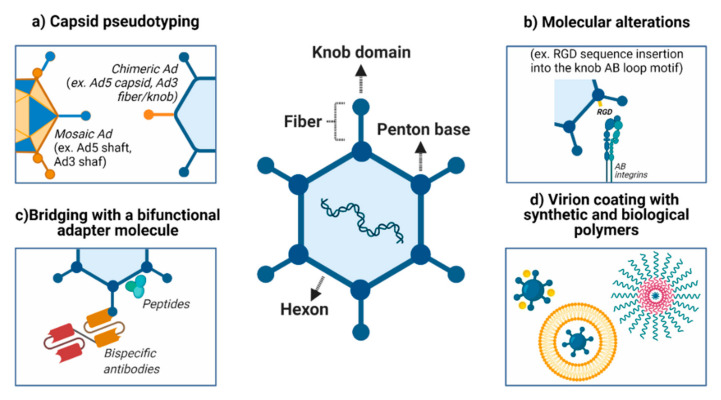
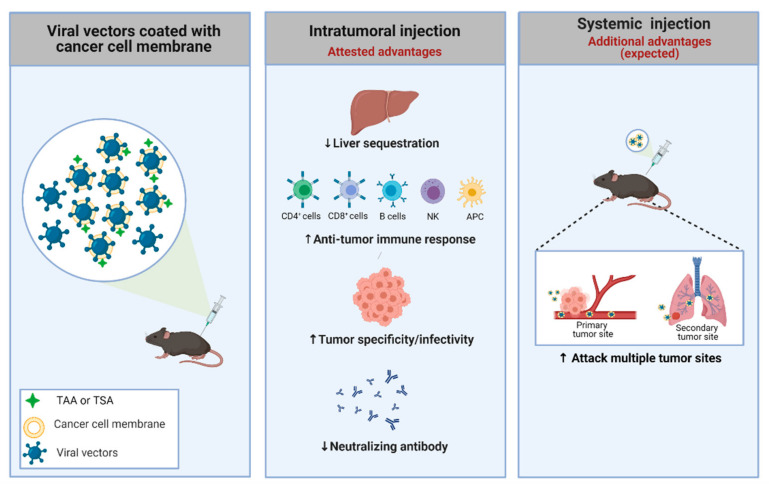
Recent preclinical and clinical studies have used viral vectors in gene therapy research, especially nonreplicating adenovirus encoding strategic therapeutic genes for cancer treatment. Adenoviruses were the first DNA viruses to go into therapeutic development, mainly due to well-known biological features: stability in vivo, ease of manufacture, and efficient gene delivery to dividing and nondividing cells. However, there are some limitations for gene therapy using adenoviral vectors, such as nonspecific transduction of normal cells and liver sequestration and neutralization by antibodies, especially when administered systemically. On the other hand, adenoviral vectors are amenable to strategies for the modification of their biological structures, including genetic manipulation of viral proteins, pseudotyping, and conjugation with polymers or biological membranes. Such modifications provide greater specificity to the target cell and better safety in systemic administration; thus, a reduction of antiviral host responses would favor the use of adenoviral vectors in cancer immunotherapy. In this review, we describe the structural and molecular features of nonreplicating adenoviral vectors, the current limitations to their use, and strategies to modify adenoviral tropism, highlighting the approaches that may allow for the systemic administration of gene therapy.
近期的临床前和临床研究已在基因治疗研究中使用病毒载体,尤其是用于癌症治疗的编码策略性治疗基因的非复制型腺病毒。腺病毒是首批进入治疗性开发的DNA病毒,主要归因于其众所周知的生物学特性:在体内的稳定性、易于制造以及能有效地将基因递送至分裂细胞和非分裂细胞。然而,使用腺病毒载体进行基因治疗存在一些局限性,例如正常细胞的非特异性转导以及肝脏滞留和抗体中和作用,尤其是在全身给药时。另一方面,腺病毒载体适合对其生物学结构进行修饰的策略,包括对病毒蛋白的基因操作、假型化以及与聚合物或生物膜结合。此类修饰可提高对靶细胞的特异性,并在全身给药时提高安全性;因此,减少抗病毒宿主反应将有利于腺病毒载体在癌症免疫治疗中的应用。在本综述中,我们描述了非复制型腺病毒载体的结构和分子特征、其目前使用的局限性以及修饰腺病毒嗜性的策略,重点介绍了可能允许进行全身基因治疗的方法。