Perez Geovanny F, Jain Amisha, Kurdi Bassem, Megalaa Rosemary, Pancham Krishna, Huseni Shehlanoor, Isaza Natalia, Rodriguez-Martinez Carlos E, Rose Mary C, Pillai Dinesh, Nino Gustavo
Division of Pulmonary and Sleep Medicine, Children's National Medical Center, Washington, DC 20010, USA.
Department of Pediatrics, George Washington University School of Medicine and Health Sciences, Washington, DC 20010, USA.
Children (Basel). 2016 Oct 20;3(4):19. doi: 10.3390/children3040019.
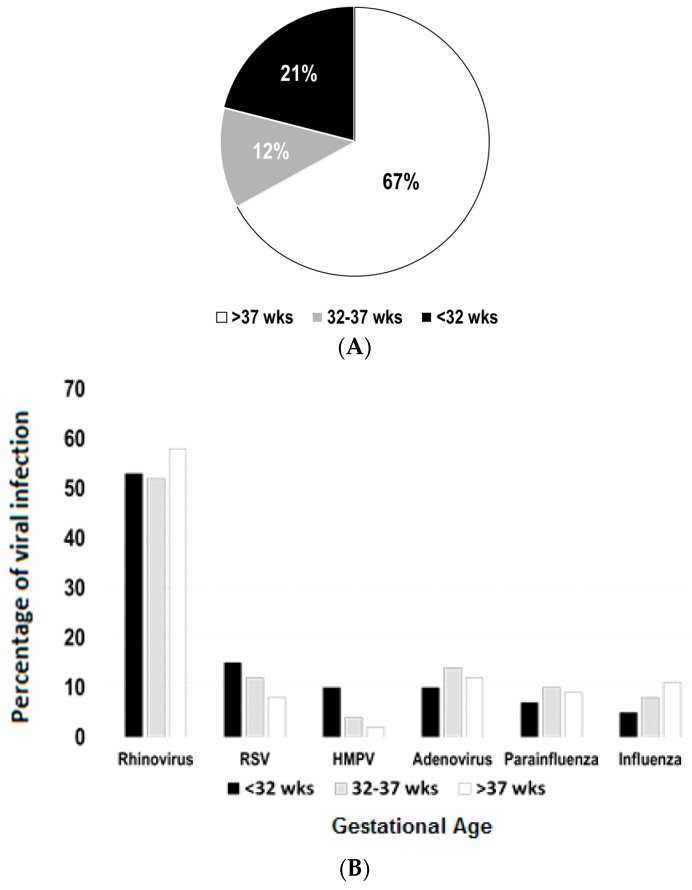
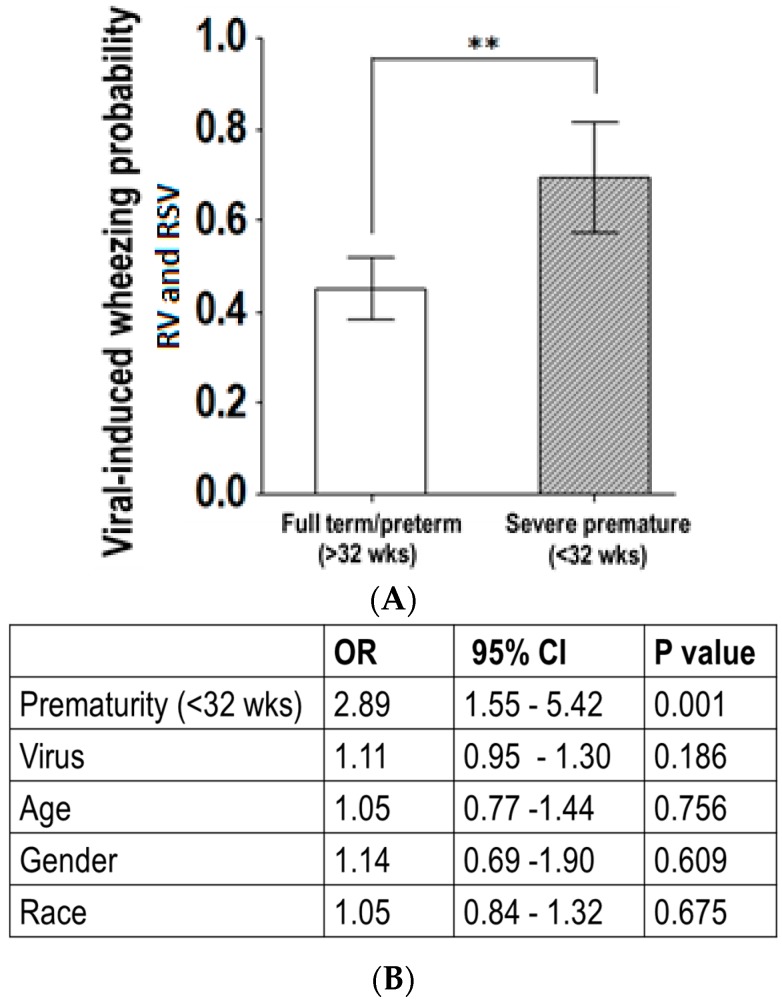
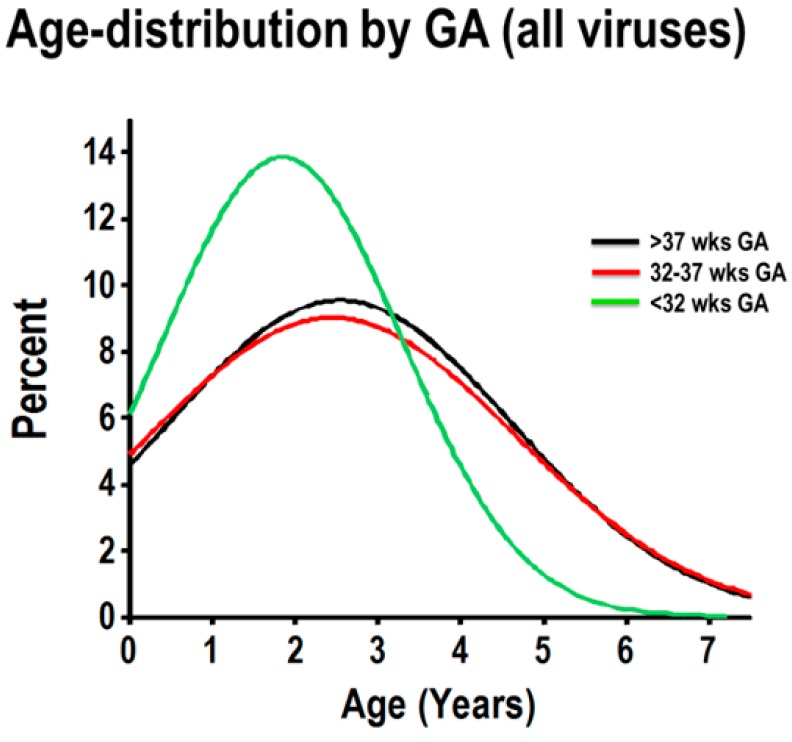
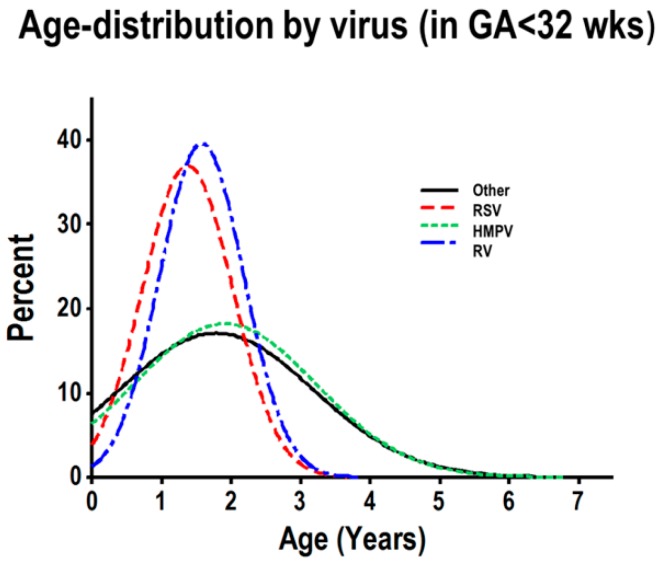
Premature children are prone to severe viral respiratory infections in early life, but the age at which susceptibility peaks and disappears for each pathogen is unclear. A retrospective analysis was performed of the age distribution and clinical features of acute viral respiratory infections in full-term and premature children, aged zero to seven years. The study comprised of a total of 630 hospitalizations (n = 580 children). Sixty-seven percent of these hospitalizations occurred in children born full-term (>37 weeks), 12% in preterm (32-37 weeks) and 21% in severely premature children (<32 weeks). The most common viruses identified were rhinovirus (RV; 60%) and respiratory syncytial virus (RSV; 17%). Age-distribution analysis of each virus identified that severely premature children had a higher relative frequency of RV and RSV in their first three years, relative to preterm or full-term children. Additionally, the probability of RV- or RSV-induced wheezing was higher overall in severely premature children less than three years old. Our results indicate that the vulnerability to viral infections in children born severely premature is more specific for RV and RSV and persists during the first three years of age. Further studies are needed to elucidate the age-dependent molecular mechanisms that underlie why premature infants develop RV- and RSV-induced wheezing in early life.
早产儿童在生命早期易患严重的病毒性呼吸道感染,但每种病原体易感性达到峰值和消失的年龄尚不清楚。对0至7岁足月儿和早产儿急性病毒性呼吸道感染的年龄分布和临床特征进行了回顾性分析。该研究共纳入630例住院病例(涉及580名儿童)。其中67%的住院病例发生在足月儿(>37周),12%发生在早产儿(32 - 37周),21%发生在极早产儿(<32周)。鉴定出的最常见病毒是鼻病毒(RV;60%)和呼吸道合胞病毒(RSV;17%)。对每种病毒的年龄分布分析表明,与早产儿或足月儿相比,极早产儿在其生命的前三年中RV和RSV的相对感染频率更高。此外,总体而言,三岁以下的极早产儿因RV或RSV诱发喘息的可能性更高。我们的结果表明,极早产出生儿童对病毒感染的易感性在RV和RSV方面更具特异性,并且在生命的前三年持续存在。需要进一步研究以阐明与年龄相关的分子机制,这些机制是极早产儿在生命早期发生RV和RSV诱发喘息的原因。