Someya Akimasa, Ikegami Takako, Sakamoto Koji, Nagaoka Isao
Department of Host Defense and Biochemical Research, Juntendo University, Graduate School of Medicine, Bunkyo-Ku, Tokyo 113-8421, Japan.
Laboratory of Molecular and Biochemical Research, Research Support Center, Juntendo University, Graduate School of Medicine, Bunkyo-Ku, Tokyo 113-8421, Japan.
PLoS One. 2016 Oct 24;11(10):e0165158. doi: 10.1371/journal.pone.0165158. eCollection 2016.
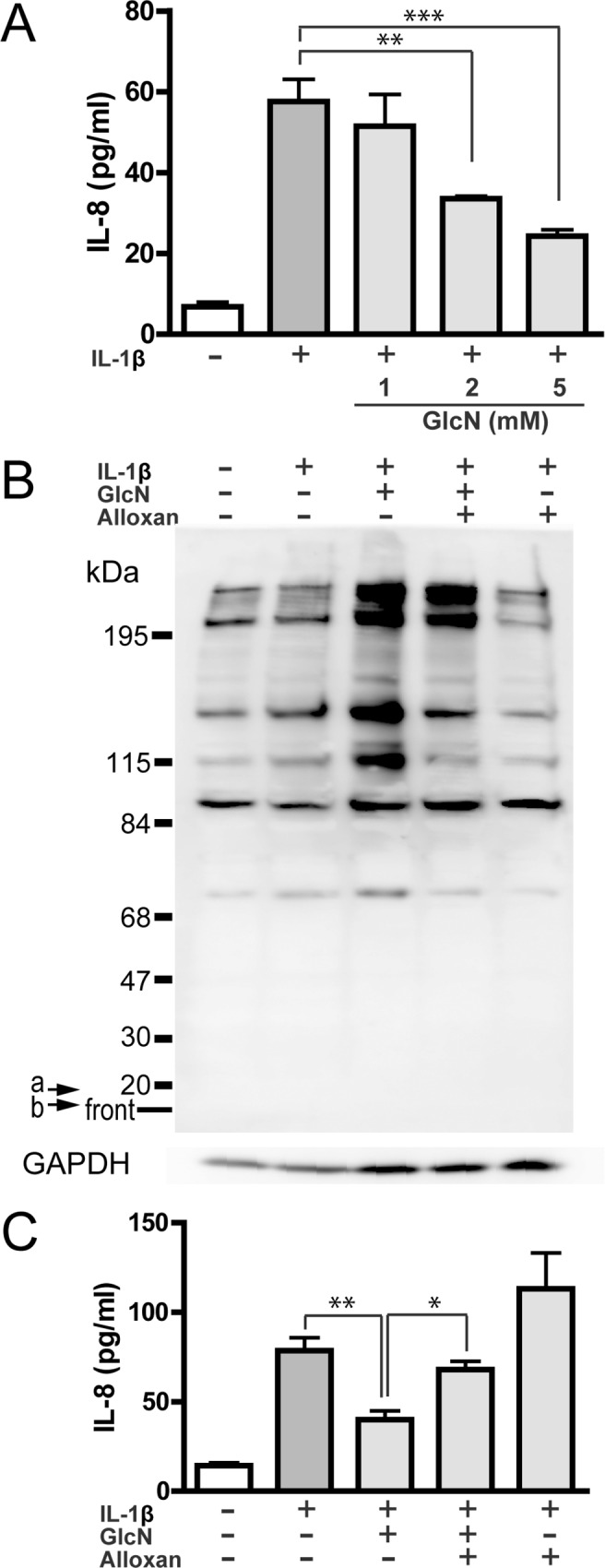
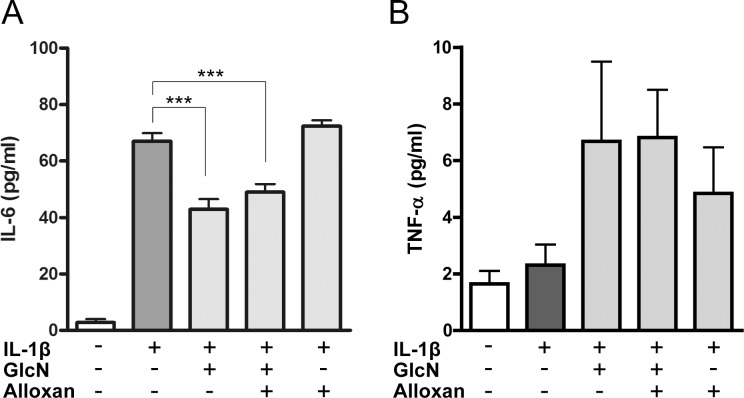
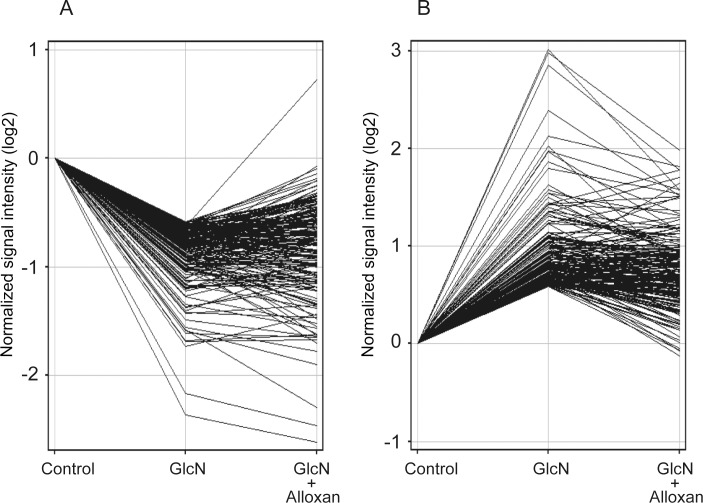
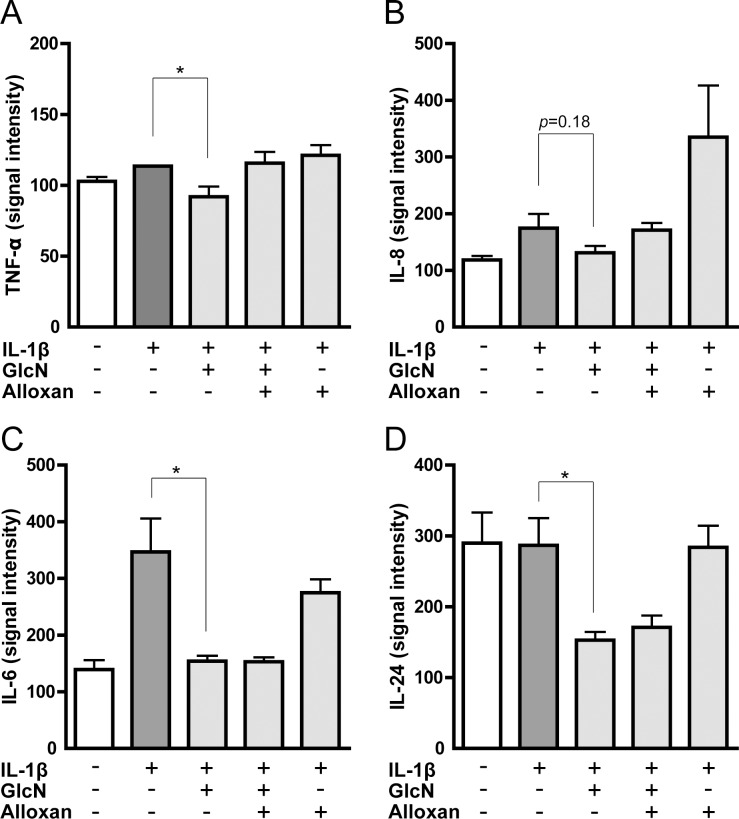
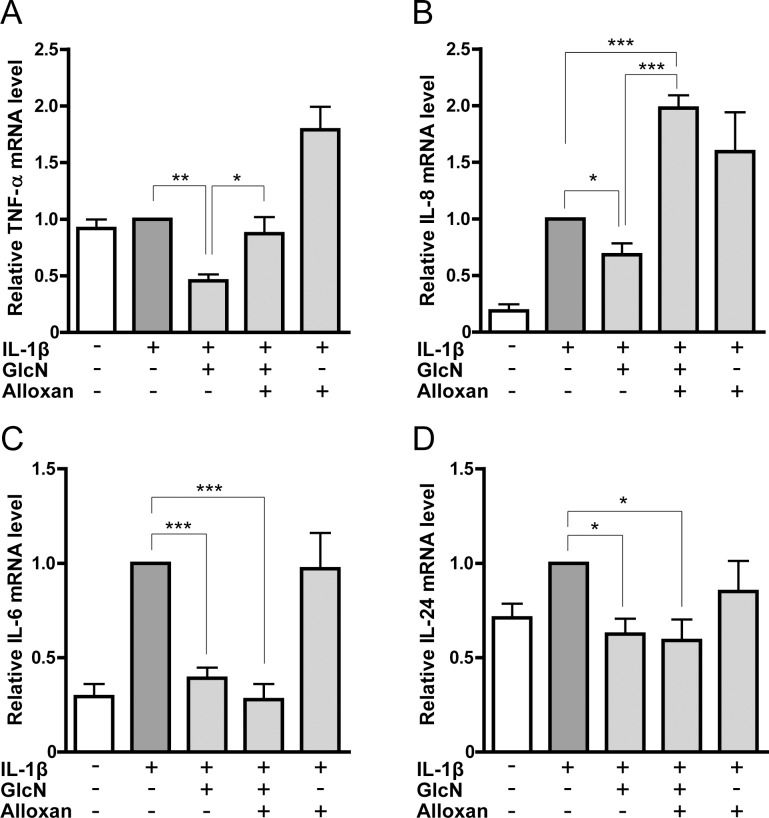
Osteoarthritis (OA) is one of the major joint diseases, and the synovial inflammation is involved in the pathogenesis and progression of OA. Glucosamine (GlcN) is widely used as a dietary supplement for OA, and is expected to exert the antiinflammatory action in OA. However, the detailed mechanism for the antiinflammatory action of GlcN remains poorly understood. In this study, to elucidate the molecular mechanism involved in the GlcN-medicated regulation of synovial cell activation, we comprehensively analyzed the effect of GlcN on the gene expression using a human synovial cell line MH7A by DNA microarray. The results indicated that GlcN significantly downregulates the expression of 187 genes (≤1/1.5-fold) and upregulates the expression of 194 genes (≥1.5-fold) in IL-1β-stimulated MH7A cells. Interestingly, pathway analysis indicated that among the 10 pathways into which the GlcN-regulated genes are categorized, the 4 pathways are immune-related. Furthermore, GlcN suppressed the expression of proinflammatory cytokine genes (such as IL-6, IL-8, IL-24 and TNF-α genes). In addition, GlcN-mediated O-GlcNAc modification was involved in the downregulation of TNF-α and IL-8 genes but not IL-6 and IL-24 genes, based on the effects of alloxan, an O-GlcNAc transferase inhibitor. Thus, GlcN likely exerts an antiinflammatroy action in OA by suppressing the expression of proinflammatory cytokine genes in synovial MH7A cells by O-GlcNAc modification-dependent and -independent mechanisms.
骨关节炎(OA)是主要的关节疾病之一,滑膜炎症参与OA的发病机制和病情进展。氨基葡萄糖(GlcN)作为OA的膳食补充剂被广泛使用,有望在OA中发挥抗炎作用。然而,GlcN抗炎作用的详细机制仍知之甚少。在本研究中,为阐明GlcN介导的滑膜细胞活化调控所涉及的分子机制,我们通过DNA微阵列全面分析了GlcN对人滑膜细胞系MH7A基因表达的影响。结果表明,在IL-1β刺激的MH7A细胞中,GlcN显著下调187个基因的表达(≤1/1.5倍),上调194个基因的表达(≥1.5倍)。有趣的是,通路分析表明,在GlcN调控的基因所归类的10条通路中,有4条与免疫相关。此外,GlcN抑制促炎细胞因子基因(如IL-6、IL-8、IL-24和TNF-α基因)的表达。另外,基于O-GlcNAc转移酶抑制剂四氧嘧啶的作用,GlcN介导的O-GlcNAc修饰参与TNF-α和IL-8基因的下调,但不参与IL-6和IL-24基因的下调。因此,GlcN可能通过O-GlcNAc修饰依赖性和非依赖性机制抑制滑膜MH7A细胞中促炎细胞因子基因的表达,从而在OA中发挥抗炎作用。