Maleki Shohreh, Kjellqvist Sanela, Paloschi Valentina, Magné Joelle, Branca Rui Miguel Mamede, Du Lei, Hultenby Kjell, Petrini Johan, Fuxe Jonas, Lehtiö Janne, Franco-Cereceda Anders, Eriksson Per, Björck Hanna M
Cardiovascular Medicine Unit, Center for Molecular Medicine, Department of Medicine, Karolinska Institutet, Karolinska University hospital Solna, Stockholm, Sweden.
Science for Life Laboratory, Department of Biochemistry and Biophysics, Stockholm University, Stockholm, Sweden.
Sci Rep. 2016 Oct 25;6:35712. doi: 10.1038/srep35712.
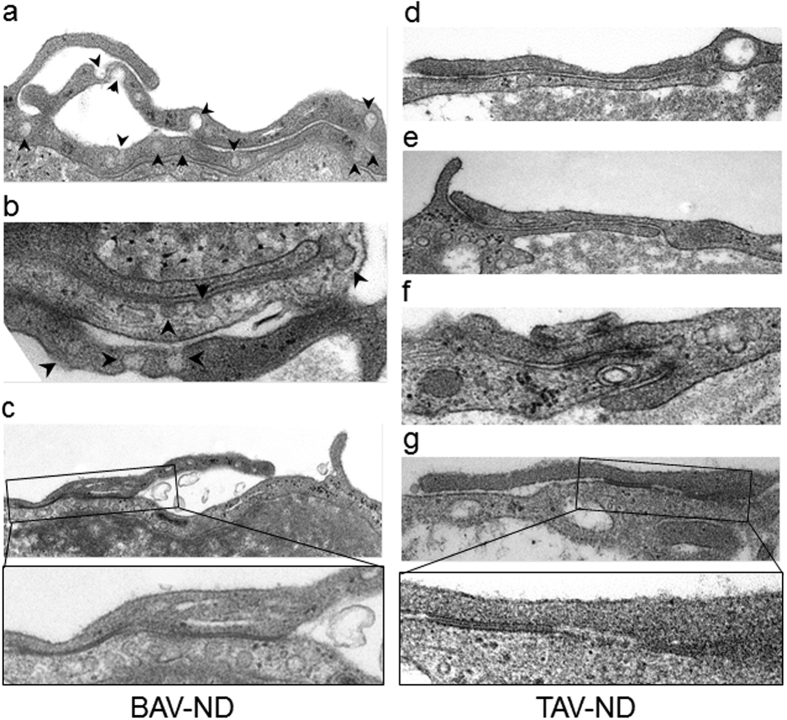
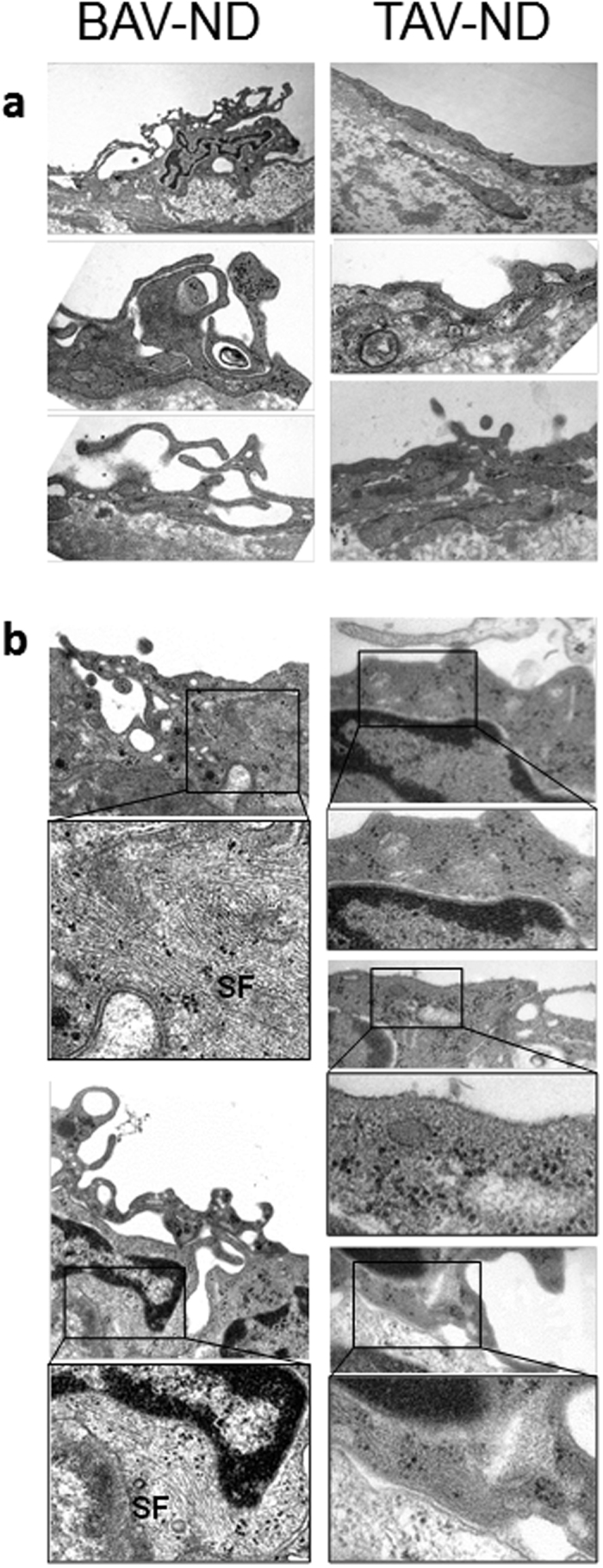
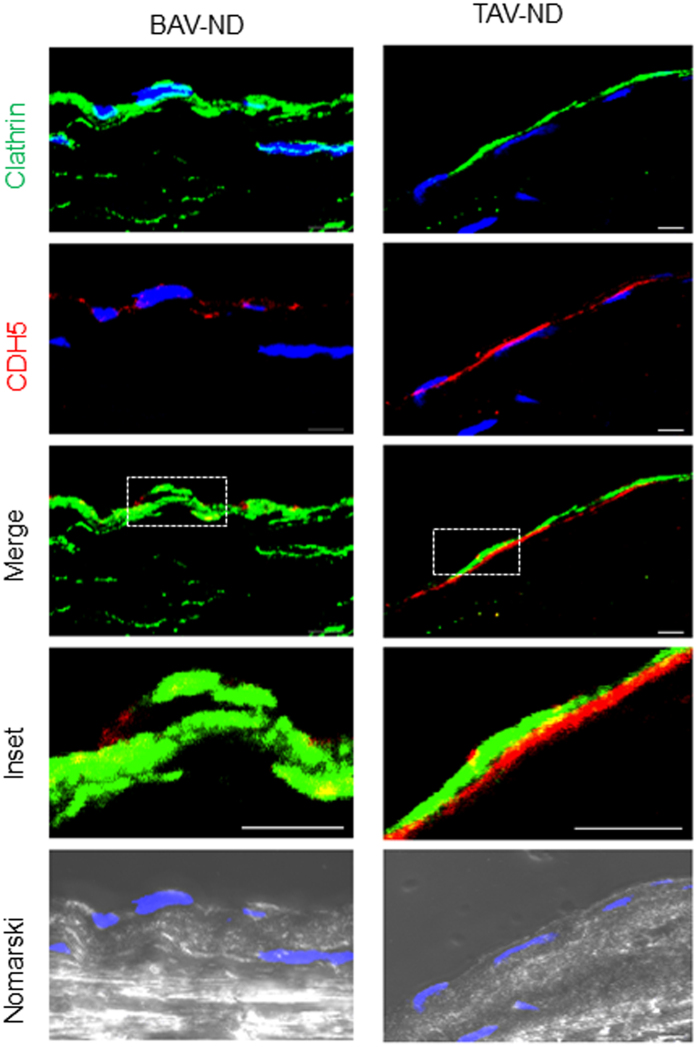
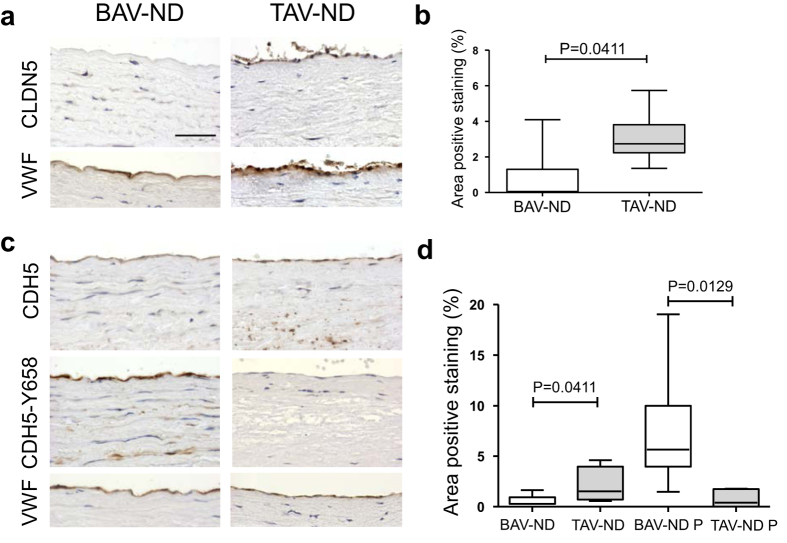
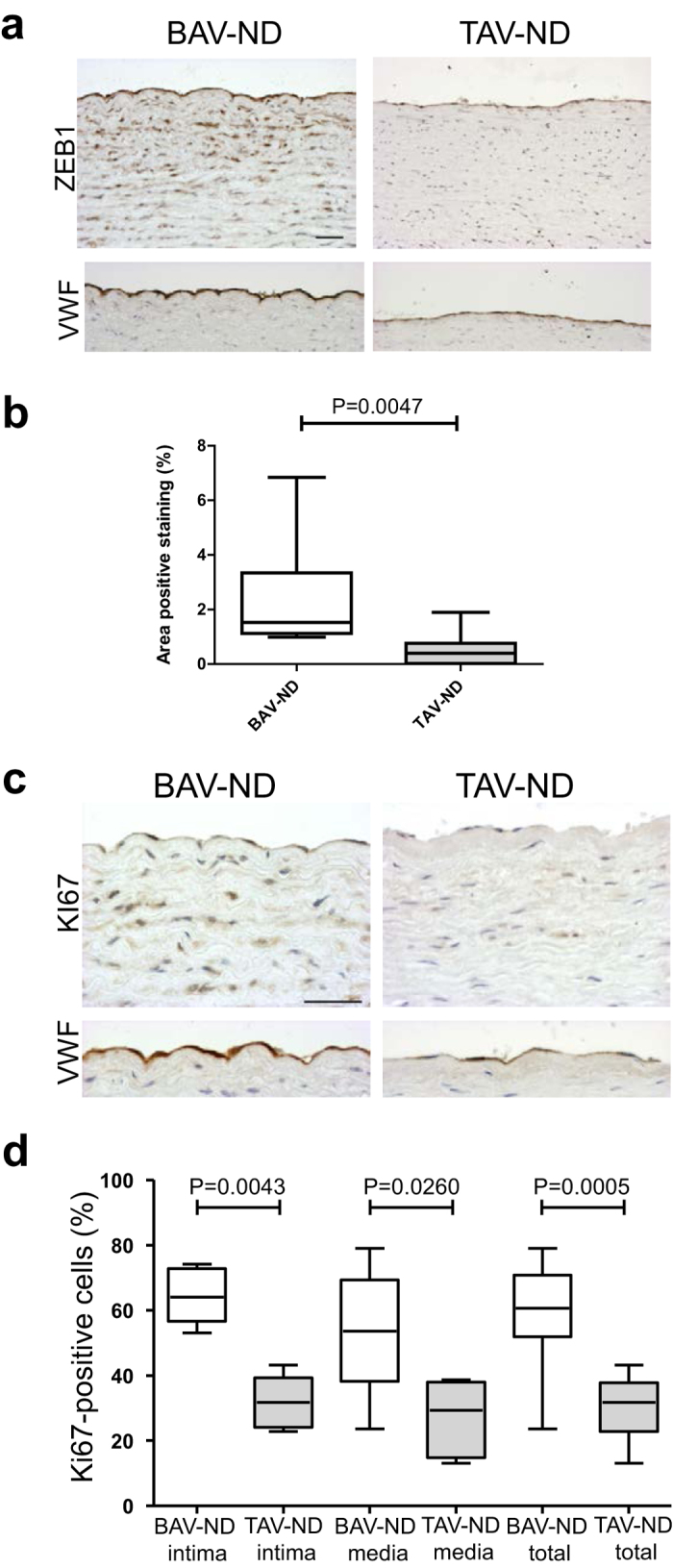
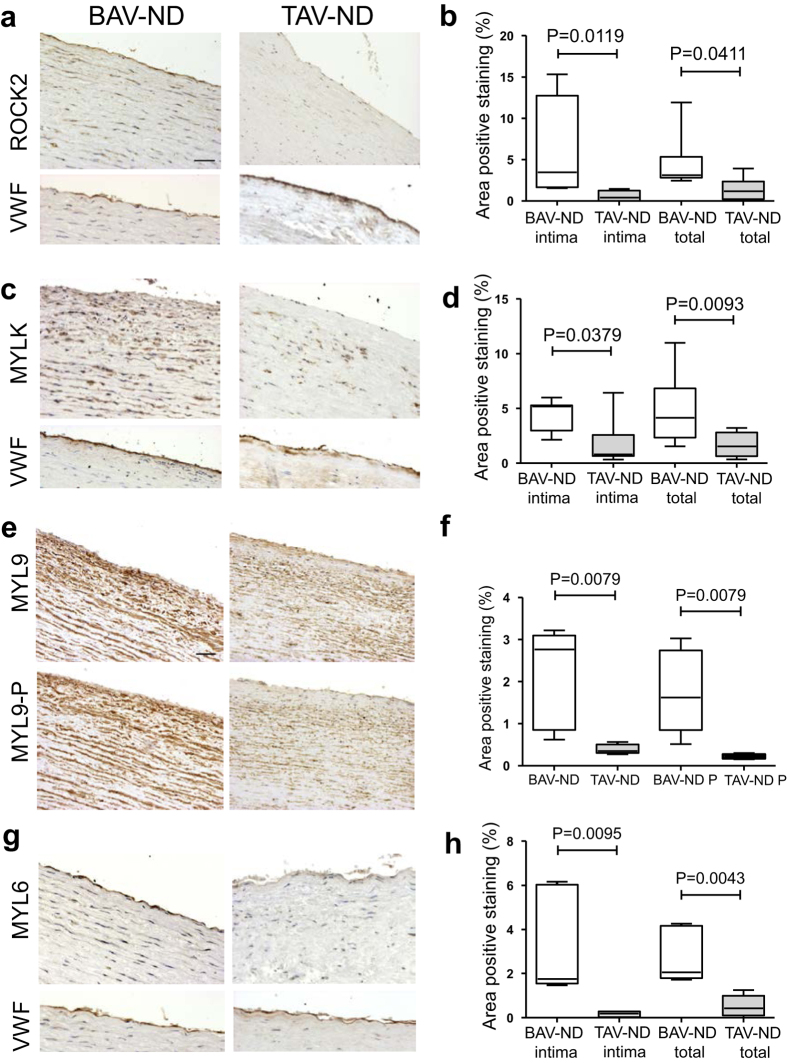
Individuals with a bicuspid aortic valve (BAV) are at significantly higher risk of developing aortic complications than individuals with tricuspid aortic valves (TAV) and defective signaling during the embryonic development and/or life time exposure to abnormal hemodynamic have been proposed as underlying factors. However, an explanation for the molecular mechanisms of aortopathy in BAV has not yet been provided. We combined proteomics, RNA analyses, immunohistochemistry, and electron microscopy to identify molecular differences in samples of non-dilated ascending aortas from BAV (N = 62) and TAV (N = 54) patients. Proteomic analysis was also performed for dilated aortas (N = 6 BAV and N = 5 TAV) to gain further insight into the aortopathy of BAV. Our results collectively showed the molecular signature of an endothelial/epithelial-mesenchymal (EndMT/EMT) transition-like process, associated with instability of intimal cell junctions and activation of RHOA pathway in the intima and media layers of ascending aorta in BAV patients. We propose that an improper regulation of EndMT/EMT during the spatiotemporally related embryogenesis of semilunar valves and ascending aorta in BAV individuals may result in aortic immaturity and instability prior to dilation. Exasperation of EndMT/EMT state in post embryonic life and/or exposure to non-physiological hemodynamic could lead to the aneurysm of ascending aorta in BAV individuals.
与三尖瓣主动脉瓣(TAV)患者相比,二叶式主动脉瓣(BAV)患者发生主动脉并发症的风险显著更高,胚胎发育过程中的信号缺陷和/或一生中暴露于异常血流动力学被认为是潜在因素。然而,尚未对BAV中主动脉病变的分子机制作出解释。我们结合蛋白质组学、RNA分析、免疫组织化学和电子显微镜,以确定BAV(N = 62)和TAV(N = 54)患者未扩张升主动脉样本中的分子差异。还对扩张主动脉(N = 6例BAV和N = 5例TAV)进行了蛋白质组学分析,以进一步深入了解BAV的主动脉病变。我们的结果共同显示了一种内皮/上皮-间充质(EndMT/EMT)转变样过程的分子特征,这与BAV患者升主动脉内膜和中膜层内膜细胞连接的不稳定性以及RHOA途径的激活有关。我们提出,在BAV个体半月瓣和升主动脉时空相关的胚胎发生过程中,EndMT/EMT的调节不当可能导致扩张前主动脉不成熟和不稳定。胚胎后期EndMT/EMT状态的加剧和/或暴露于非生理性血流动力学可能导致BAV个体升主动脉瘤形成。