Section of Cardiothoracic Surgery, Department of Molecular Medicine and Surgery, Karolinska Institutet, Stockholm, Sweden.
Division of Cardiovascular Medicine, Center for Molecular Medicine, Department of Medicine, Karolinska Institutet, Stockholm, Karolinska University Hospital, Solna, Sweden.
J Mol Med (Berl). 2023 Oct;101(10):1323-1333. doi: 10.1007/s00109-023-02370-z. Epub 2023 Sep 12.
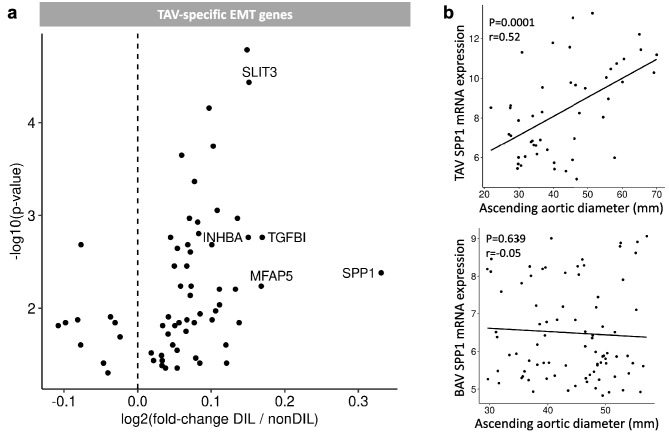
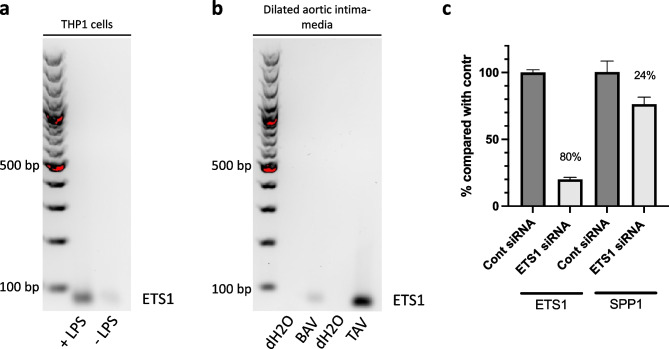
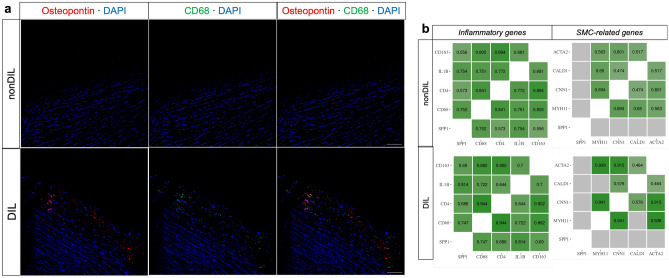
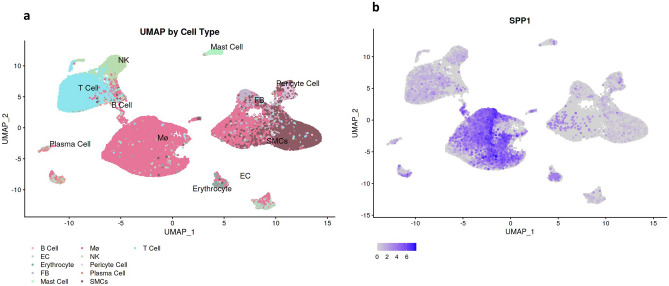
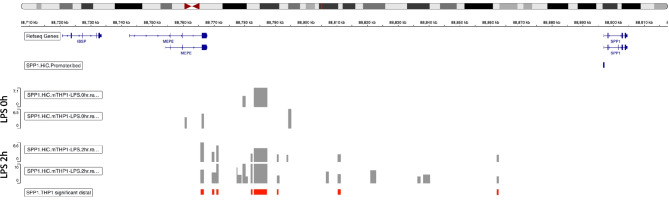
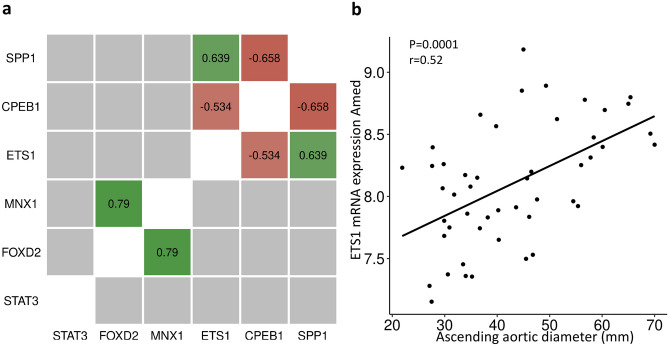
Degenerative ascending aortic aneurysm (AscAA) is a silent and potentially fatal disease characterized by excessive vascular inflammation and fibrosis. We aimed to characterize the cellular and molecular signature for the fibrotic type of endothelial mesenchymal transition (EndMT) that has previously been described in degenerative AscAA. Patients undergoing elective open-heart surgery for AscAA and/or aortic valve repair were recruited. Gene expression in the intima-media of the ascending aorta was measured in 22 patients with non-dilated and 24 with dilated aortas, and candidate genes were identified. Protein expression was assessed using immunohistochemistry. Interacting distal gene enhancer regions were identified using targeted chromosome conformation capture (HiCap) in untreated and LPS-treated THP1 cells, and the associated transcription factors were analyzed. Differential expression analysis identified SPP1 (osteopontin) as a key gene in the signature of fibrotic EndMT in patients with degenerative AscAA. The aortic intima-media expression of SPP1 correlated with the expression of inflammatory markers, the level of macrophage infiltration, and the aortic diameter. HiCap analysis, followed by transcription factor binding analysis, identified ETS1 as a potential regulator of SPP1 expression under inflammatory conditions. In conclusion, the present findings suggest that SPP1 may be involved in the development of the degenerative type of AscAA. KEY MESSAGES: In the original manuscript titled "SPP1/osteopontin, a driver of fibrosis and inflammation in degenerative ascending aortic aneurysm?" by David Freiholtz, Otto Bergman, Saliendra Pradhananga, Karin Lång, Flore-Anne Poujade, Carl Granath, Christian Olsson, Anders Franco-Cereceda, Pelin Sahlén, Per Eriksson, and Hanna M Björck, we present novel findings on regulatory factors on osteopontin (SPP1) expression in immune cells involved in degenerative ascending aortic aneurysms (AscAA). The central findings convey: SPP1 is a potential driver of the fibrotic endothelial-to-mesenchymal transition in AscAA. SPP1/osteopontin expression in AscAA is predominately by immune cells. ETS1 is a regulatory transcription factor of SPP1 expression in AscAA immune cells.
退行性升主动脉瘤(AscAA)是一种沉默且潜在致命的疾病,其特征为血管过度炎症和纤维化。我们旨在描绘先前在退行性 AscAA 中描述的纤维化型内皮间充质转化(EndMT)的细胞和分子特征。招募接受择期心脏手术治疗 AscAA 和/或主动脉瓣修复的患者。在 22 名非扩张性升主动脉和 24 名扩张性升主动脉患者的升主动脉内膜-中膜中测量基因表达,并鉴定候选基因。使用免疫组织化学评估蛋白质表达。在未处理和 LPS 处理的 THP1 细胞中使用靶向染色体构象捕获(HiCap)鉴定相互作用的远端基因增强子区域,并分析相关转录因子。差异表达分析鉴定 SPP1(骨桥蛋白)为退行性 AscAA 患者纤维化 EndMT 特征的关键基因。主动脉内膜-中膜 SPP1 的表达与炎症标志物的表达、巨噬细胞浸润水平和主动脉直径相关。HiCap 分析,随后进行转录因子结合分析,鉴定 ETS1 为炎症条件下 SPP1 表达的潜在调节剂。总之,目前的研究结果表明 SPP1 可能参与退行性 AscAA 的发展。