Nie Jingyi, Wang Zhengke, Hu Qiaoling
MoE Key Laboratory of Macromolecular Synthesis and Functionalization, Department of Polymer Science and Engineering, Zhejiang University, Hangzhou, China.
Key Laboratory of Adsorption and Separation Materials &Technologies of Zhejiang Province, Hangzhou, China.
Sci Rep. 2016 Oct 27;6:36053. doi: 10.1038/srep36053.
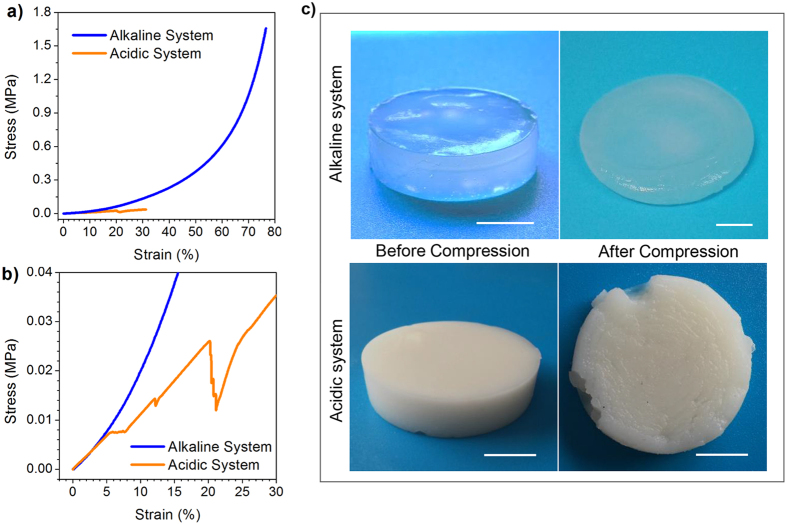
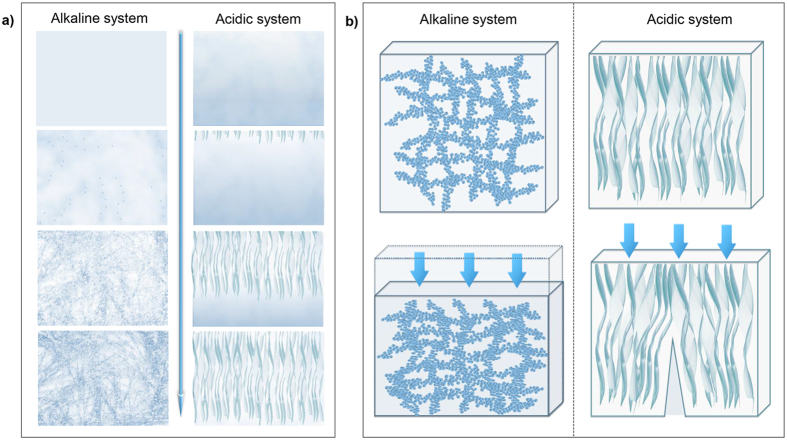
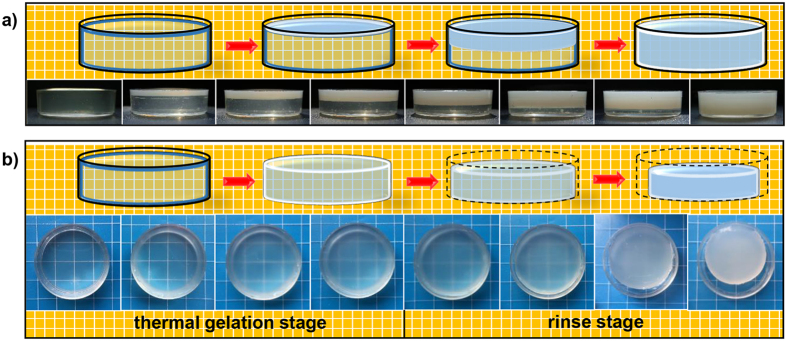
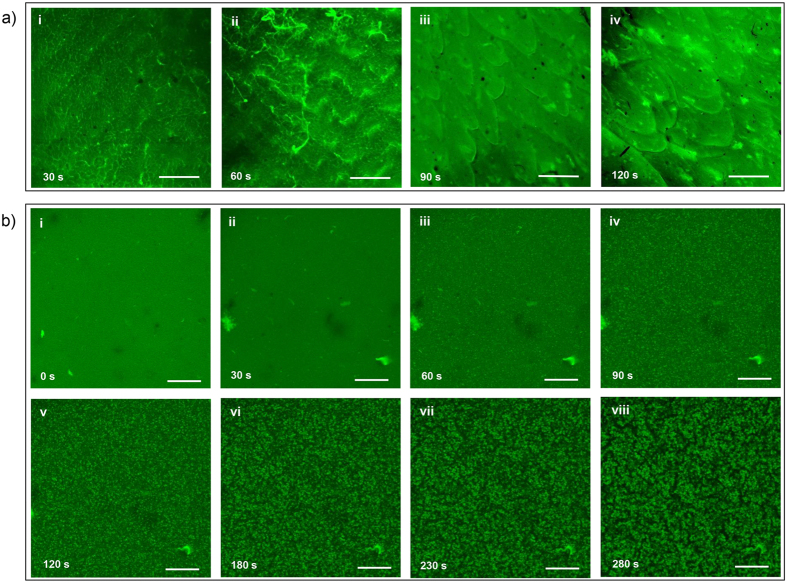
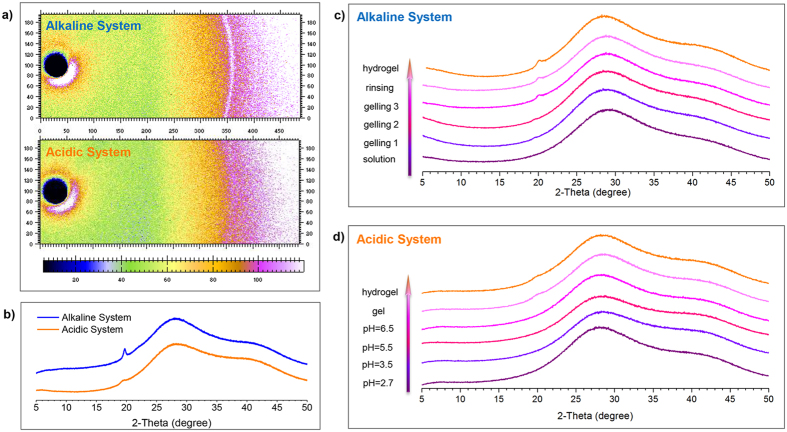
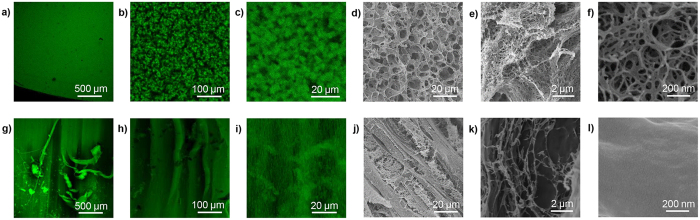
Chitosan (CS) has generated considerable interest for its desirable properties and wide applications. Hydrogel has been proven to be a major and vital form in the applications of CS materials. Among various types of CS hydrogels, physical cross-linked CS hydrogels are popular, because they avoided the potential toxicity and sacrifice of intrinsic properties caused by cross-linking or reinforcements. Alkaline solvent system and acidic solvent system are two important solvent systems for the preparation of physical cross-linked CS hydrogels, and also lay the foundations of CS hydrogel-based materials in many aspects. As members of physical cross-linked CS hydrogels, gel material via alkaline solvent system showed significant differences from that via acidic solvent system, but the reasons behind are still unexplored. In the present work, we studied the difference between CS hydrogel via alkaline system and acidic system, in terms of gelation process, hydrogel structure and mechanical property. In-situ/pseudo in-situ studies were carried out, including fluorescent imaging of gelation process, which provided dynamic visualization. Finally, the reasons behind the differences were explained, accompanied by the discussion about design strategy based on gelation behavior of the two systems.
壳聚糖(CS)因其优良的性能和广泛的应用而备受关注。水凝胶已被证明是CS材料应用中的一种主要且重要的形式。在各类CS水凝胶中,物理交联的CS水凝胶很受欢迎,因为它们避免了交联或增强作用所导致的潜在毒性和固有性能的损失。碱性溶剂体系和酸性溶剂体系是制备物理交联CS水凝胶的两种重要溶剂体系,也在许多方面奠定了基于CS水凝胶材料的基础。作为物理交联CS水凝胶的成员,通过碱性溶剂体系制备的凝胶材料与通过酸性溶剂体系制备的凝胶材料表现出显著差异,但其背后的原因仍未得到探索。在本研究中,我们从凝胶化过程、水凝胶结构和力学性能方面研究了通过碱性体系和酸性体系制备的CS水凝胶之间的差异。进行了原位/准原位研究,包括凝胶化过程的荧光成像,提供了动态可视化。最后,解释了差异背后的原因,并讨论了基于两种体系凝胶化行为的设计策略。