Lyu Zhenyong, Jackson Todd
Key Laboratory of Cognition and Personality, Southwest University Chongqing, China.
Key Laboratory of Cognition and Personality, Southwest UniversityChongqing, China; Department of Psychology, University of MacauMacau, China.
Front Behav Neurosci. 2016 Oct 13;10:188. doi: 10.3389/fnbeh.2016.00188. eCollection 2016.
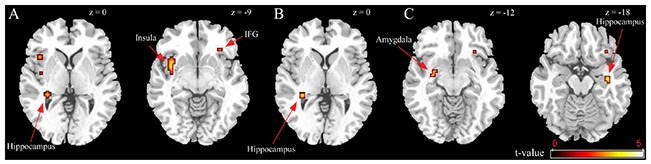
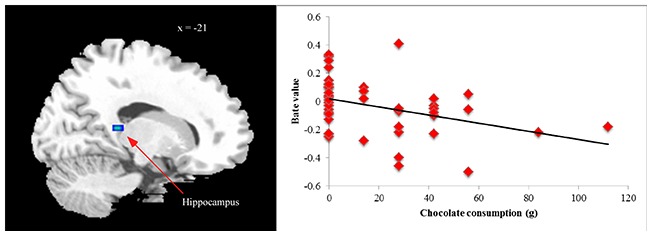
Stressors can trigger binge-eating but researchers have yet to consider their effects on both neural responses to food cues and food consumption among those at risk. In this experiment, we examined the impact of acute stressors on neural activation to food images and subsequent food consumption within binge-eating disorder (BED) and non-eating disordered control groups. Eighteen women meeting DSM-IV BED criteria and 26 women serving as non-eating disordered controls were randomly assigned to unpleasant stressor (painful cold pressor test (CPT) followed by negative performance feedback) or less unpleasant stressor (non-painful sensory discrimination task followed by positive performance feedback) conditions. Subsequently, they were scanned with functional magnetic resonance imaging (fMRI) while viewing food and neutral images. After the scans, participants completed a self-report battery in an environment conducive to snacking. During exposure to food images, BED-symptomatic women in the unpleasant stressor condition reported more liking of high calorie food images and showed less activation in one inhibitory area, the hippocampus, compared to controls in this condition. BED-symptomatic women exposed to unpleasant stressors also consumed more chocolate than any other group during the post-scan questionnaire completion. Crucially, reduced hippocampal activation to high calorie food images predicted more chocolate consumption following fMRI scans within the entire sample. This experiment provides initial evidence suggesting unpleasant acute stressors contribute to reduced inhibitory region responsiveness in relation to external food cues and later food consumption among BED-symptomatic women.
压力源可引发暴饮暴食,但研究人员尚未考虑其对有风险人群中食物线索的神经反应和食物消费的影响。在本实验中,我们研究了急性压力源对暴食症(BED)组和非饮食失调对照组中食物图像的神经激活及随后食物消费的影响。18名符合《精神疾病诊断与统计手册》第四版(DSM-IV)中BED标准的女性和26名作为非饮食失调对照组的女性被随机分配到不愉快压力源组(疼痛性冷加压试验(CPT),随后给予负面绩效反馈)或不太不愉快压力源组(非疼痛性感觉辨别任务,随后给予正面绩效反馈)。随后,她们在观看食物和中性图像时接受功能磁共振成像(fMRI)扫描。扫描后,参与者在有利于吃零食的环境中完成一系列自我报告。在观看食物图像期间,与该条件下的对照组相比,处于不愉快压力源条件下有BED症状的女性报告对高热量食物图像的喜爱程度更高,并且在一个抑制区域海马体中的激活较少。在扫描后问卷填写期间,暴露于不愉快压力源的有BED症状的女性也比其他任何组食用了更多巧克力。至关重要的是,在整个样本中,对高热量食物图像的海马体激活减少预示着fMRI扫描后会食用更多巧克力。本实验提供了初步证据,表明不愉快的急性压力源会导致有BED症状的女性相对于外部食物线索的抑制区域反应性降低以及随后的食物消费增加。