Maravi Devendra Kumar, Kumar Sanjeev, Sharma Prabin Kumar, Kobayashi Yasufumi, Goud Vaibhav V, Sakurai Nozomu, Koyama Hiroyuki, Sahoo Lingaraj
Center for Energy, Indian Institute of Technology Guwahati, Guwahati, 781039 India.
Department of Biosciences and Bioengineering, Indian Institute of Technology Guwahati, Guwahati, 781039 India.
Biotechnol Biofuels. 2016 Oct 21;9:226. doi: 10.1186/s13068-016-0642-7. eCollection 2016.
is an important biofuel crop due to the presence of high amount of oil in its seeds suitable for biodiesel production. Triacylglycerols (TAGs) are the most abundant form of storage oil in plants. Diacylglycerol -acyltransferase (DGAT1) enzyme is responsible for the last and only committed step in seed TAG biosynthesis. Direct upregulation of TAG biosynthesis in seeds and vegetative tissues through overexpression of the could enhance the energy density of the biomass, making significant impact on biofuel production.
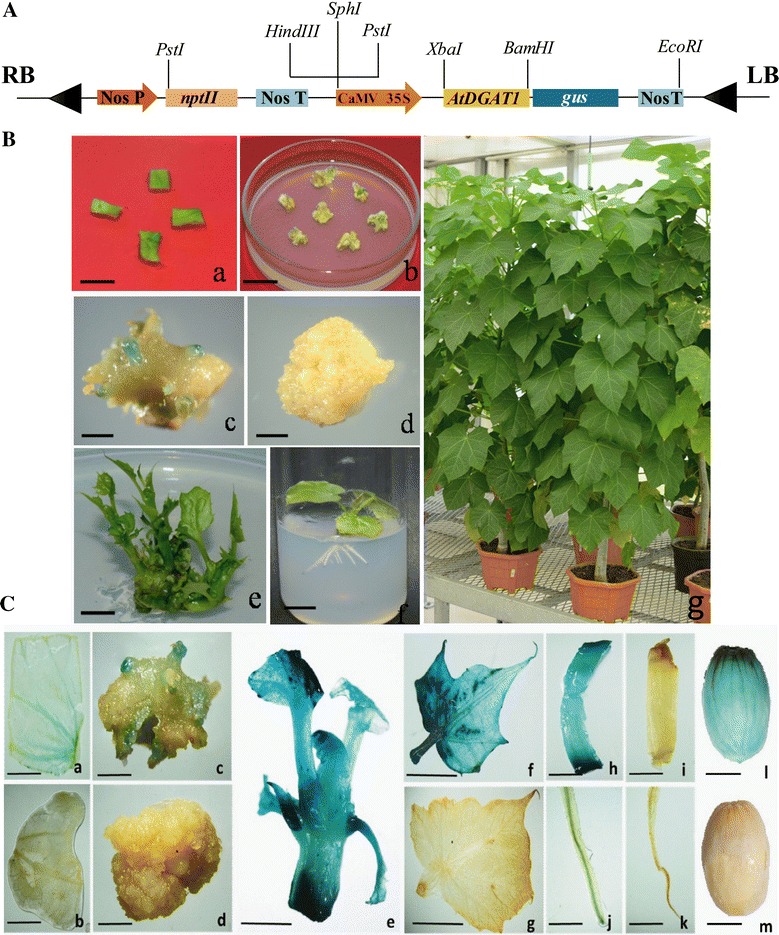
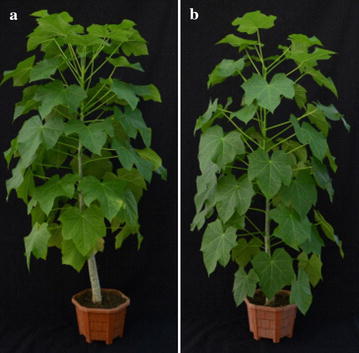
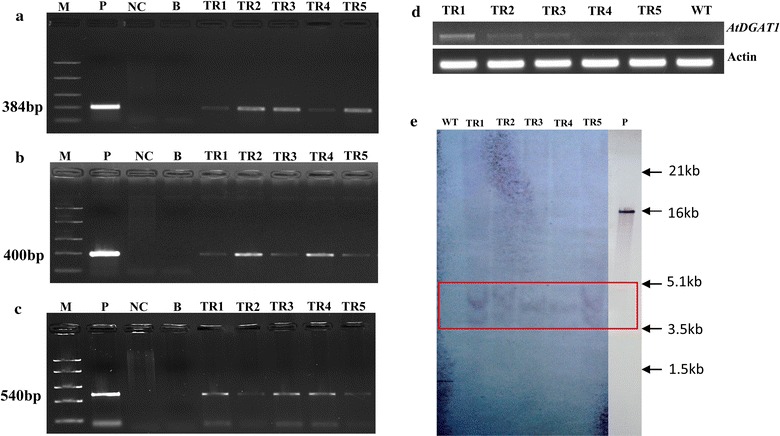
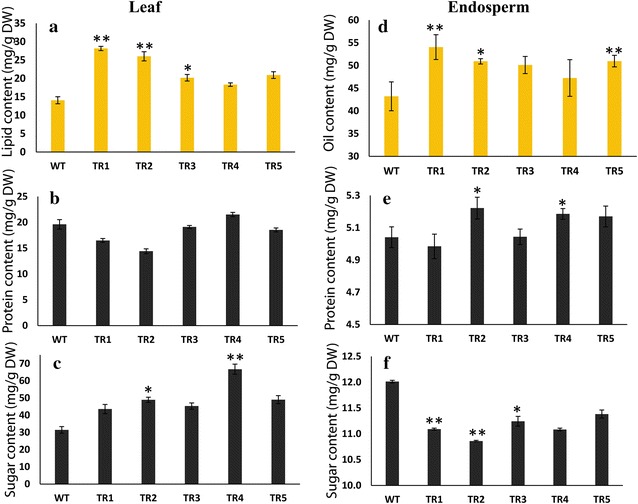
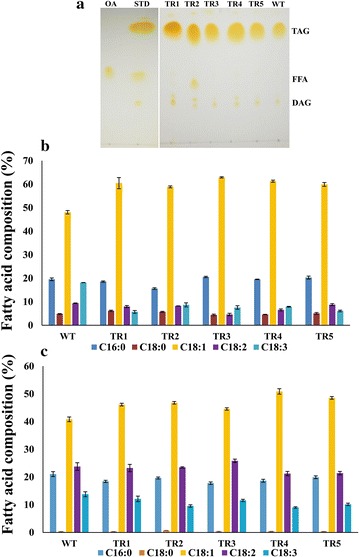
The enzyme diacylglycerol -acyltransferase is the rate-limiting enzyme responsible for the TAG biosynthesis in seeds. We generated transgenic Jatropha ectopically expressing an gene through -mediated transformation. The resulting transgenic plants showed a dramatic increase in lipid content by 1.5- to 2 fold in leaves and 20-30 % in seeds, and an overall increase in TAG and DAG, and lower free fatty acid (FFA) levels compared to the wild-type plants. The increase in oil content in transgenic plants is accompanied with increase in average plant height, seeds per tree, average 100-seed weight, and seed length and breadth. The enhanced TAG accumulation in transgenic plants had no penalty on the growth rates, growth patterns, leaf number, and leaf size of plants.
In this study, we produced transgenic Jatropha ectopically expressing . We successfully increased the oil content by 20-30 % in seeds and 1.5- to 2.0-fold in leaves of Jatropha through genetic engineering. Transgenic plants had reduced FFA content compared with control plants. Our strategy of increasing energy density by enhancing oil accumulation in both seeds and leaves in Jatropha would make it economically more sustainable for biofuel production.
由于其种子中含有大量适合生物柴油生产的油,麻风树是一种重要的生物燃料作物。三酰甘油(TAGs)是植物中储存油的最丰富形式。二酰甘油酰基转移酶(DGAT1)负责种子TAG生物合成中的最后一步也是唯一的关键步骤。通过过量表达相关基因直接上调种子和营养组织中的TAG生物合成,可以提高生物质的能量密度,对生物燃料生产产生重大影响。
二酰甘油酰基转移酶是负责种子中TAG生物合成的限速酶。我们通过农杆菌介导的转化产生了异位表达相关基因的转基因麻风树。与野生型植物相比,所得的转基因植物叶片中的脂质含量显著增加了1.5至2倍,种子中的脂质含量增加了20 - 30%,TAG和DAG总体增加,游离脂肪酸(FFA)水平降低。转基因植物中油含量的增加伴随着平均株高、每株种子数、平均百粒重以及种子长度和宽度的增加。转基因植物中TAG积累的增强对植物的生长速率、生长模式、叶片数量和叶片大小没有负面影响。
在本研究中,我们生产了异位表达相关基因的转基因麻风树。通过基因工程,我们成功地使麻风树种子中的油含量增加了20 - 30%,叶片中的油含量增加了1.5至2.0倍。与对照植物相比,转基因植物的FFA含量降低。我们通过提高麻风树种子和叶片中的油积累来增加能量密度的策略将使其在生物燃料生产方面在经济上更具可持续性。