Halstead Susan K, Kalna Gabriela, Islam Mohammad B, Jahan Israt, Mohammad Quazi D, Jacobs Bart C, Endtz Hubert P, Islam Zhahirul, Willison Hugh J
Institute of Infection, Immunity and Inflammation (S.K.H., H.J.W.), College of Medical, Veterinary and Life Sciences, University of Glasgow; The Beatson Institute for Cancer Research (G.K.), Glasgow, UK; Laboratory Sciences and Services Division (M.B.I., I.J., Q.D.M., Z.I.), International Centre for Diarrheal Disease Research; Shaheed Tajuddin Ahmed Sarani (M.B.I., I.J., Q.D.M., Z.I.), Mohakhali, Dhaka, Bangladesh; Departments of Immunology and Neurology (B.C.J.) and Medical Microbiology and Infectious Diseases (H.P.E.), Erasmus MC, University Medical Center Rotterdam, Rotterdam, the Netherlands; and Fondation Mérieux (H.P.E.), Lyon, France.
Neurol Neuroimmunol Neuroinflamm. 2016 Sep 28;3(6):e284. doi: 10.1212/NXI.0000000000000284. eCollection 2016 Dec.
To characterize the patterns of autoantibodies to glycolipid complexes in a large cohort of Guillain-Barré syndrome (GBS) and control samples collected in Bangladesh using a newly developed microarray technique.
Twelve commonly studied glycolipids and lipids, plus their 66 possible heteromeric complexes, totaling 78 antigens, were applied to polyvinylidene fluoride-coated slides using a microarray printer. Arrays were probed with 266 GBS and 579 control sera (2 μL per serum, diluted 1/50) and bound immunoglobulin G detected with secondary antibody. Scanned arrays were subjected to statistical analyses.
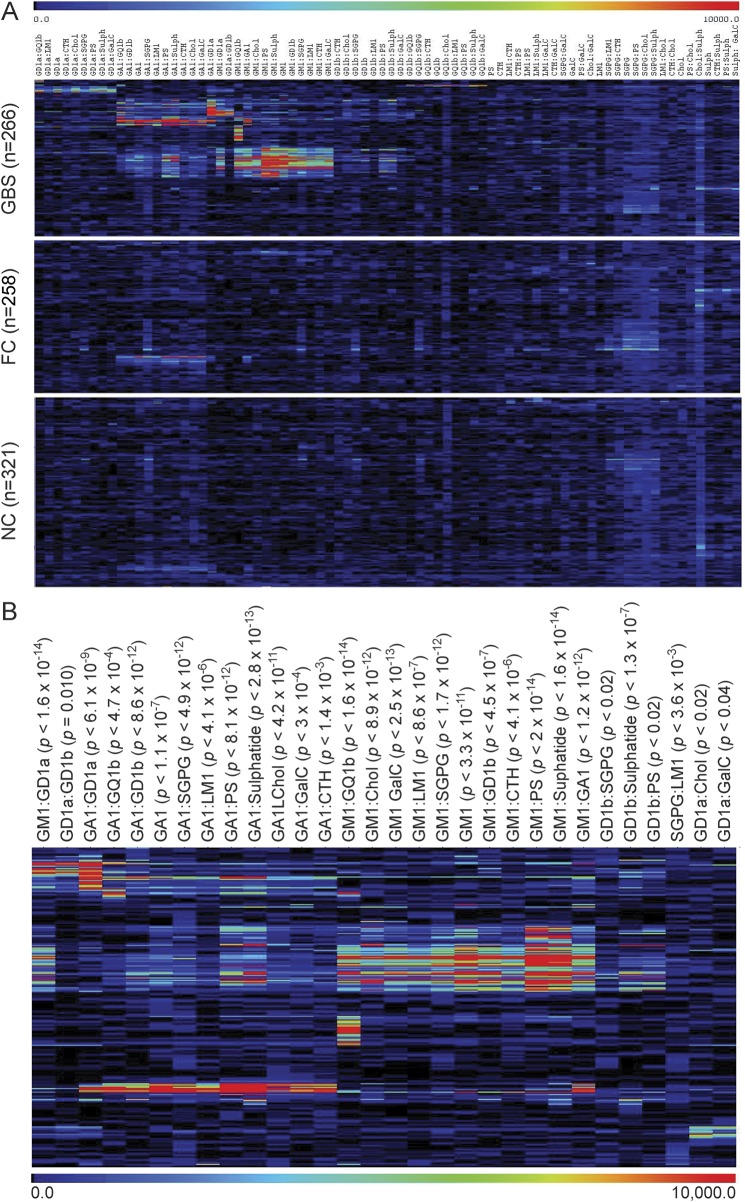
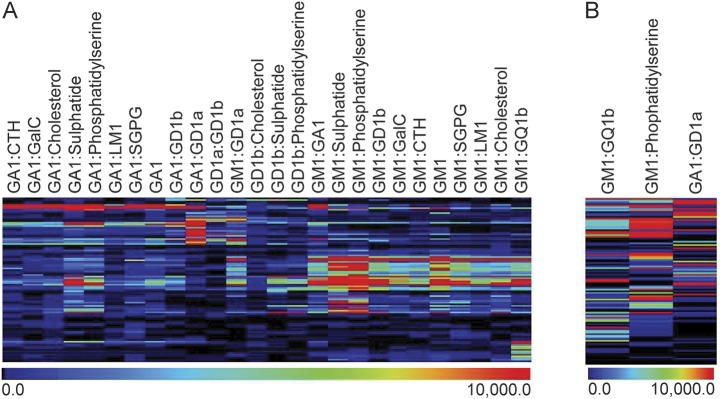
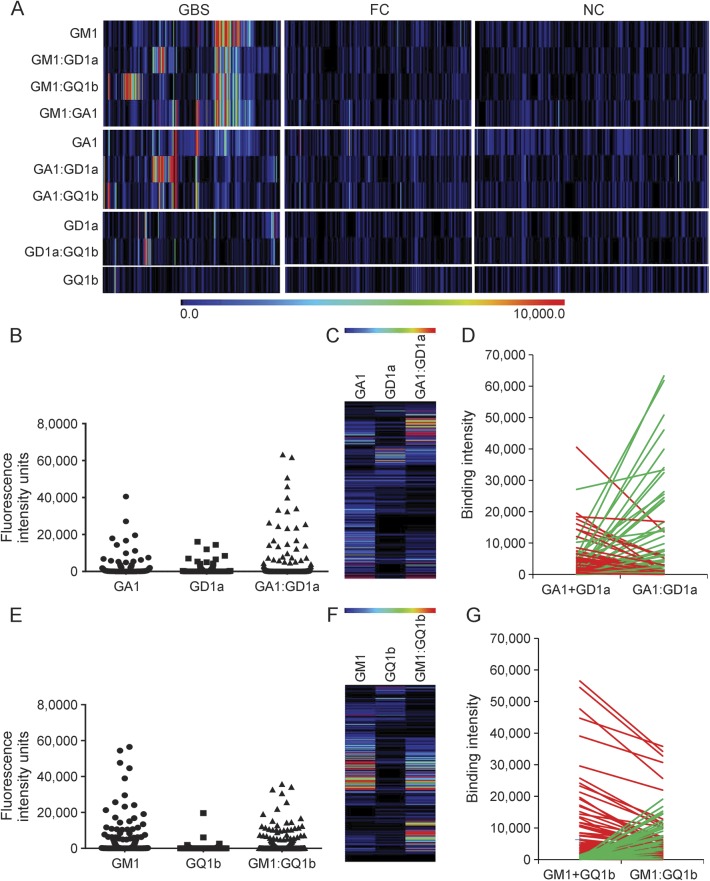
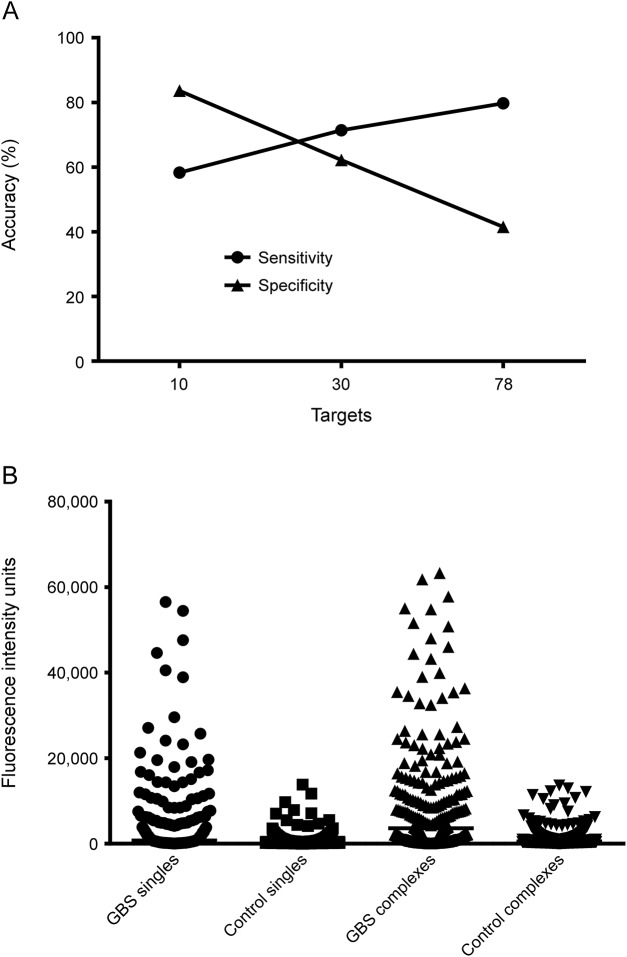
Measuring antibodies to single targets was 9% less sensitive than to heteromeric complex targets (49.2% vs 58.3%) without significantly affecting specificity (83.9%-85.0%). The optimal screening protocol for GBS sera comprised a panel of 10 glycolipids (4 single glycolipids GM1, GA1, GD1a, GQ1b, and their 6 heteromeric complexes), resulting in an overall assay sensitivity of 64.3% and specificity of 77.1%. Notable heteromeric targets were GM1:GD1a, GM1:GQ1b, and GA1:GD1a, in which exclusive binding to the complex was observed.
Rationalizing the screening protocol to capture the enormous diversity of glycolipid complexes can be achieved by miniaturizing the screening platform to a microarray platform, and applying simple bioinformatics to determine optimal sensitivity and specificity of the targets. Glycolipid complexes are an important category of glycolipid antigens in autoimmune neuropathy cases that require specific analytical and bioinformatics methods for optimal detection.
使用新开发的微阵列技术,对孟加拉国收集的一大组吉兰 - 巴雷综合征(GBS)和对照样本中针对糖脂复合物的自身抗体模式进行特征分析。
使用微阵列打印机将12种常用研究的糖脂和脂质及其66种可能的异聚复合物(共78种抗原)应用于聚偏二氟乙烯包被的载玻片上。用266份GBS血清和579份对照血清(每份血清2μL,稀释1/50)对微阵列进行检测,并用二抗检测结合的免疫球蛋白G。对扫描后的微阵列进行统计分析。
检测针对单一靶点的抗体的敏感性比针对异聚复合物靶点的敏感性低9%(49.2%对58.3%),但对特异性没有显著影响(83.9% - 85.0%)。GBS血清的最佳筛选方案包括一组10种糖脂(4种单一糖脂GM1、GA1、GD1a、GQ1b及其6种异聚复合物),总体检测敏感性为64.3%,特异性为77.1%。值得注意的异聚靶点是GM1:GD1a、GM1:GQ1b和GA1:GD1a,观察到它们与复合物的特异性结合。
通过将筛选平台小型化为微阵列平台,并应用简单的生物信息学方法来确定靶点的最佳敏感性和特异性,可以使筛选方案合理化,以捕捉糖脂复合物的巨大多样性。糖脂复合物是自身免疫性神经病病例中一类重要的糖脂抗原,需要特定的分析和生物信息学方法来实现最佳检测。