Zhang Linli, Su Beibei, Sun Wei, Li Wenwen, Luo Min, Liu Dongbo, Mei Qi, Long Guoxian, Hu Guangyuan, Hu Guoqing
Department of Oncology, Tongji Hospital, Tongji Medical College, Huazhong University of Science and Technology, Wuhan, Hubei, 430030, P.R. China.
Oncotarget. 2016 Dec 6;7(49):81332-81340. doi: 10.18632/oncotarget.12875.
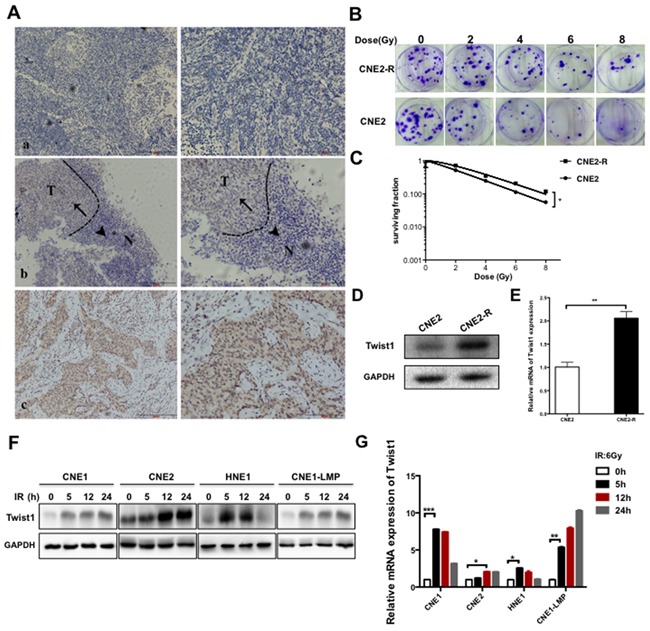
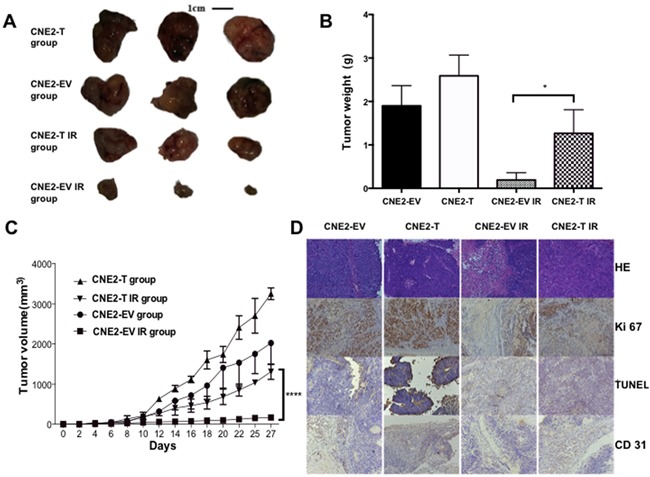
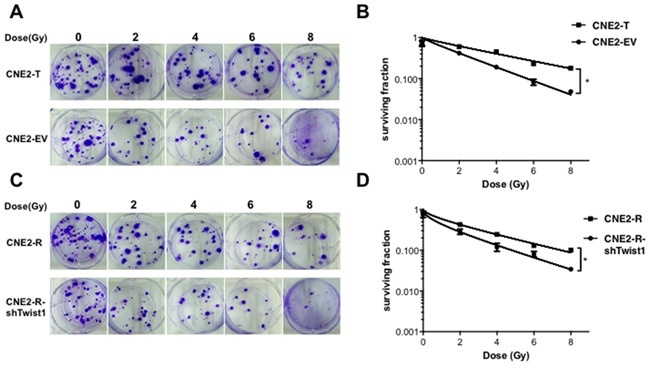
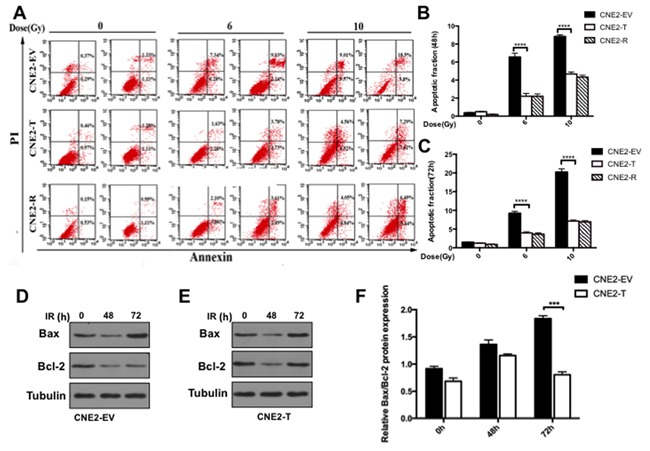
With the development of advanced imaging and radiation technologies, radiotherapy has been employed as the principal treatment approach for nasopharyngeal carcinoma (NPC). So far, a number of patients still suffer from the failure of this treatment due to the acquired radioresistance, but the underlying mechanisms are still poorly defined. In this study, we found that Twist1, participating in a variety of cell biological process, was associated with the malignancy of NPC and could induce NPC radioresistance in vitro and in vivo. Mechanically, Twist1 could promote the accumulation of DNA damage repair and inhibit the apoptosis of NPC cells. Therefore, our study not only elucidates the significant role of Twist1 in radioresistance of NPC, but also highlights Twist1 as a potential therapeutic target for NPC.
随着先进成像和放射技术的发展,放射治疗已被用作鼻咽癌(NPC)的主要治疗方法。到目前为止,由于获得性放射抗性,仍有许多患者遭受这种治疗失败,但潜在机制仍不清楚。在本研究中,我们发现参与多种细胞生物学过程的Twist1与NPC的恶性程度相关,并可在体外和体内诱导NPC放射抗性。从机制上讲,Twist1可以促进DNA损伤修复的积累并抑制NPC细胞的凋亡。因此,我们的研究不仅阐明了Twist1在NPC放射抗性中的重要作用,还突出了Twist1作为NPC潜在治疗靶点的地位。