Siena Emilio, D'Aurizio Romina, Riley David, Tettelin Hervé, Guidotti Silvia, Torricelli Giulia, Moxon E Richard, Medini Duccio
GSK Vaccines, 53100, Siena, Italy.
Present address: Institute of Informatics and Telematics and Institute of Clinical Physiology, National Research Council, 56124, Pisa, Italy.
BMC Genomics. 2016 Oct 28;17(1):843. doi: 10.1186/s12864-016-3185-1.
The Neisseria meningitidis (Nm) chromosome shows a high abundance of simple sequence DNA repeats (SSRs) that undergo stochastic, reversible mutations at high frequency. This mechanism is reflected in an extensive phenotypic diversity that facilitates Nm adaptation to dynamic environmental changes. To date, phase-variable phenotypes mediated by SSRs variation have been experimentally confirmed for 26 Nm genes.
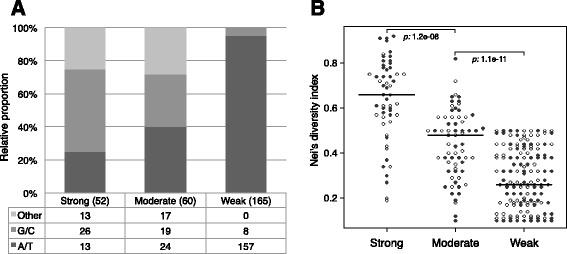
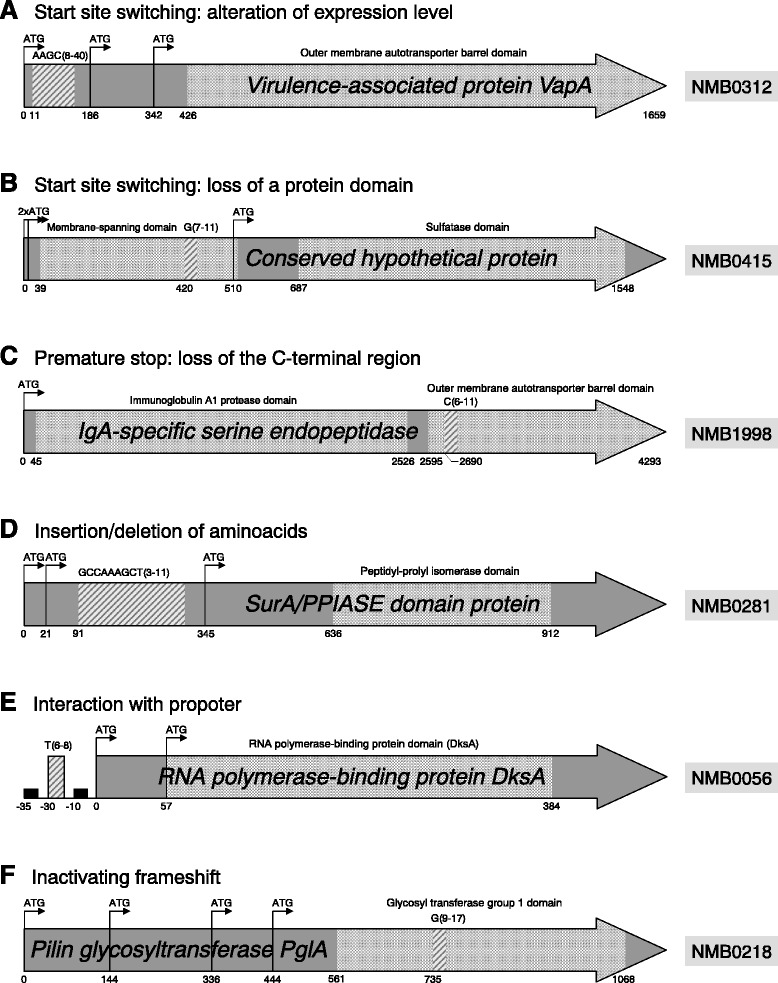
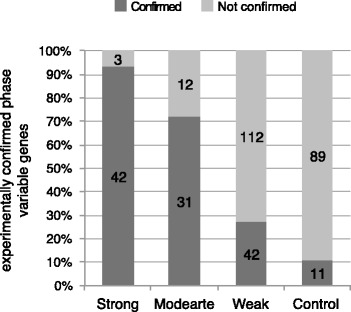
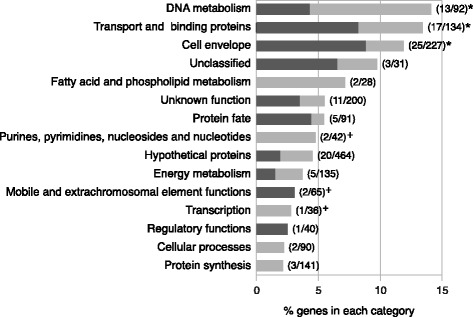
Here we present a population-scale comparative genomic analysis that identified 277 genes and classified them into 52 strong, 60 moderate and 165 weak candidates for phase variation. Deep-coverage DNA sequencing of single colonies grown overnight under non-selective conditions confirmed the presence of high-frequency, stochastic variation in 115 of them, providing circumstantial evidence for their phase variability. We confirmed previous observations of a predominance of variable SSRs within genes for components located on the cell surface or DNA metabolism. However, in addition we identified an unexpectedly broad spectrum of other metabolic functions, and most of the variable SSRs were predicted to induce phenotypic changes by modulating gene expression at a transcriptional level or by producing different protein isoforms rather than mediating on/off translational switching through frameshifts. Investigation of the evolutionary history of SSR contingency loci revealed that these loci were inherited from a Nm ancestor, evolved independently within Nm, or were acquired by Nm through lateral DNA exchange.
Overall, our results have identified a broader and qualitatively different phenotypic diversification of SSRs-mediated stochastic variation than previously documented, including its impact on central Nm metabolism.
脑膜炎奈瑟菌(Nm)染色体显示出大量简单序列DNA重复序列(SSRs),这些序列会以高频率发生随机、可逆突变。这种机制反映在广泛的表型多样性中,有助于Nm适应动态环境变化。迄今为止,由SSRs变异介导的相变表型已在26个Nm基因中得到实验证实。
在此,我们进行了一项群体规模的比较基因组分析,鉴定出277个基因,并将它们分为52个强、60个中等和165个弱相变候选基因。在非选择性条件下过夜培养的单菌落的深度覆盖DNA测序证实,其中115个基因存在高频随机变异,为它们的相变变异性提供了间接证据。我们证实了先前的观察结果,即位于细胞表面或DNA代谢相关成分的基因内可变SSRs占主导地位。然而,除此之外,我们还发现了一系列意想不到的其他代谢功能,并且大多数可变SSRs预计通过在转录水平调节基因表达或产生不同的蛋白质异构体来诱导表型变化,而不是通过移码介导开/关翻译转换。对SSRs应急位点进化历史的研究表明这些位点是从Nm祖先遗传而来,在Nm内部独立进化,或者是Nm通过横向DNA交换获得的。
总体而言,我们的结果确定了由SSRs介导的随机变异在表型上比以前记录的更为广泛且在性质上有所不同,包括其对Nm核心代谢的影响。