Mellbye Brett L, Giguere Andrew T, Bottomley Peter J, Sayavedra-Soto Luis A
Department of Botany and Plant Pathology, Oregon State University, Corvallis, Oregon, USA
Department of Crop and Soil Science, Oregon State University, Corvallis, Oregon, USA.
mBio. 2016 Oct 25;7(5):e01753-16. doi: 10.1128/mBio.01753-16.
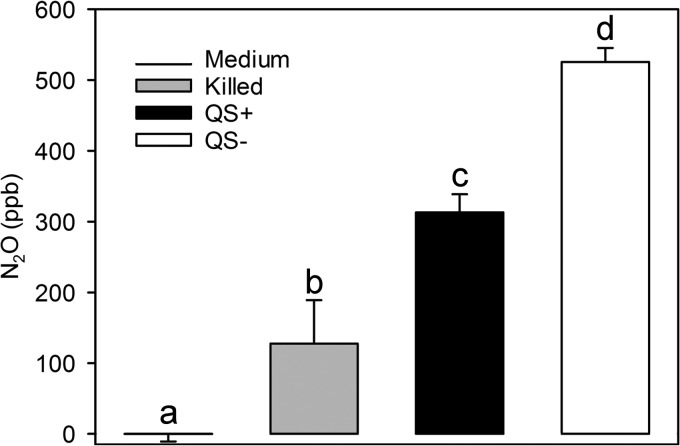
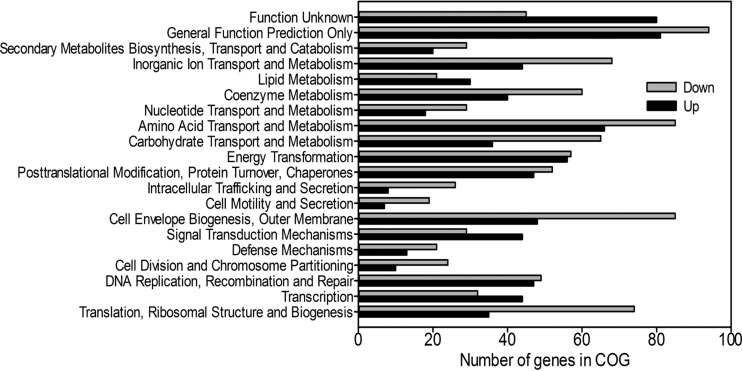
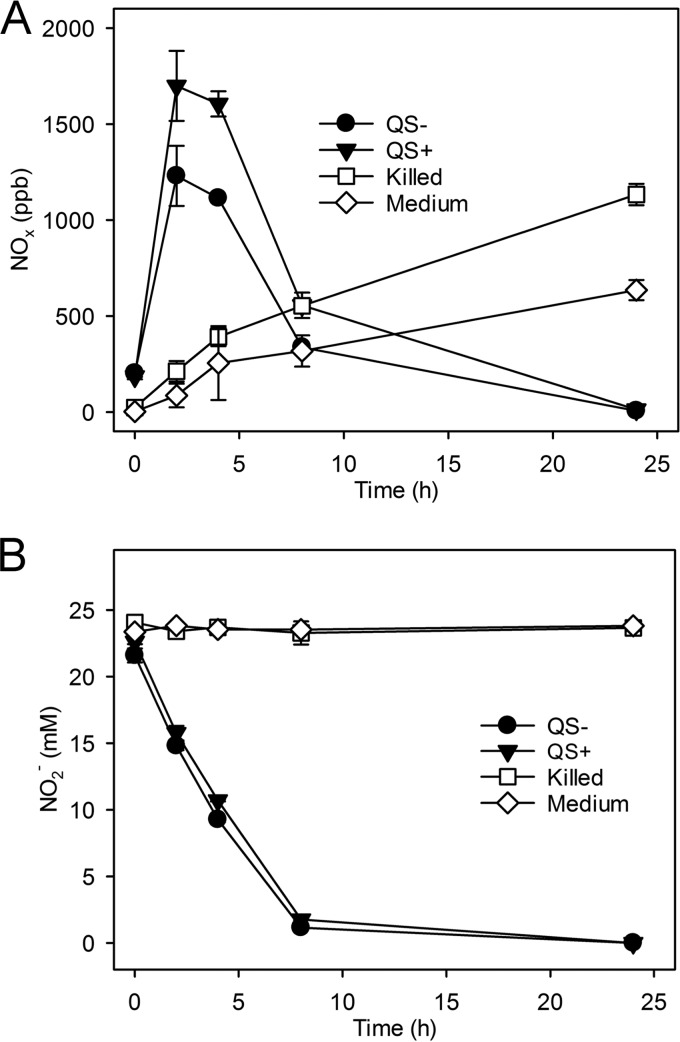
Quorum sensing (QS) is a widespread process in bacteria used to coordinate gene expression with cell density, diffusion dynamics, and spatial distribution through the production of diffusible chemical signals. To date, most studies on QS have focused on model bacteria that are amenable to genetic manipulation and capable of high growth rates, but many environmentally important bacteria have been overlooked. For example, representatives of proteobacteria that participate in nitrification, the aerobic oxidation of ammonia to nitrate via nitrite, produce QS signals called acyl-homoserine lactones (AHLs). Nitrification emits nitrogen oxide gases (NO, NO, and NO), which are potentially hazardous compounds that contribute to global warming. Despite considerable interest in nitrification, the purpose of QS in the physiology/ecology of nitrifying bacteria is poorly understood. Through a quorum quenching approach, we investigated the role of QS in a well-studied AHL-producing nitrite oxidizer, Nitrobacter winogradskyi We added a recombinant AiiA lactonase to N. winogradskyi cultures to degrade AHLs to prevent their accumulation and to induce a QS-negative phenotype and then used mRNA sequencing (mRNA-Seq) to identify putative QS-controlled genes. Our transcriptome analysis showed that expression of nirK and nirK cluster genes (ncgABC) increased up to 19.9-fold under QS-proficient conditions (minus active lactonase). These data led to us to query if QS influenced nitrogen oxide gas fluxes in N. winogradskyi Production and consumption of NO increased and production of NO decreased under QS-proficient conditions. Quorum quenching transcriptome approaches have broad potential to identify QS-controlled genes and phenotypes in organisms that are not genetically tractable.
Bacterial cell-cell signaling, or quorum sensing (QS), is a method of bacterial communication and gene regulation that is well studied in bacteria. However, little is known about the purpose of QS in many environmentally important bacteria. Here, we demonstrate quorum quenching coupled with mRNA-Seq to identify QS-controlled genes and phenotypes in Nitrobacter winogradskyi, a nitrite-oxidizing bacterium. Nitrite oxidizers play an important role in the nitrogen cycle though their participation in nitrification, the aerobic oxidation of ammonia to nitrate via nitrite. Our quorum quenching approach revealed that QS influences production and consumption of environmentally important nitrogen oxide gases (NO, NO, and NO) in N. winogradskyi This study demonstrated a novel technique for studying QS in difficult-to-work-with microorganisms and showed that nitrite oxidizers might also contribute to nitrification-dependent production of nitrogen oxide gases that contribute to global warming.
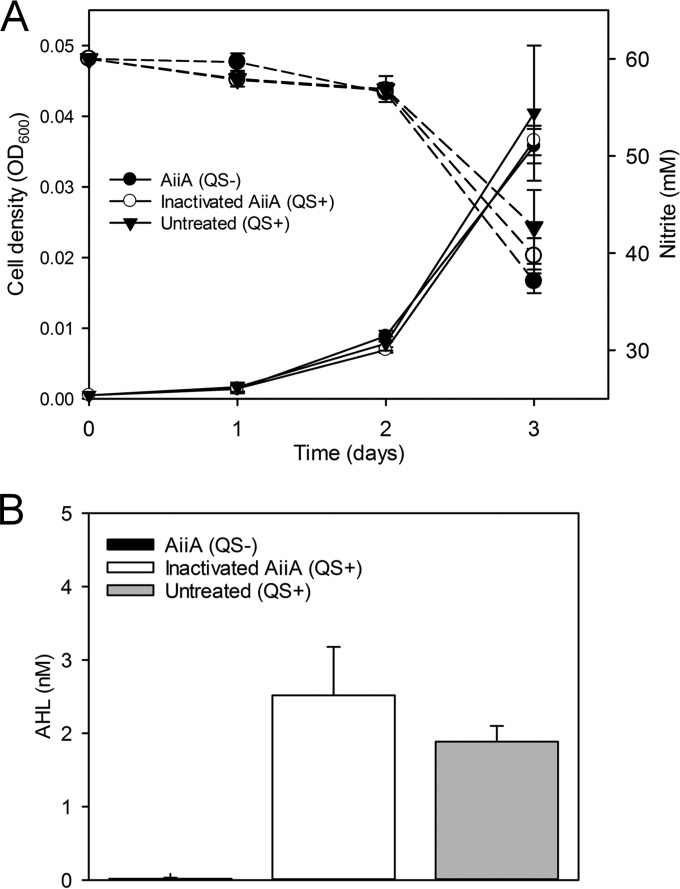
群体感应(QS)是细菌中一种广泛存在的过程,用于通过产生可扩散的化学信号来协调基因表达与细胞密度、扩散动力学和空间分布。迄今为止,大多数关于群体感应的研究都集中在易于进行基因操作且生长速度快的模式细菌上,但许多对环境重要的细菌被忽视了。例如,参与硝化作用(氨通过亚硝酸盐有氧氧化为硝酸盐)的变形菌门代表会产生称为酰基高丝氨酸内酯(AHLs)的群体感应信号。硝化作用会释放氮氧化物气体(NO、NO和NO),这些都是潜在的有害化合物,会导致全球变暖。尽管人们对硝化作用有相当大的兴趣,但群体感应在硝化细菌生理/生态中的作用仍知之甚少。通过群体猝灭方法,我们研究了群体感应在一种经过充分研究的产AHLs的亚硝酸盐氧化菌——维氏硝化杆菌中的作用。我们向维氏硝化杆菌培养物中添加重组AiiA内酯酶以降解AHLs,防止其积累并诱导群体感应阴性表型,然后使用mRNA测序(mRNA-Seq)来鉴定假定的群体感应控制基因。我们的转录组分析表明,在群体感应功能正常的条件下(减去活性内酯酶),nirK和nirK簇基因(ncgABC)的表达增加了19.9倍。这些数据促使我们质疑群体感应是否影响维氏硝化杆菌中氮氧化物气体通量。在群体感应功能正常的条件下,NO的产生和消耗增加,而NO的产生减少。群体猝灭转录组方法在鉴定难以进行基因操作的生物体中的群体感应控制基因和表型方面具有广泛的潜力。
细菌细胞间信号传导,即群体感应(QS),是一种在细菌中得到充分研究的细菌通讯和基因调控方法。然而,对于许多对环境重要的细菌中群体感应的目的知之甚少。在这里,我们展示了群体猝灭与mRNA-Seq相结合,以鉴定亚硝酸盐氧化菌维氏硝化杆菌中的群体感应控制基因和表型。亚硝酸盐氧化菌通过参与硝化作用(氨通过亚硝酸盐有氧氧化为硝酸盐)在氮循环中发挥重要作用。我们的群体猝灭方法表明,群体感应会影响维氏硝化杆菌中对环境重要的氮氧化物气体(NO、NO和NO)的产生和消耗。这项研究展示了一种研究难以处理的微生物中群体感应的新技术,并表明亚硝酸盐氧化菌可能也有助于依赖硝化作用产生导致全球变暖的氮氧化物气体。