Hori Hikaru, Ikenouchi-Sugita Atsuko, Yoshimura Reiji, Nakamura Jun
Department of Psychiatry, University of Occupational and Environmental Health Iseigaoka, Yahatanishi-ku, Kitakyushu, Japan.
BMJ Open. 2016 Oct 24;6(10):e011055. doi: 10.1136/bmjopen-2016-011055.
The purpose of this study was to evaluate the impact of a 4-week walking intervention on subjective sleep quality.
A prospective open-label study.
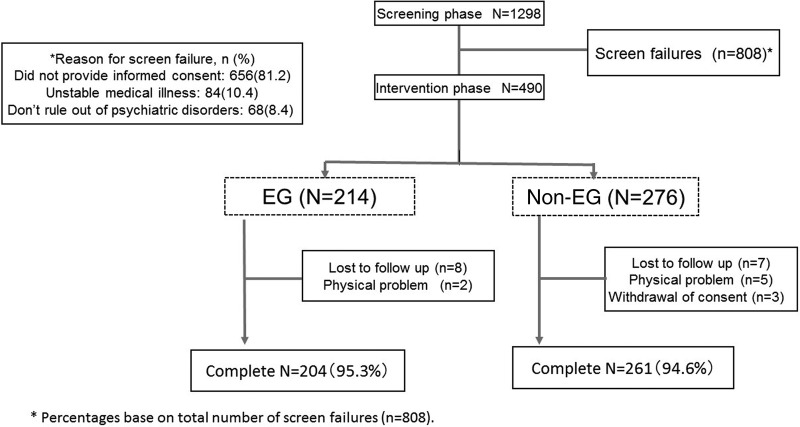
A total of 490 healthy workers were included in the study. The 490 participants were divided into a group of 214 participants with exercise habits (exercising group, EG) and a group of 276 participants without exercise habits (non-EG).
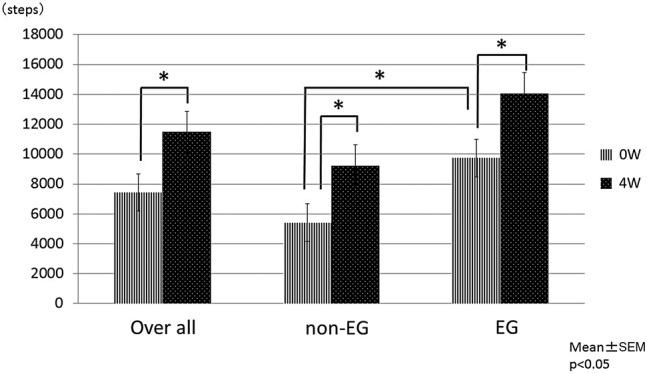
A walking intervention with a target of walking 10 000 steps daily for 4 weeks.
The Pittsburgh Sleep Quality Index (PSQI) questionnaire was administered twice (before the start and after the end of the study).
Overall, the walking intervention improved the participants' PSQI global score, sleep latency (minutes), sleep duration (hours), perceived sleep quality factor and daily disturbance factor. Among the EG participants, the walking intervention significantly improved the PSQI global score and perceived sleep quality. Among the non-EG participants, the walking intervention significantly improved the PSQI global score, sleep latency, sleep duration and perceived sleep quality.
A walking intervention might reduce the sleep latency and increase total sleep duration in working persons without exercise habits.
本研究旨在评估为期4周的步行干预对主观睡眠质量的影响。
一项前瞻性开放标签研究。
共有490名健康工作者纳入本研究。490名参与者被分为有运动习惯的214名参与者组(运动组,EG)和无运动习惯的276名参与者组(非运动组)。
进行一项步行干预,目标是连续4周每天步行10000步。
匹兹堡睡眠质量指数(PSQI)问卷在研究开始前和结束后各进行一次。
总体而言,步行干预改善了参与者的PSQI总分、入睡潜伏期(分钟)、睡眠时间(小时)、主观睡眠质量因子和日间干扰因子。在运动组参与者中,步行干预显著改善了PSQI总分和主观睡眠质量。在非运动组参与者中,步行干预显著改善了PSQI总分、入睡潜伏期、睡眠时间和主观睡眠质量。
步行干预可能会减少无运动习惯的工作人群的入睡潜伏期并增加总睡眠时间。