Bao Xiaoying, Zhu Xiaoxue, Chang Xiaofeng, Wang Shiping, Xu Burenbayin, Luo Caiyun, Zhang Zhenhua, Wang Qi, Rui Yichao, Cui Xiaoying
College of Life Sciences, University of the Chinese Academy of Sciences, Beijing 100049, China.
Key Laboratory of Adaptation and Evolution of Plateau Biota, Northwest Institute of Plateau Biology, Chinese Academy of Sciences, Xining 810008, China.
PLoS One. 2016 Oct 31;11(10):e0165212. doi: 10.1371/journal.pone.0165212. eCollection 2016.
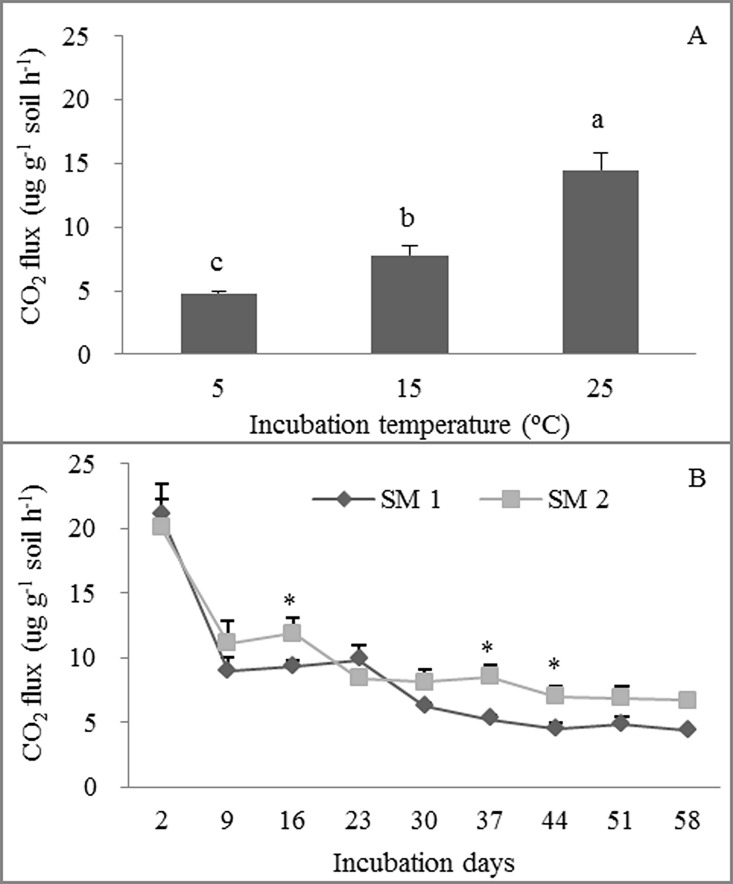
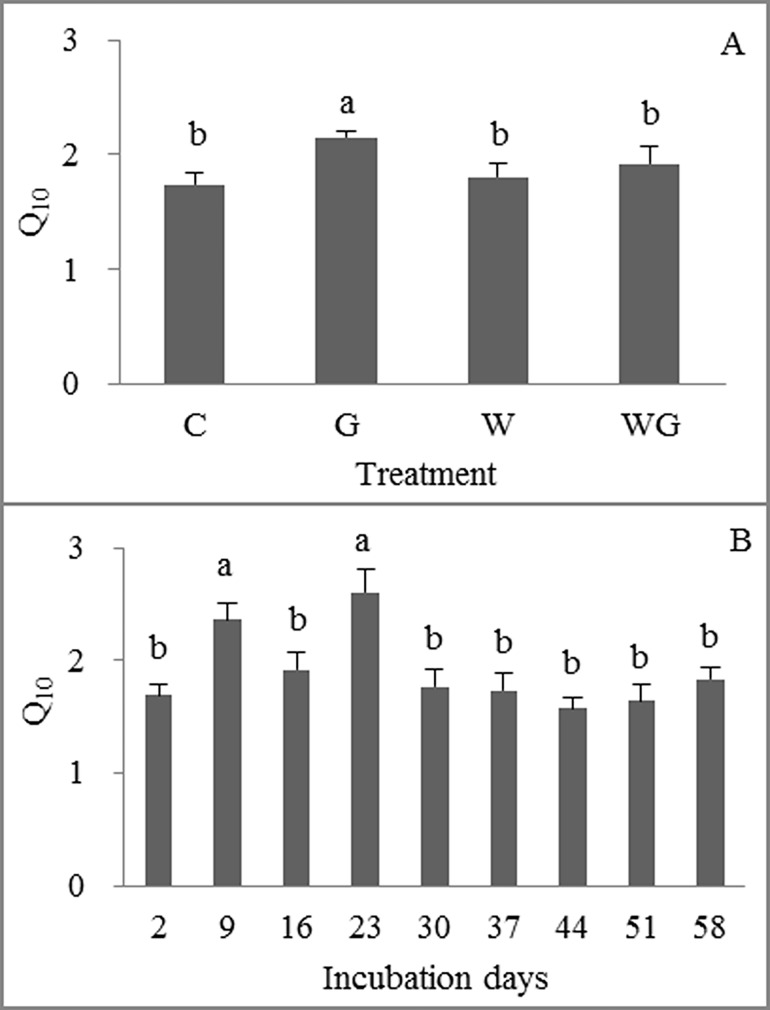
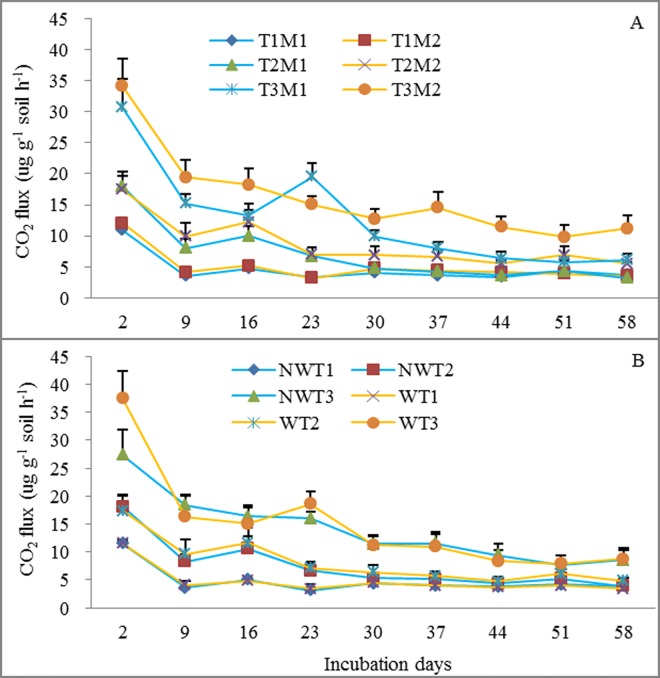
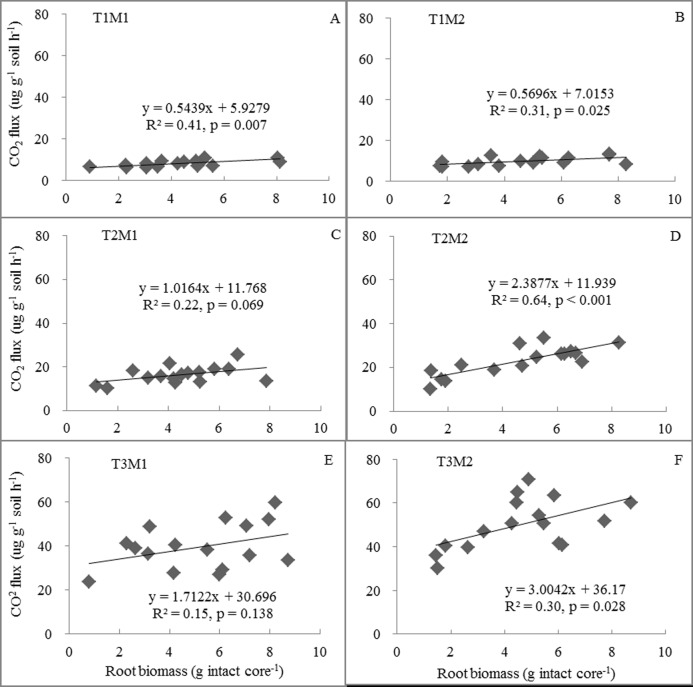
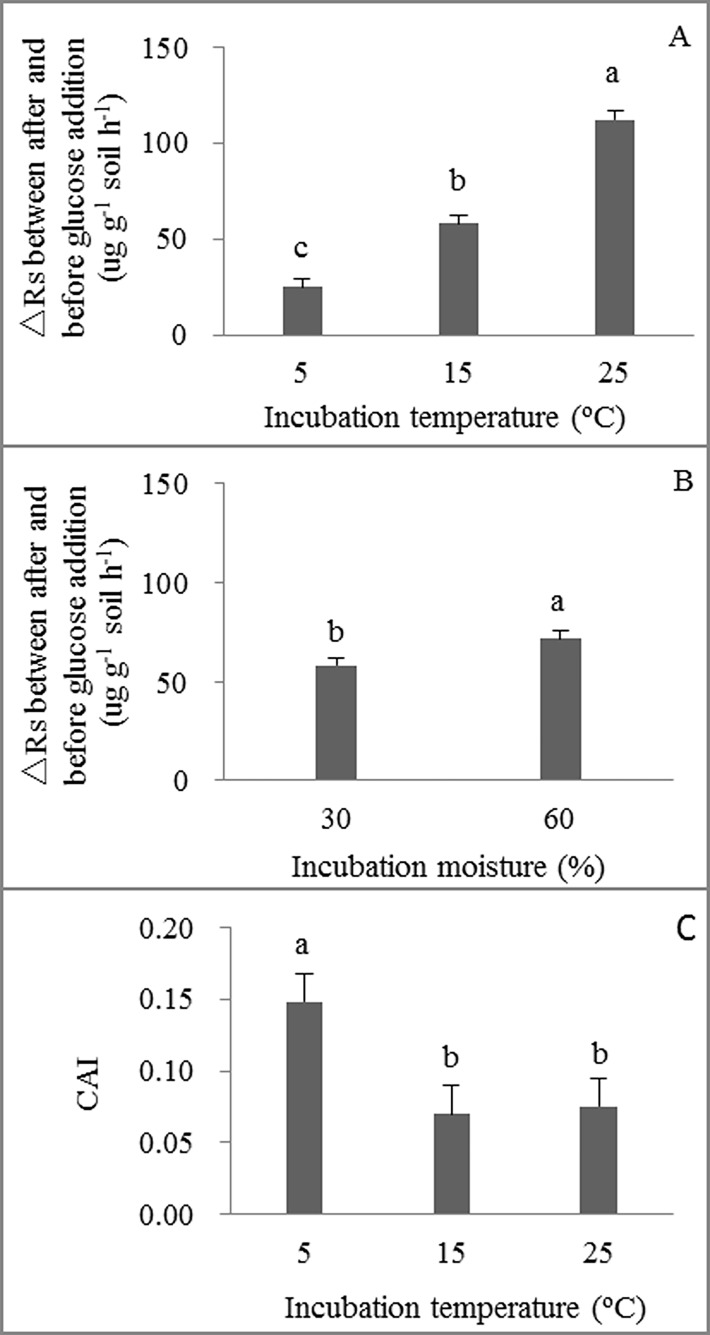
Understanding of effects of soil temperature and soil moisture on soil respiration (Rs) under future warming is critical to reduce uncertainty in predictions of feedbacks to atmospheric CO2 concentrations from grassland soil carbon. Intact cores with roots taken from a full factorial, 5-year alpine meadow warming and grazing experiment in the field were incubated at three different temperatures (i.e. 5, 15 and 25°C) with two soil moistures (i.e. 30 and 60% water holding capacity (WHC)) in our study. Another experiment of glucose-induced respiration (GIR) with 4 h of incubation was conducted to determine substrate limitation. Our results showed that high temperature increased Rs and low soil moisture limited the response of Rs to temperature only at high incubation temperature (i.e. 25°C). Temperature sensitivity (Q10) did not significantly decrease over the incubation period, suggesting that substrate depletion did not limit Rs. Meanwhile, the carbon availability index (CAI) was higher at 5°C compared with 15 and 25°C incubation, but GIR increased with increasing temperature. Therefore, our findings suggest that warming-induced decrease in Rs in the field over time may result from a decrease in soil moisture rather than from soil substrate depletion, because warming increased root biomass in the alpine meadow.
了解未来气候变暖下土壤温度和土壤湿度对土壤呼吸(Rs)的影响,对于减少草地土壤碳向大气二氧化碳浓度反馈预测中的不确定性至关重要。在我们的研究中,将从一项为期5年的野外全因子高山草甸变暖和放牧实验中采集的带根原状土芯,在三种不同温度(即5、15和25°C)和两种土壤湿度(即田间持水量的30%和60%)条件下进行培养。另外进行了一项为期4小时培养的葡萄糖诱导呼吸(GIR)实验,以确定底物限制情况。我们的结果表明,高温会增加Rs,而低土壤湿度仅在高培养温度(即25°C)下限制Rs对温度的响应。温度敏感性(Q10)在培养期间没有显著下降,这表明底物耗尽并未限制Rs。同时,与15和25°C培养相比,5°C时的碳有效性指数(CAI)更高,但GIR随温度升高而增加。因此,我们的研究结果表明,随着时间推移,野外变暖导致的Rs下降可能是由于土壤湿度降低而非土壤底物耗尽所致,因为变暖增加了高山草甸的根系生物量。