Conti Rossella, Assayag Osnath, de Sars Vincent, Guillon Marc, Emiliani Valentina
Wave Front Engineering Microscopy Group, Neurophotonics Laboratory, Centre National de la Recherche Scientifique, UMR 8250, University Paris Descartes Paris, France.
Front Cell Neurosci. 2016 Oct 17;10:236. doi: 10.3389/fncel.2016.00236. eCollection 2016.
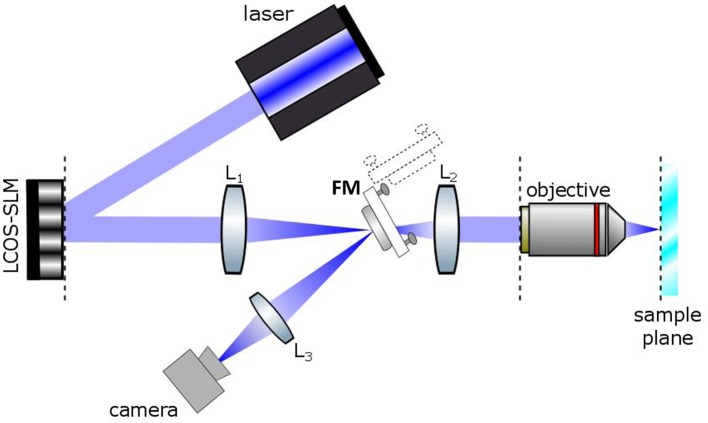
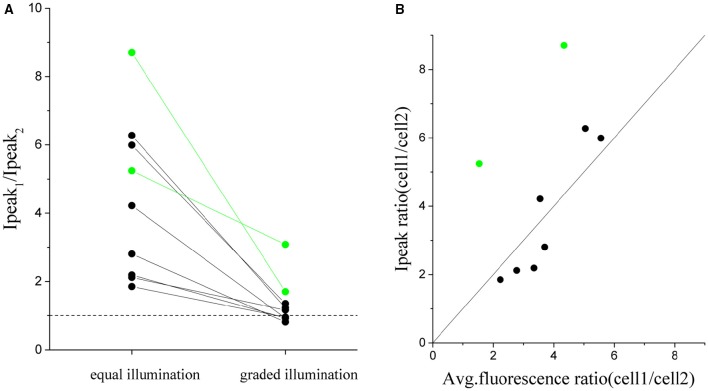
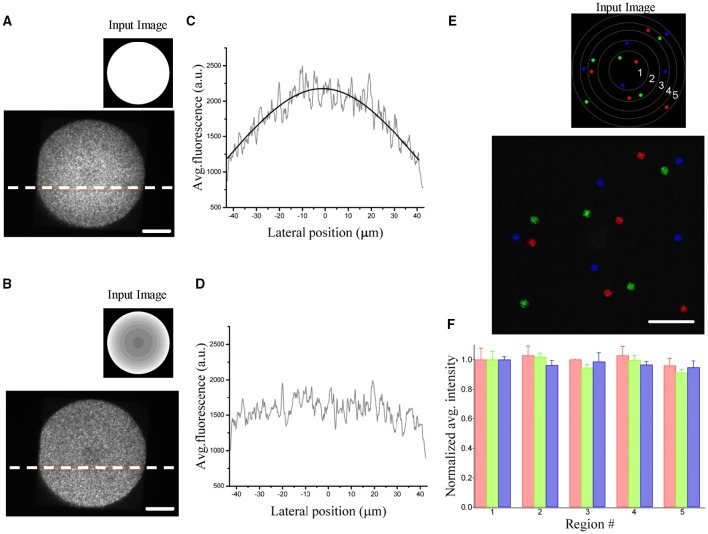
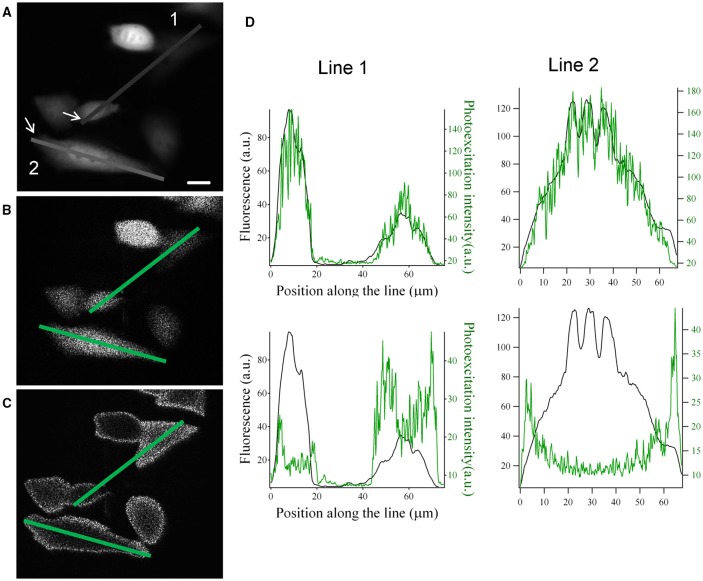
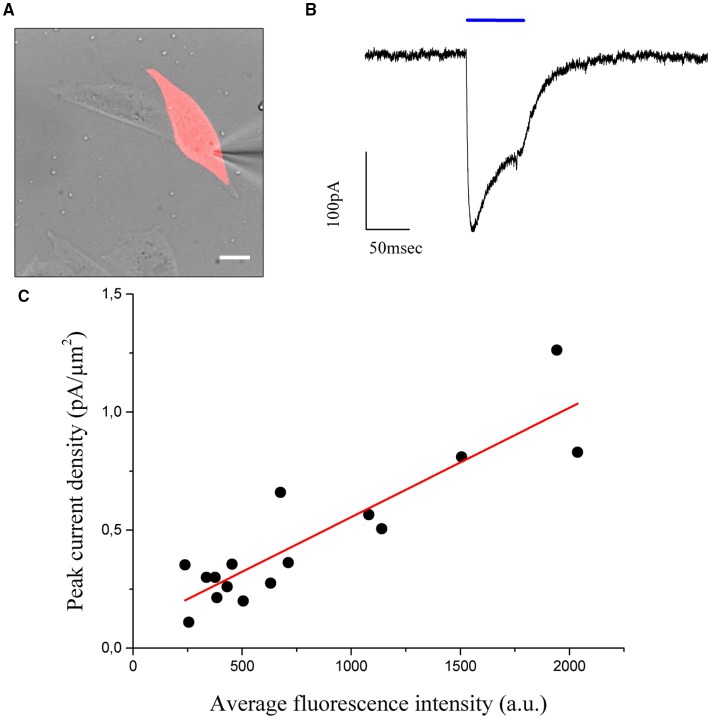
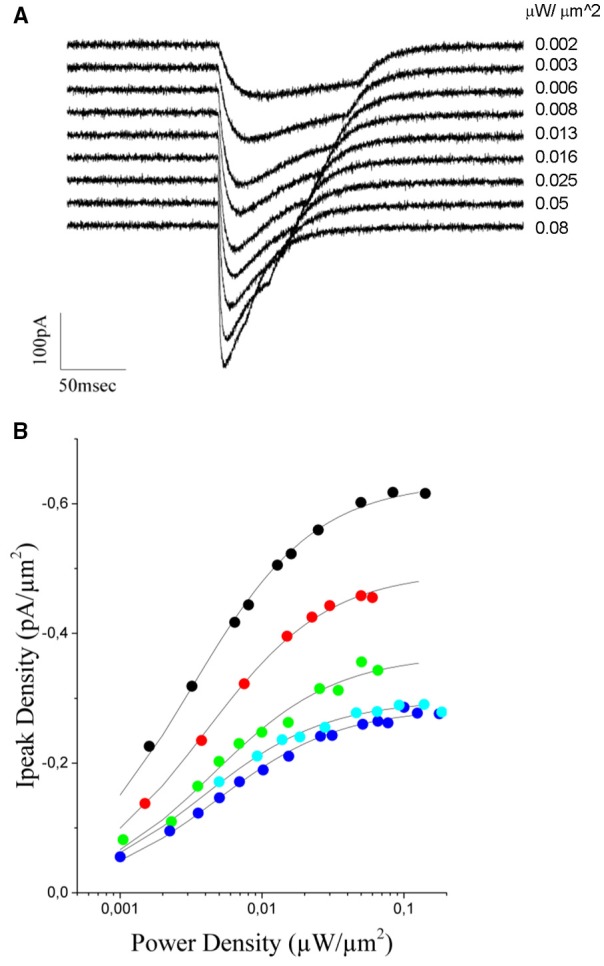
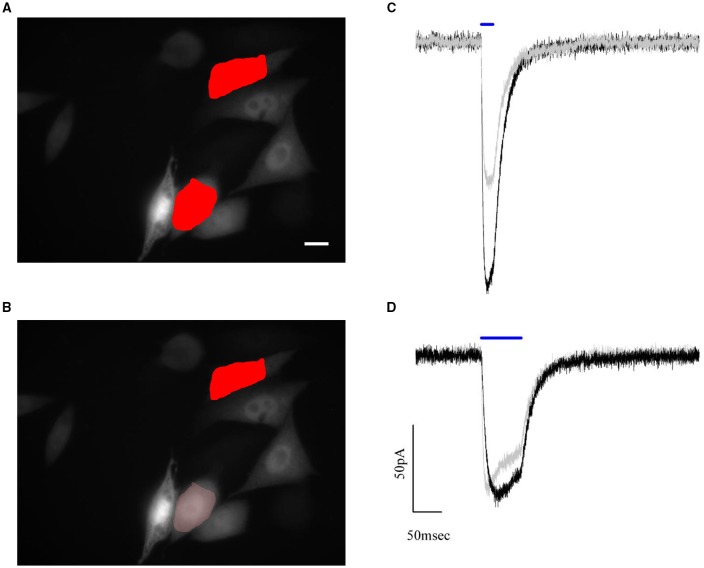
Computer Generated Holography achieves patterned illumination at the sample plane through phase modulation of the laser beam at the objective back aperture. This is obtained by using liquid crystal-based spatial light modulators (LC-SLMs), which modulate the spatial phase of the incident laser beam. A variety of algorithms is employed to calculate the phase modulation masks addressed to the LC-SLM. These algorithms range from simple gratings-and-lenses to generate multiple diffraction-limited spots, to iterative Fourier-transform algorithms capable of generating arbitrary illumination shapes perfectly tailored on the base of the target contour. Applications for holographic light patterning include multi-trap optical tweezers, patterned voltage imaging and optical control of neuronal excitation using uncaging or optogenetics. These past implementations of computer generated holography used binary input profile to generate binary light distribution at the sample plane. Here we demonstrate that using graded input sources, enables generating intensity graded light patterns and extend the range of application of holographic light illumination. At first, we use intensity-graded holograms to compensate for LC-SLM position dependent diffraction efficiency or sample fluorescence inhomogeneity. Finally we show that intensity-graded holography can be used to equalize photo evoked currents from cells expressing different levels of chanelrhodopsin2 (ChR2), one of the most commonly used optogenetics light gated channels, taking into account the non-linear dependence of channel opening on incident light.
计算机生成全息术通过在物镜后孔径处对激光束进行相位调制,在样品平面上实现图案化照明。这是通过使用基于液晶的空间光调制器(LC-SLM)来实现的,该调制器可调制入射激光束的空间相位。采用了多种算法来计算发送到LC-SLM的相位调制掩膜。这些算法范围从简单的光栅和透镜以生成多个衍射极限光斑,到能够基于目标轮廓完美定制生成任意照明形状的迭代傅里叶变换算法。全息光图案化的应用包括多阱光镊、图案化电压成像以及使用光解笼锁或光遗传学对神经元兴奋进行光学控制。计算机生成全息术过去的这些实现方式使用二进制输入轮廓在样品平面上生成二进制光分布。在此我们证明,使用渐变输入源能够生成强度渐变的光图案,并扩展全息光照明的应用范围。首先,我们使用强度渐变全息图来补偿与LC-SLM位置相关的衍射效率或样品荧光不均匀性。最后我们表明,考虑到通道开放对入射光的非线性依赖性,强度渐变全息术可用于均衡来自表达不同水平的通道视紫红质2(ChR2,最常用的光遗传学光门控通道之一)的细胞的光诱发电流。