Gerstner Jason R, Koberstein John N, Watson Adam J, Zapero Nikolai, Risso Davide, Speed Terence P, Frank Marcos G, Peixoto Lucia
Washington State University, Elson S. Floyd College of Medicine, Spokane, WA, 99202, USA.
Department of Neuroscience, Perelman School of Medicine University of Pennsylvania, Philadelphia, PA, 19104, USA.
BMC Genomics. 2016 Oct 25;17(Suppl 8):727. doi: 10.1186/s12864-016-3065-8.
Why we sleep is still one of the most perplexing mysteries in biology. Strong evidence indicates that sleep is necessary for normal brain function and that sleep need is a tightly regulated process. Surprisingly, molecular mechanisms that determine sleep need are incompletely described. Moreover, very little is known about transcriptional changes that specifically accompany the accumulation and discharge of sleep need. Several studies have characterized differential gene expression changes following sleep deprivation. Much less is known, however, about changes in gene expression during the compensatory response to sleep deprivation (i.e. recovery sleep).
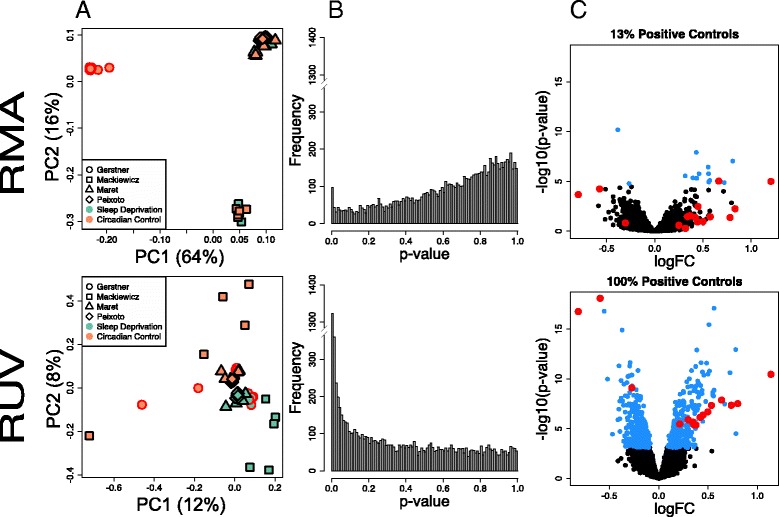
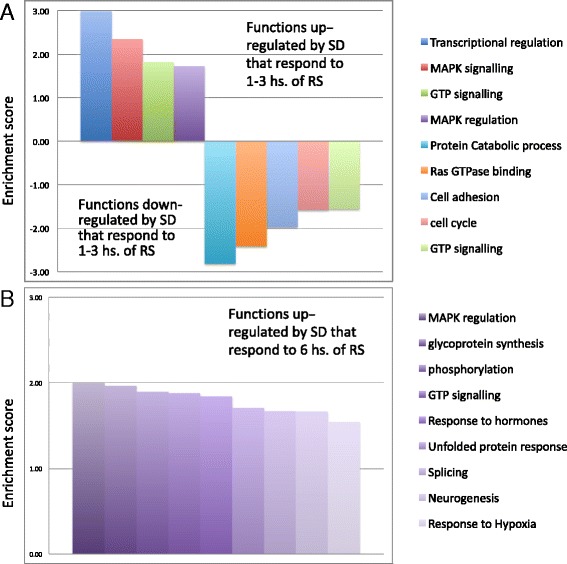
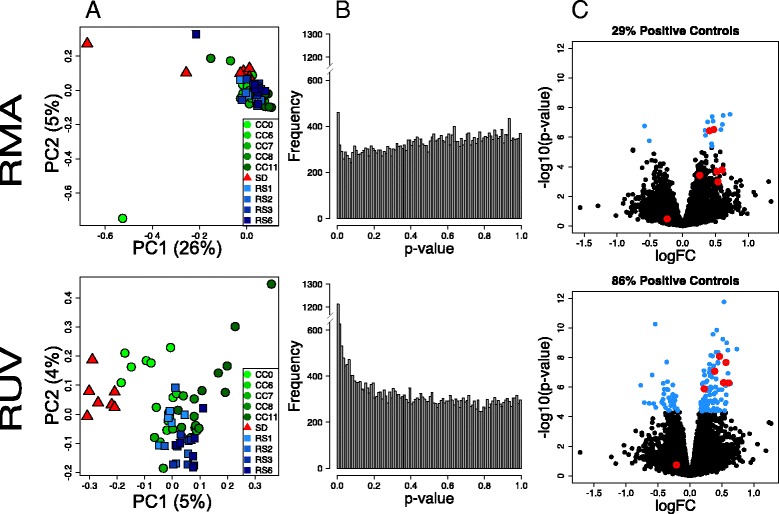
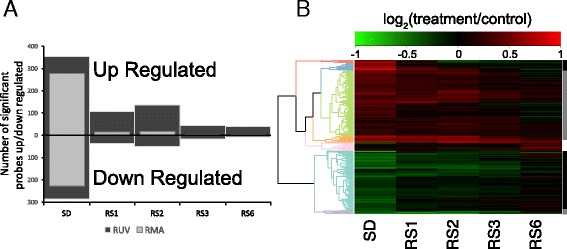
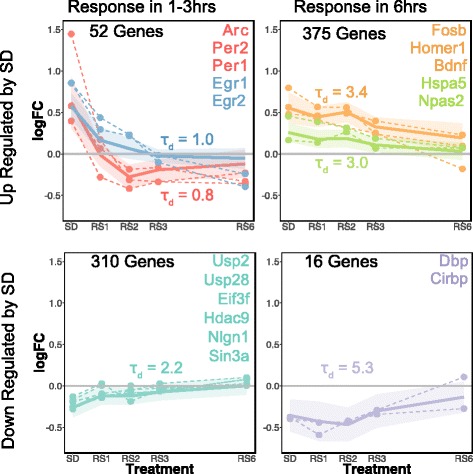
In this study we present a comprehensive analysis of the effects of sleep deprivation and subsequent recovery sleep on gene expression in the mouse cortex. We used a non-traditional analytical method for normalization of genome-wide gene expression data, Removal of Unwanted Variation (RUV). RUV improves detection of differential gene expression following sleep deprivation. We also show that RUV normalization is crucial to the discovery of differentially expressed genes associated with recovery sleep. Our analysis indicates that the majority of transcripts upregulated by sleep deprivation require 6 h of recovery sleep to return to baseline levels, while the majority of downregulated transcripts return to baseline levels within 1-3 h. We also find that transcripts that change rapidly during recovery (i.e. within 3 h) do so on average with a time constant that is similar to the time constant for the discharge of sleep need.
We demonstrate that proper data normalization is essential to identify changes in gene expression that are specifically linked to sleep deprivation and recovery sleep. Our results provide the first evidence that recovery sleep is comprised of two waves of transcriptional regulation that occur at different times and affect functionally distinct classes of genes.
睡眠的原因仍是生物学中最令人困惑的谜团之一。有力证据表明,睡眠对于正常脑功能是必需的,且睡眠需求是一个受到严格调控的过程。令人惊讶的是,决定睡眠需求的分子机制尚未完全阐明。此外,对于伴随睡眠需求积累和释放而发生的转录变化,人们所知甚少。多项研究已对睡眠剥夺后的差异基因表达变化进行了特征描述。然而,对于睡眠剥夺补偿反应(即恢复性睡眠)期间的基因表达变化,人们了解得更少。
在本研究中,我们对睡眠剥夺及随后的恢复性睡眠对小鼠皮质基因表达的影响进行了全面分析。我们使用了一种非传统的分析方法——去除不必要变异(RUV)来对全基因组基因表达数据进行标准化。RUV提高了对睡眠剥夺后差异基因表达的检测能力。我们还表明,RUV标准化对于发现与恢复性睡眠相关的差异表达基因至关重要。我们的分析表明,大多数因睡眠剥夺而上调的转录本需要6小时的恢复性睡眠才能恢复到基线水平,而大多数下调的转录本在1 - 3小时内恢复到基线水平。我们还发现,在恢复过程中(即3小时内)快速变化的转录本,其平均变化时间常数与睡眠需求释放的时间常数相似。
我们证明,适当的数据标准化对于识别与睡眠剥夺和恢复性睡眠特异性相关的基因表达变化至关重要。我们的结果首次证明,恢复性睡眠由两波转录调控组成,这两波调控发生在不同时间,并影响功能上不同类别的基因。