Goyal Saumitra, Radi Mohamed Abdel, Ramadan Islam Karam-Allah, Said Hatem Galal
Orthopaedics Department, Faculty of Medicine, Assiut University Hospital, Assiut 71515, Egypt - G.G. Medical Institute and Research Centre, 106/2 Sanjay Place, Agra 282004, India.
Arthroscopy & Sports Injuries Unit, Orthopaedics Department, Faculty of Medicine, Assiut University, Assiut 71515, Egypt.
SICOT J. 2016;2:37. doi: 10.1051/sicotj/2016024. Epub 2016 Nov 1.
Arthroscopic skills training outside the operative room may decrease risks and errors by trainee surgeons. There is a need of simple objective method for evaluating proficiency and skill of arthroscopy trainees using simple bench model of arthroscopic simulator. The aim of this study is to correlate motor task performance to level of prior arthroscopic experience and establish benchmarks for training modules.
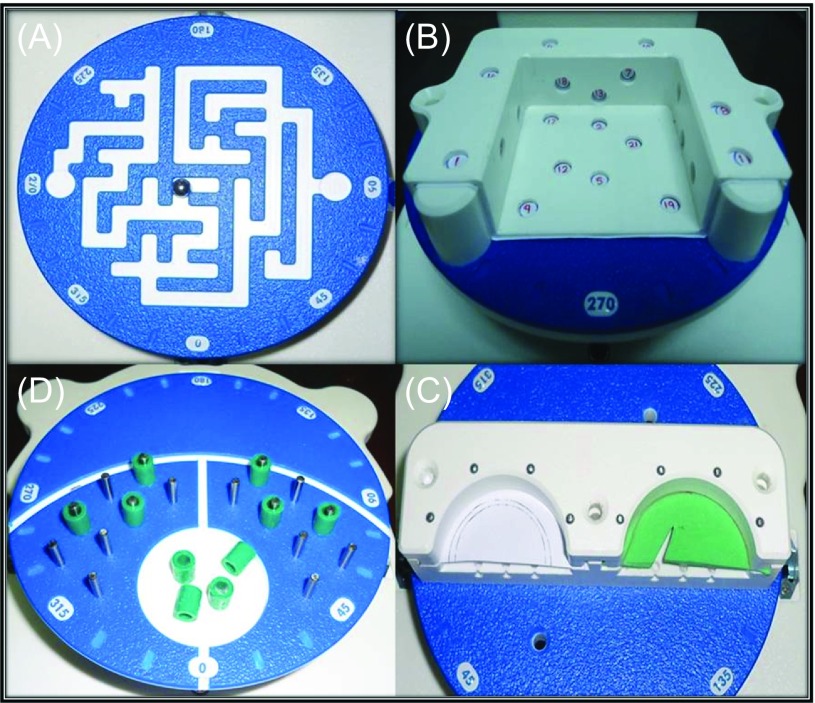
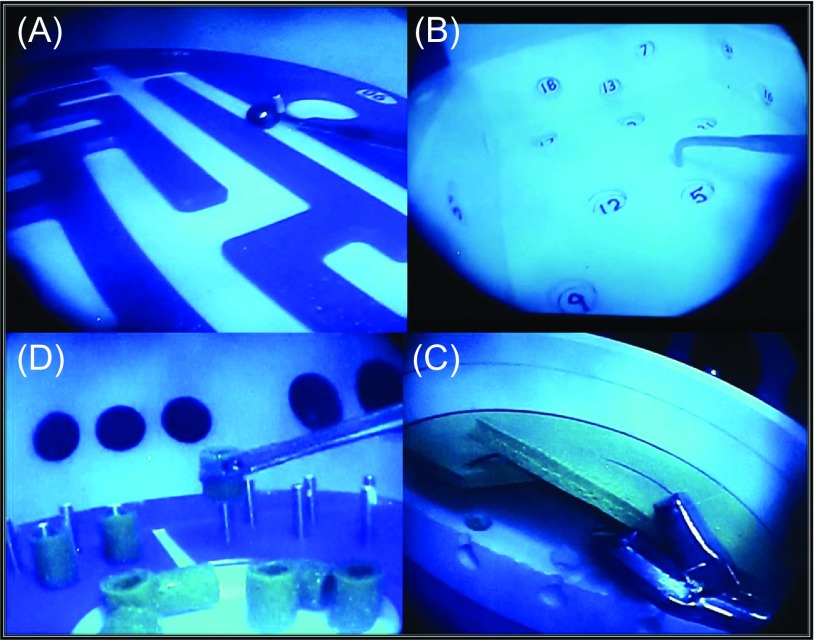
Twenty orthopaedic surgeons performed a set of tasks to assess a) arthroscopic triangulation, b) navigation, c) object handling and d) meniscus trimming using SAWBONES "FAST" arthroscopy skills workstation. Time to completion and the errors were computed. The subjects were divided into four levels; "Novice", "Beginner", "Intermediate" and "Advanced" based on previous arthroscopy experience, for analyses of performance.
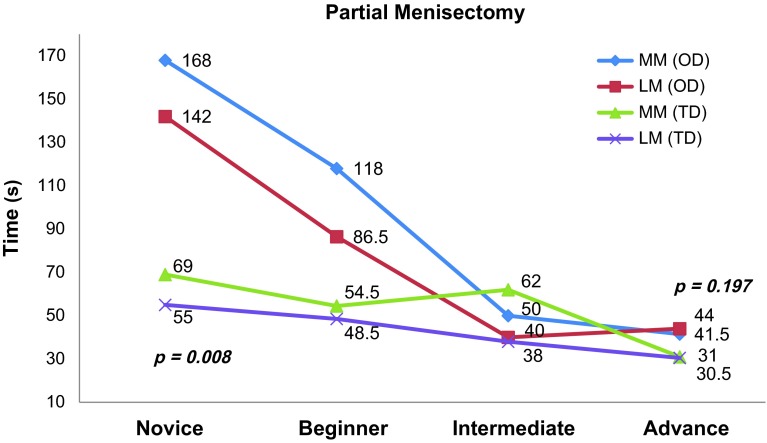
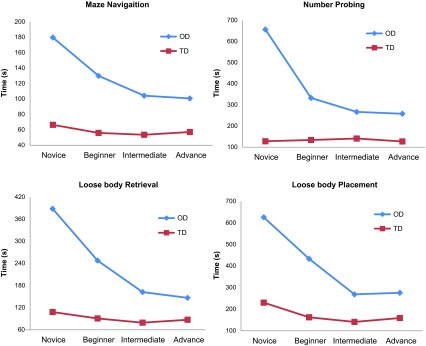
The task performance under transparent dome was not related to experience of the surgeon unlike opaque dome, highlighting the importance of hand-eye co-ordination required in arthroscopy. Median time to completion for each task improved as the level of experience increased and this was found to be statistically significant (p < .05) e.g. time for maze navigation (Novice - 166 s, Beginner - 135.5 s, Intermediate - 100 s, Advance - 97.5 s) and the similar results for all tasks. Majority (>85%) of subjects across all the levels reported improvement in performance with sequential tasks.
Use of the arthroscope requires visuo-spatial coordination which is a skill that develops with practice. This simple box model can reliably differentiate the arthroscopic skills based on experience and can be used to monitor progression of skills of trainees in institutions.
在手术室之外进行关节镜技能培训可能会降低实习外科医生的风险和失误。需要一种简单的客观方法,使用关节镜模拟器的简易实验台模型来评估关节镜实习生的熟练程度和技能。本研究的目的是将运动任务表现与先前的关节镜经验水平相关联,并为培训模块建立基准。
20名骨科医生使用SAWBONES“FAST”关节镜技能工作站执行一组任务,以评估a)关节镜三角定位、b)导航、c)物体操作和d)半月板修整。计算完成时间和失误情况。根据先前的关节镜经验,将受试者分为四个级别;“新手”、“初学者”、“中级”和“高级”,以分析表现。
与不透明穹顶不同,在透明穹顶下的任务表现与外科医生的经验无关,这突出了关节镜检查中手眼协调的重要性。随着经验水平的提高,每个任务的中位完成时间有所改善,并且发现这具有统计学意义(p <.05),例如迷宫导航时间(新手 - 166秒,初学者 - 135.5秒,中级 - 100秒,高级 - 97.5秒),所有任务均有类似结果。所有级别中的大多数受试者(> 85%)报告随着连续任务表现有所改善。
关节镜的使用需要视觉空间协调能力,这是一种通过练习而发展的技能。这种简单的实验台模型可以根据经验可靠地区分关节镜技能,并可用于监测机构中实习生技能的进展情况。