Krokhotin Andrey, Mustoe Anthony M, Weeks Kevin M, Dokholyan Nikolay V
Department of Biochemistry and Biophysics, University of North Carolina at Chapel Hill, Chapel Hill, North Carolina 27599, USA.
Department of Chemistry, University of North Carolina at Chapel Hill, Chapel Hill, North Carolina 27599, USA.
RNA. 2017 Jan;23(1):6-13. doi: 10.1261/rna.058586.116. Epub 2016 Nov 1.
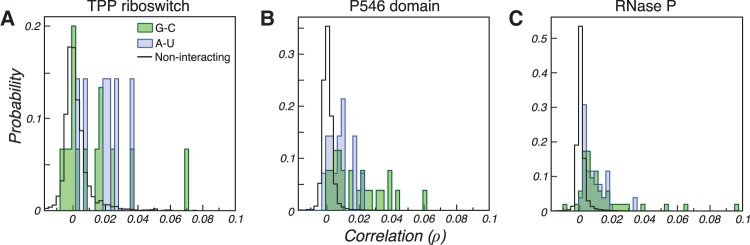
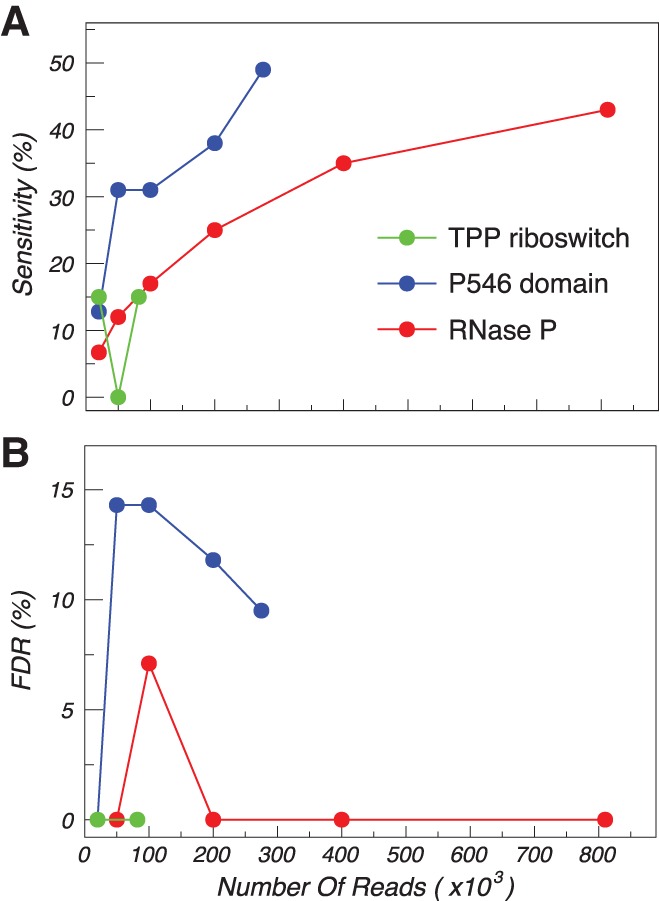
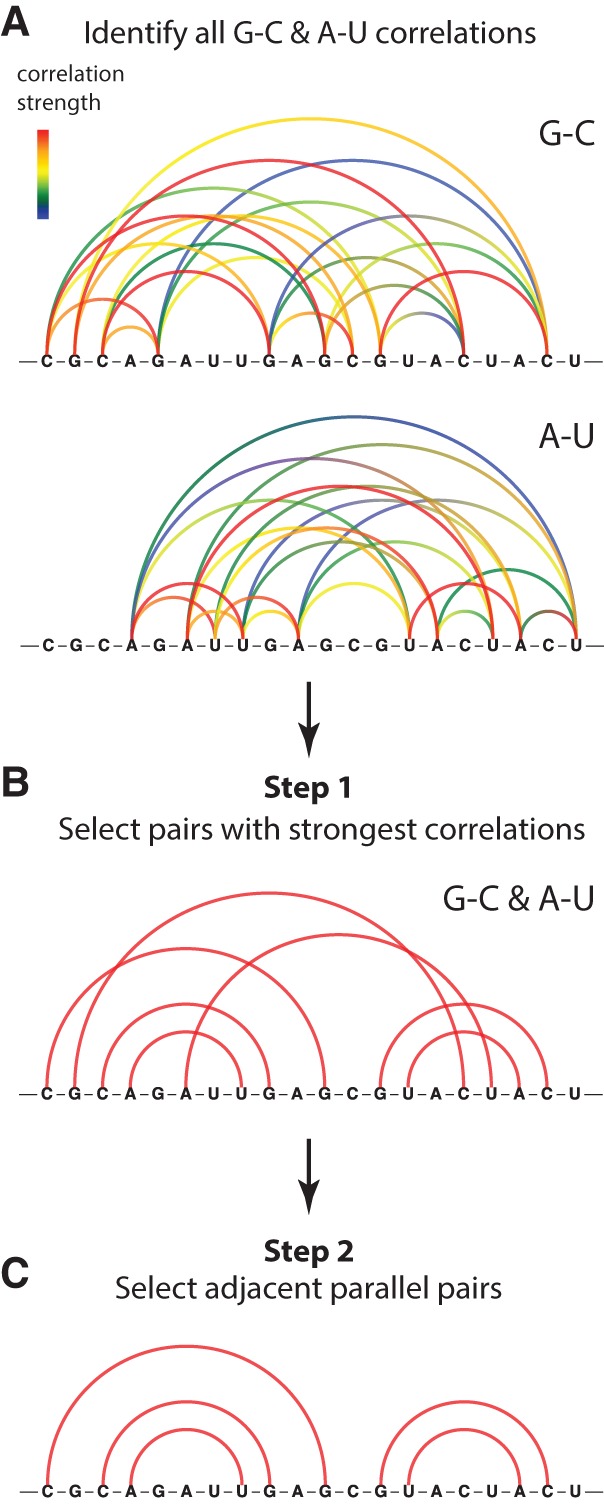
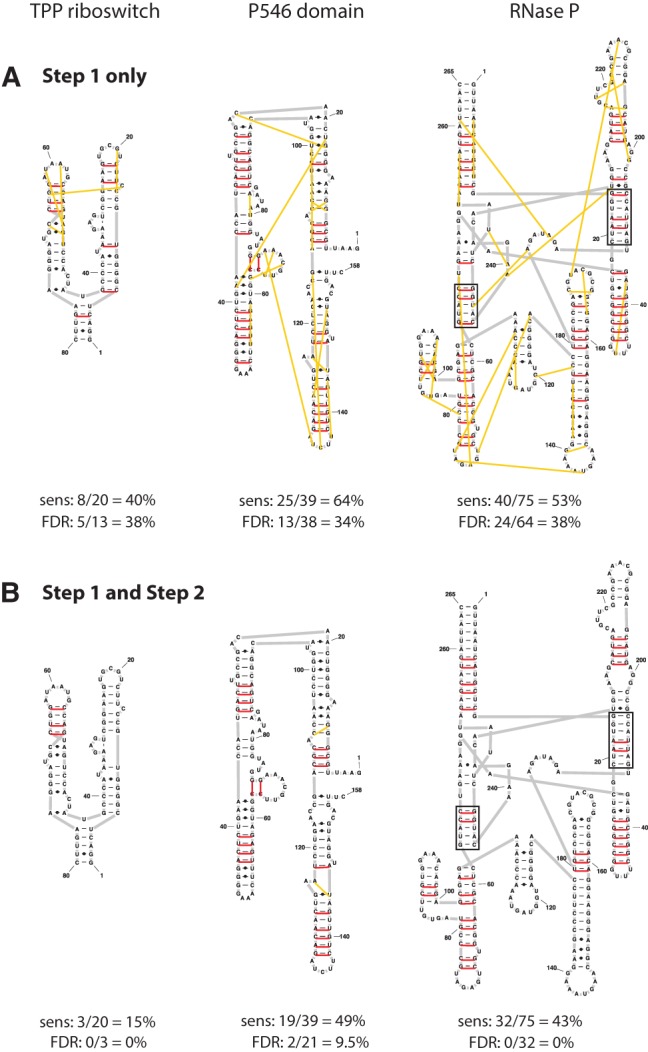
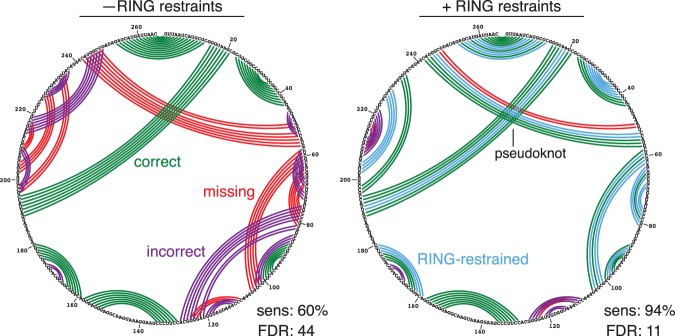
Many RNA molecules fold into complex secondary and tertiary structures that play critical roles in biological function. Among the best-established methods for examining RNA structure are chemical probing experiments, which can report on local nucleotide structure in a concise and extensible manner. While probing data are highly useful for inferring overall RNA secondary structure, these data do not directly measure through-space base-pairing interactions. We recently introduced an approach for single-molecule correlated chemical probing with dimethyl sulfate (DMS) that measures RNA interaction groups by mutational profiling (RING-MaP). RING-MaP experiments reveal diverse through-space interactions corresponding to both secondary and tertiary structure. Here we develop a framework for using RING-MaP data to directly and robustly identify canonical base pairs in RNA. When applied to three representative RNAs, this framework identified 20%-50% of accepted base pairs with a <10% false discovery rate, allowing detection of 88% of duplexes containing four or more base pairs, including pseudoknotted pairs. We further show that base pairs determined from RING-MaP analysis significantly improve secondary structure modeling. RING-MaP-based correlated chemical probing represents a direct, experimentally concise, and accurate approach for detection of individual base pairs and helices and should greatly facilitate structure modeling for complex RNAs.
许多RNA分子折叠成复杂的二级和三级结构,这些结构在生物学功能中发挥着关键作用。在检测RNA结构的最成熟方法中,化学探测实验能够以简洁且可扩展的方式报告局部核苷酸结构。虽然探测数据对于推断RNA整体二级结构非常有用,但这些数据并不能直接测量空间碱基配对相互作用。我们最近引入了一种用硫酸二甲酯(DMS)进行单分子相关化学探测的方法,即通过突变谱分析来测量RNA相互作用基团(RING-MaP)。RING-MaP实验揭示了与二级和三级结构相对应的多种空间相互作用。在此,我们开发了一个利用RING-MaP数据直接且可靠地识别RNA中典型碱基对的框架。当应用于三个代表性RNA时,该框架识别出了20% - 50%已被认可的碱基对,错误发现率小于10%,能够检测出88%包含四个或更多碱基对的双链体,包括假结配对。我们进一步表明,通过RING-MaP分析确定的碱基对显著改善了二级结构建模。基于RING-MaP的相关化学探测代表了一种直接、实验简洁且准确的检测单个碱基对和螺旋的方法,应该会极大地促进复杂RNA的结构建模。