Institute of Infection, Immunity and Inflammation, University of Glasgow, UK.
Sci Rep. 2016 Nov 2;6:35838. doi: 10.1038/srep35838.
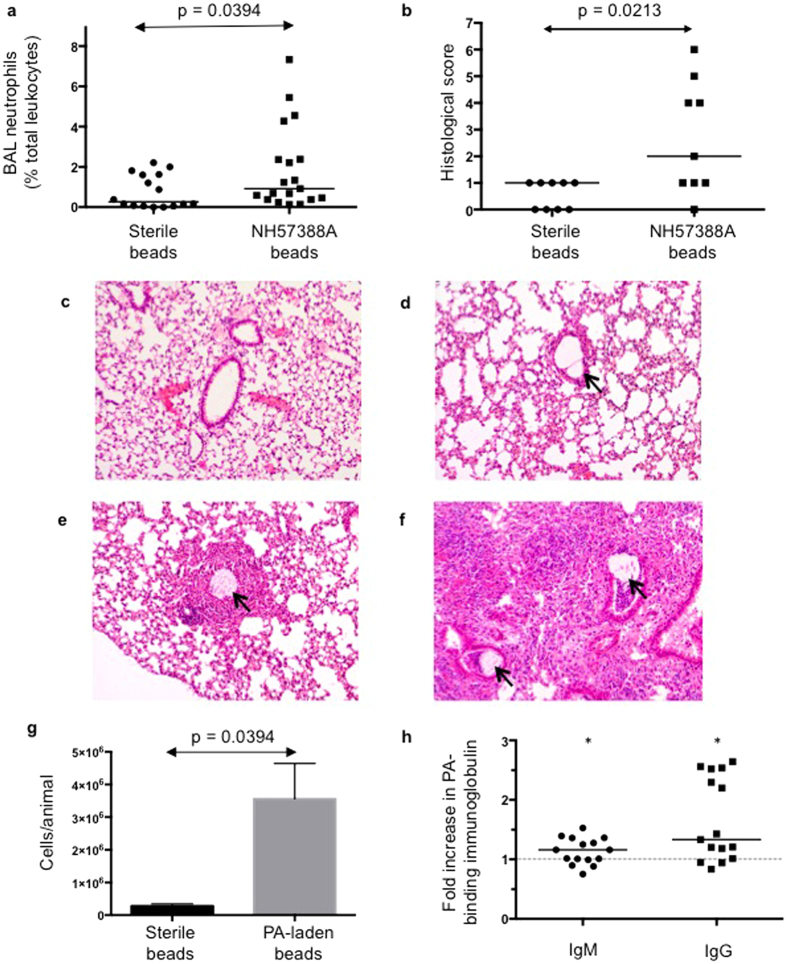
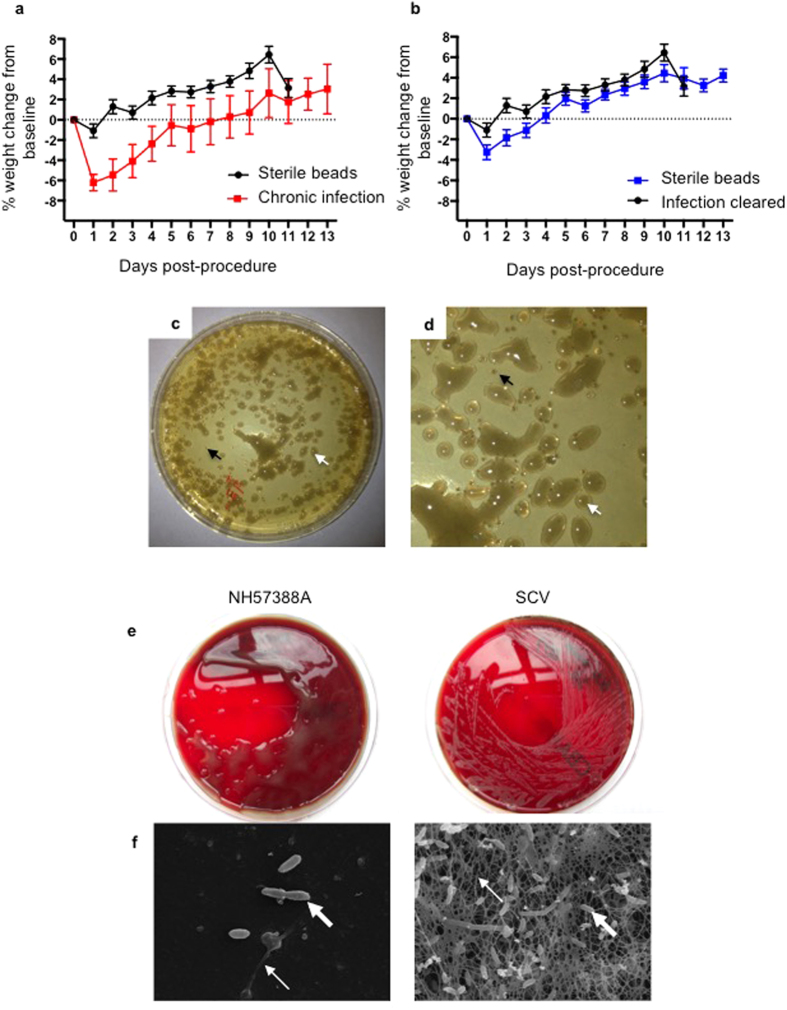
Pseudomonas aeruginosa (PA) remains an important pathogen in patients with cystic fibrosis (CF) lung disease as well as non-CF bronchiectasis and chronic obstructive airways disease. Initial infections are cleared but chronic infection with mucoid strains ensues in the majority of CF patients and specific interventions to prevent this critical infection transition are lacking. The PA bead model has been widely used to study pulmonary P.aeruginosa infection but has limitations in animal husbandry and in accurately mimicking human disease. We have developed an adapted agar bead murine model using a clinical mucoid strain that demonstrates the key features of transition from transitory to chronic airways infection. Infected animals show very limited acute morbidity and mortality, but undergo infection-related weight loss and neutrophilic inflammation, development of anti-pseudomonal antibodies, variable bacterial clearance, endobronchial infection and microbial adaptation with PA small colony variants. We anticipate this model will allow research into the host and microbial factors governing this critical period in Pseudomonas aeruginosa pulmonary pathogenesis when transition to chronicity is occurring.
铜绿假单胞菌(PA)仍然是囊性纤维化(CF)肺部疾病以及非 CF 支气管扩张和慢性阻塞性气道疾病患者的重要病原体。初始感染可被清除,但大多数 CF 患者会随之发生粘液菌株的慢性感染,而缺乏预防这种关键感染转变的具体干预措施。PA 珠模型已广泛用于研究肺部铜绿假单胞菌感染,但在动物饲养和准确模拟人类疾病方面存在局限性。我们使用临床粘液菌株开发了一种改良的琼脂珠小鼠模型,该模型显示了从短暂性到慢性气道感染转变的关键特征。感染动物的急性发病率和死亡率非常有限,但会发生与感染相关的体重减轻和中性粒细胞炎症、抗假单胞菌抗体的产生、细菌清除的变化、支气管内感染以及 PA 小菌落变体的微生物适应性。我们预计该模型将允许研究宿主和微生物因素,这些因素在铜绿假单胞菌肺部发病机制向慢性期转变时会影响这一关键时期。