Lee Jae-Hye, Cho Hyun-Soo, Lee Jeong-Ju, Jun Soo Young, Ahn Jun-Ho, Min Ju-Sik, Yoon Ji-Yong, Choi Min-Hyuk, Jeon Su-Jin, Lim Jung Hwa, Jung Cho-Rok, Kim Dae-Soo, Kim Hyun-Taek, Factor Valentina M, Lee Yun-Han, Thorgeirsson Snorri S, Kim Cheol-Hee, Kim Nam-Soon
Genome Research Center, Korea Research Institute of Bioscience and Biotechnology, Daejeon 305-333, Republic of Korea.
Department of Functional Genomics, Korea University of Science and Technology, Daejeon 305-333, Republic of Korea.
Oncotarget. 2016 Nov 29;7(48):79774-79786. doi: 10.18632/oncotarget.12967.
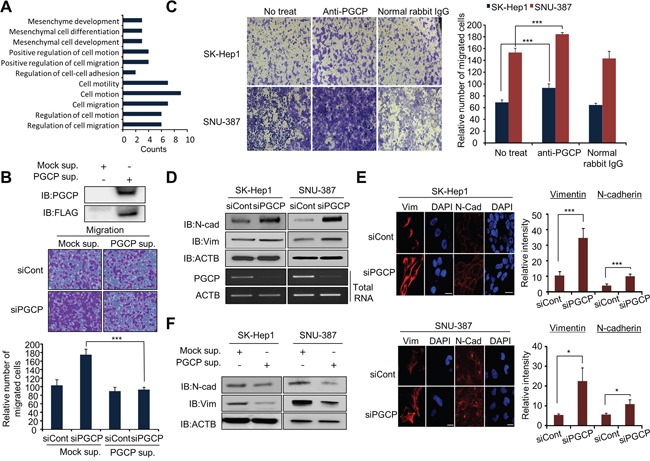
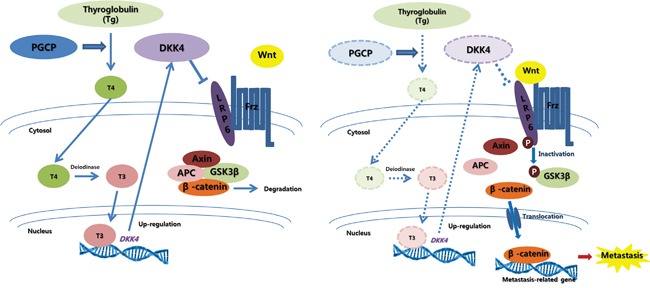
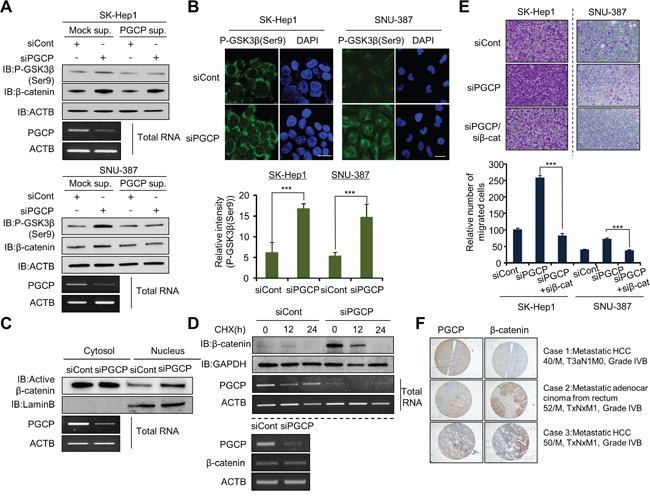
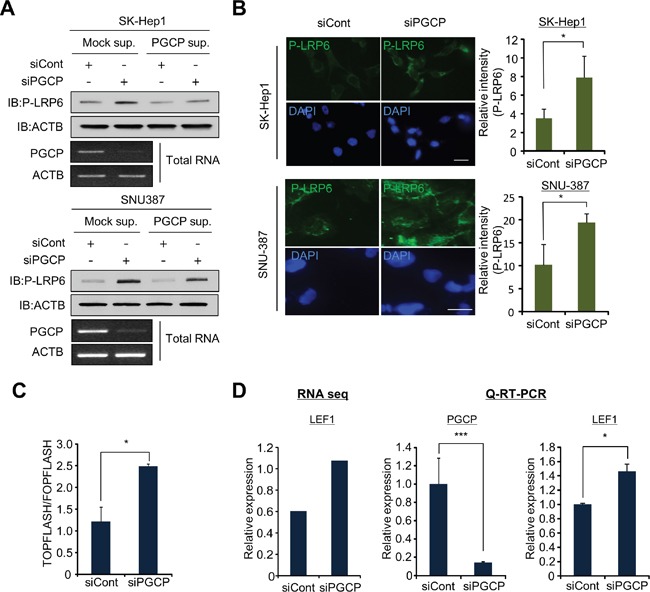
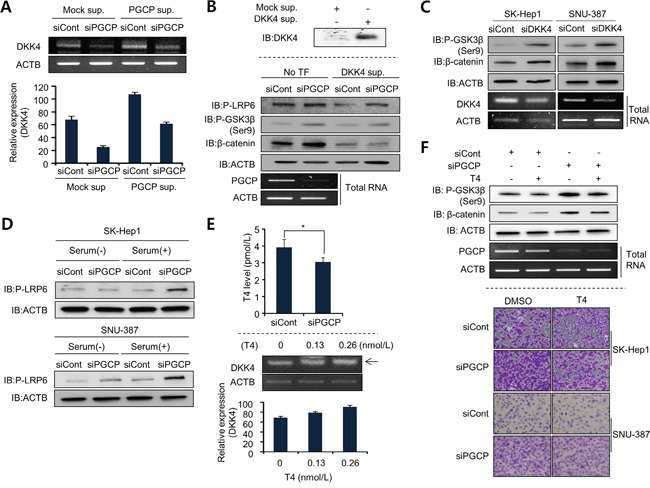
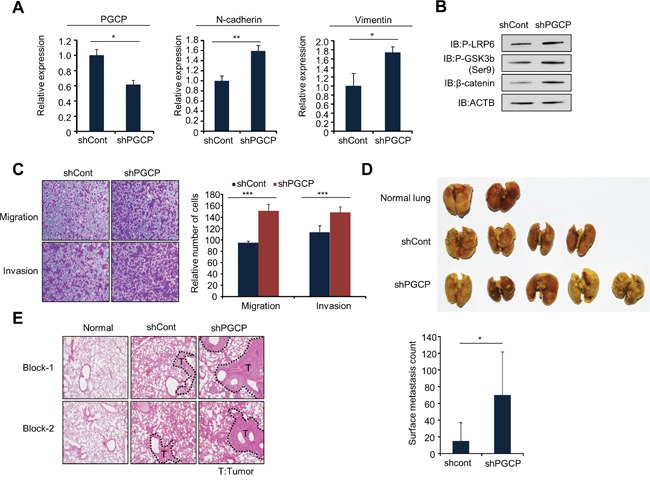
Tumor metastasis is the leading cause of cancer death. In the metastatic process, EMT is a unique phenotypic change that plays an important role in cell invasion and changes in cell morphology. Despite the clinical significance, the mechanism underlying tumor metastasis is still poorly understood. Here we report a novel mechanism by which secreted plasma glutamate carboxypeptidase(PGCP) negatively involves Wnt/β-catenin signaling by DKK4 regulation in liver cancer metastasis. Pathway analysis of the RNA sequencing data showed that PGCP knockdown in liver cancer cell lines enriched the functions of cell migration, motility and mesenchymal cell differentiation. Depletion of PGCP promoted cell migration and invasion via activation of Wnt/β-catenin signaling pathway components such as phospho-LRP6 and β-catenin. Also, addition of DKK4 antagonized the Wnt/β-catenin signaling cascade in a thyroxine (T4)-dependent manner. In an in vivo study, metastatic nodules were observed in the lungs of the mice after injection of shPGCP stable cell lines. Our findings suggest that PGCP negatively associates with Wnt/β-catenin signaling during metastasis. Targeting this regulation may represent a novel and effective therapeutic option for liver cancer by preventing metastatic activity of primary tumor cells.
肿瘤转移是癌症死亡的主要原因。在转移过程中,上皮-间质转化(EMT)是一种独特的表型变化,在细胞侵袭和细胞形态改变中起重要作用。尽管具有临床意义,但肿瘤转移的潜在机制仍知之甚少。在此,我们报告一种新机制,即分泌型血浆谷氨酸羧肽酶(PGCP)通过调节DKK4在肝癌转移中负向影响Wnt/β-连环蛋白信号通路。RNA测序数据的通路分析表明,肝癌细胞系中PGCP基因敲低可增强细胞迁移、运动及间充质细胞分化功能。PGCP缺失通过激活Wnt/β-连环蛋白信号通路成分如磷酸化LRP6和β-连环蛋白促进细胞迁移和侵袭。此外,添加DKK4以甲状腺素(T4)依赖的方式拮抗Wnt/β-连环蛋白信号级联反应。在一项体内研究中,注射shPGCP稳定细胞系后,在小鼠肺部观察到转移结节。我们的研究结果表明,PGCP在转移过程中与Wnt/β-连环蛋白信号通路呈负相关。针对这种调节可能代表一种通过预防原发性肿瘤细胞的转移活性来治疗肝癌的新型有效治疗选择。