Mikstacki Adam, Zakerska-Banaszak Oliwia, Skrzypczak-Zielinska Marzena, Tamowicz Barbara, Prendecki Michał, Dorszewska Jolanta, Molinska-Glura Marta, Waszak Malgorzata, Slomski Ryszard
Department of Anaesthesiology and Intensive Therapy, Regional Hospital, Juraszow 7/19, 60-479, Poznan, Poland.
Institute of Human Genetics, Polish Academy of Sciences, Strzeszynska 32, 60-479, Poznan, Poland.
J Appl Genet. 2017 May;58(2):213-220. doi: 10.1007/s13353-016-0373-2. Epub 2016 Nov 8.
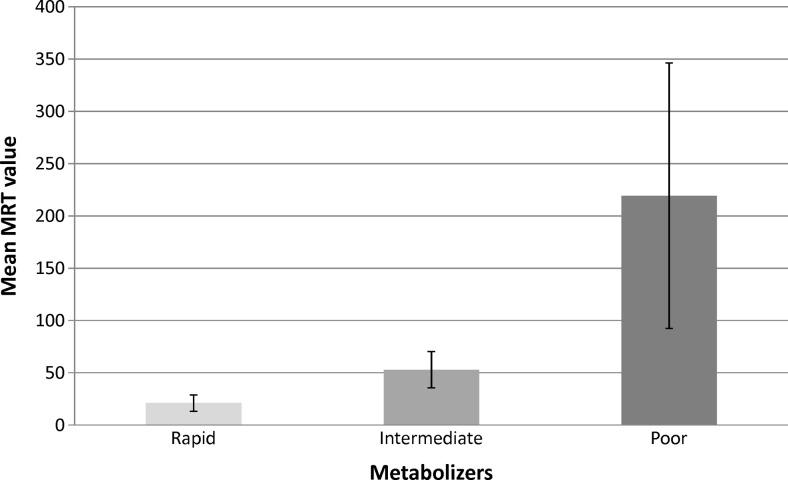
Propofol (2,6-diisopropylphenol) is one of the safest and most commonly used anaesthetic agents for intravenous general anaesthesia. However, in clinical practice, a large inter-individual variability in response to propofol is observed. To limit the risk of adverse effects, pharmacogenetic investigations are recommended. The aim of our study was to verify the impact of genetic changes c.516G>T in the CYP2B6, c.98T>C in the UGT1A9 and c.1075A>C in the CYP2C9 genes on the individual propofol pharmacokinetic profile in the Polish patients undergoing general anaesthesia. Eighty-five patients from the Department of Anaesthesiology and Intensive Therapy, Regional Hospital in Poznan, Poland, anaesthetised with propofol for surgery, were enrolled in the study. We have genotyped CYP2B6, UGT1A9 and CYP2C9 polymorphisms with the use of pyrosequencing. HPLC measurements of propofol plasma concentration were applied for a pharmacokinetic analysis of the anaesthetic. We identified poor (20), intermediate (42) and rapid (23) metabolisers of propofol, which constituted 24%, 49% and 27% of the group, respectively. Homozygotes c.516 T/T in the CYP2B6 gene were statistically more often found in the rapid metabolisers group (p < 0.05). However, polymorphisms c.98T>C in the UGT1A9 and c.1075A>C in the CYP2C9 genes did not affect the pharmacokinetic profile of propofol. The mean propofol retention time (MRT) correlated with the patient's body mass index (BMI) (p < 0.05). From all the analysed changes, only polymorphism c.516G>T in the CYP2B6 gene and BMI affect the metabolism rate of propofol and may play an important role in the optimisation of propofol anaesthesia.
丙泊酚(2,6 - 二异丙基苯酚)是静脉全身麻醉中最安全、最常用的麻醉剂之一。然而,在临床实践中,观察到个体对丙泊酚的反应存在很大差异。为降低不良反应风险,建议进行药物遗传学研究。我们研究的目的是验证CYP2B6基因中c.516G>T、UGT1A9基因中c.98T>C和CYP2C9基因中c.1075A>C的基因变化对波兰接受全身麻醉患者个体丙泊酚药代动力学特征的影响。来自波兰波兹南地区医院麻醉学与重症治疗科的85例接受丙泊酚麻醉进行手术的患者纳入了研究。我们使用焦磷酸测序法对CYP2B6、UGT1A9和CYP2C9基因多态性进行了基因分型。应用高效液相色谱法测量丙泊酚血浆浓度以进行麻醉剂的药代动力学分析。我们确定了丙泊酚的慢代谢者(20例)、中代谢者(42例)和快代谢者(23例),分别占该组的24%、49%和27%。CYP2B6基因纯合子c.516 T/T在快代谢者组中出现的频率在统计学上更高(p < 0.05)。然而,UGT1A9基因中的多态性c.98T>C和CYP2C9基因中的c.1075A>C并不影响丙泊酚的药代动力学特征。丙泊酚平均保留时间(MRT)与患者体重指数(BMI)相关(p < 0.05)。在所有分析的变化中,只有CYP2B6基因中的多态性c.516G>T和BMI影响丙泊酚的代谢速率,可能在丙泊酚麻醉优化中发挥重要作用。