Liu Mei, Wang Peng, Zhao Min, Liu D Y
Medical Research Center, Shengjing Hospital of China Medical University, Shenyang City, Liaoning Province, China.
The second department of urology, Shengjing Hospital of China Medical University, Shenyang City, Liaoning Province, China.
PLoS One. 2016 Nov 10;11(11):e0166165. doi: 10.1371/journal.pone.0166165. eCollection 2016.
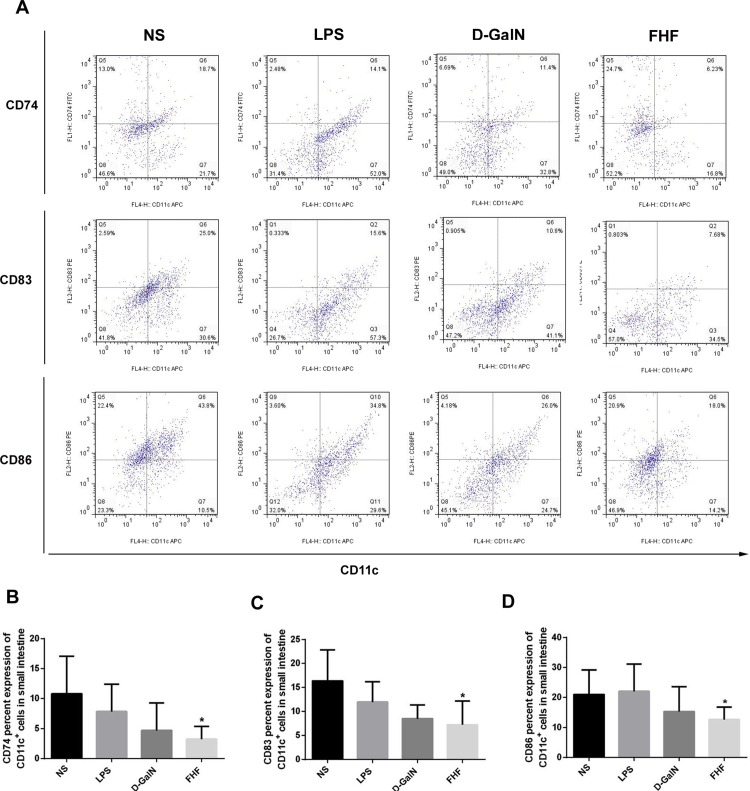
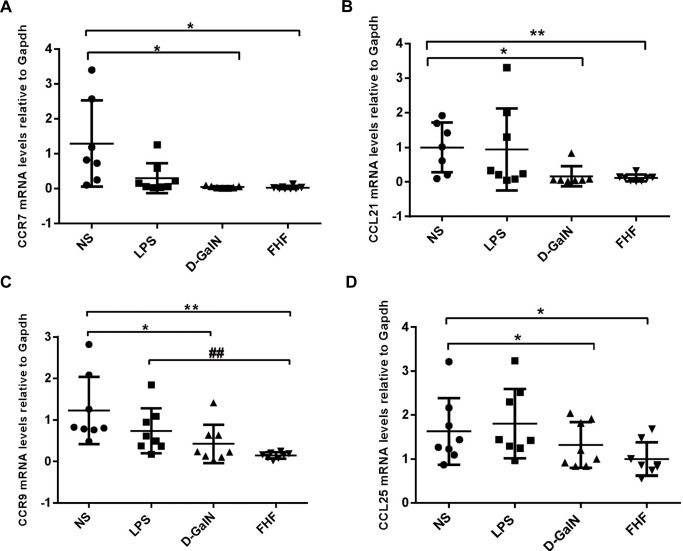
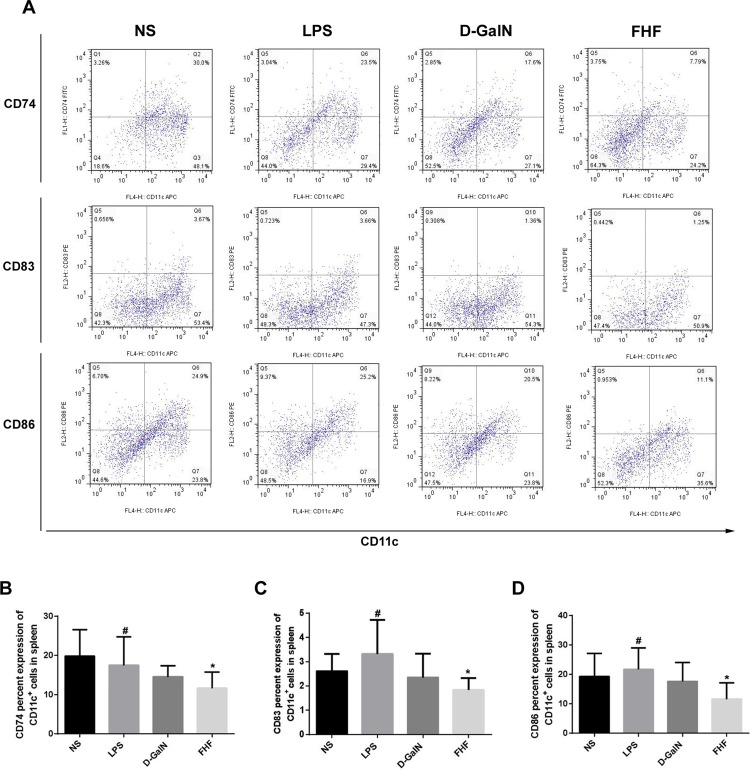
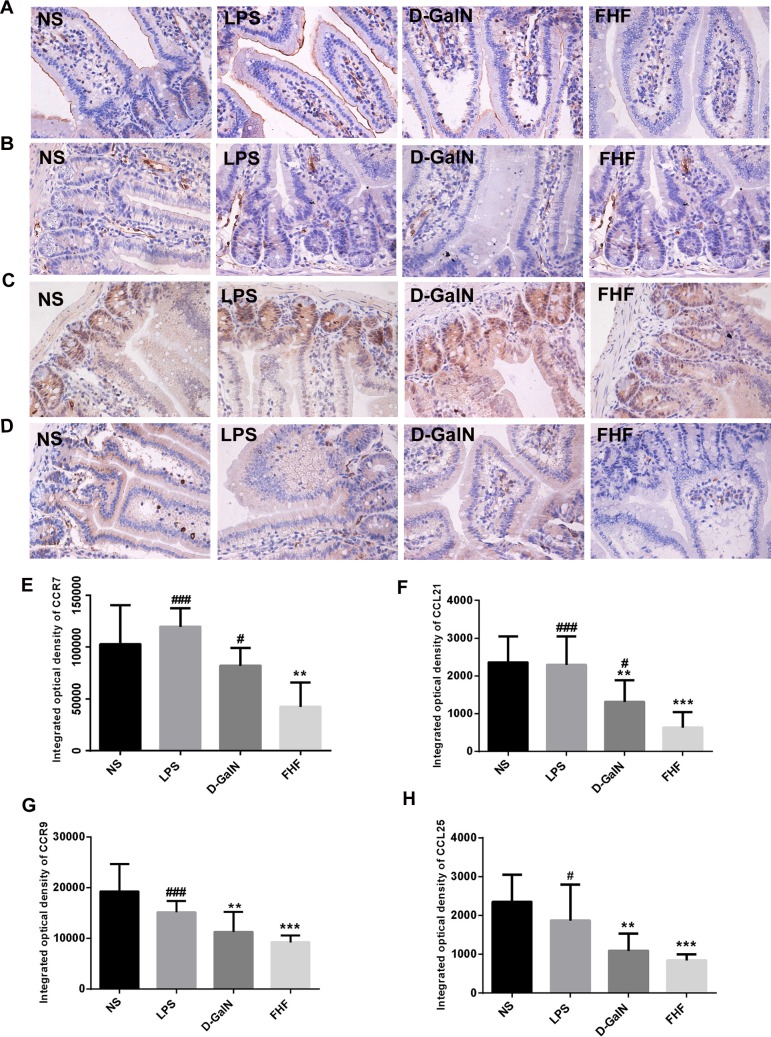
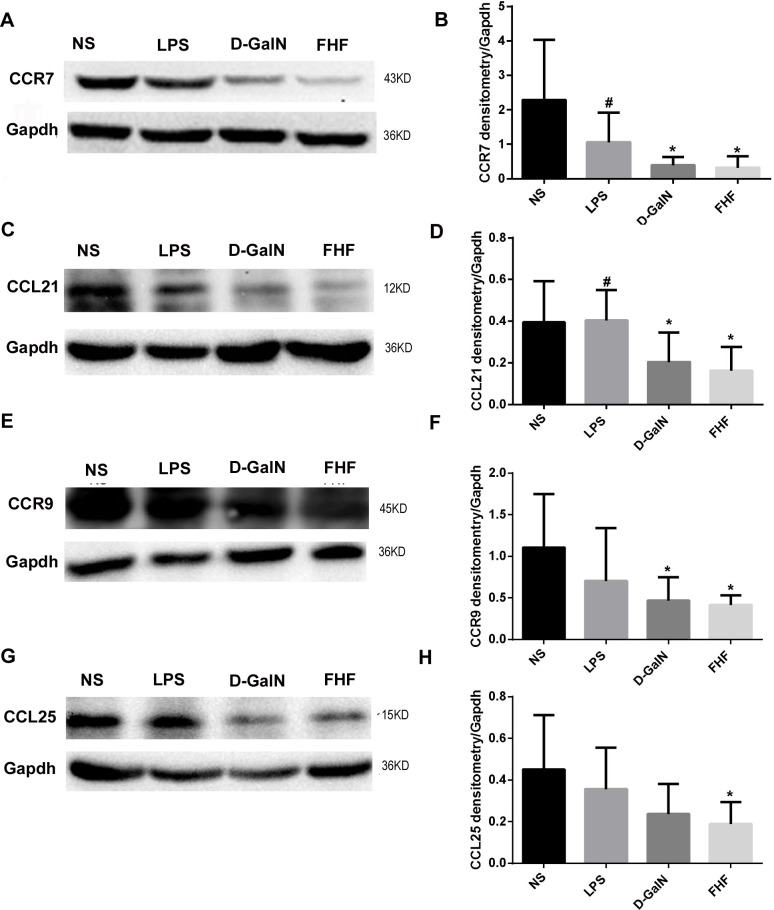
Fulminant hepatic failure (FHF) is defined as rapid acute liver injury, often complicated with spontaneous bacterial peritonitis (SBP). The precise onset of FHF with SBP is still unknown, but it is thought that SBP closely correlates with a weakened intestinal barrier. Dendritic cells (DCs) play a crucial role in forming the intestinal immune barrier, therefore the number, maturity and chemotactic ability of intestinal DCs were studied in FHF. Mouse intestinal and spleen DCs were isolated by magnetic-activated cell sorting (MACS) and surface markers of DCs, namely CD11c, CD74, CD83 and CD86, were identified using flow cytometry. Immunohistochemistry and Western blotting were performed to detect the distribution and expression of CC-chemokine receptor 7 (CCR7) and CC-chemokine receptor 9 (CCR9), as well as their ligands-CC-chemokine ligand 21 (CCL21) and CC-chemokine ligand 25 (CCL25). Real-time PCR was used to detect CCR7 and CCR9 mRNA, along with their ligands-CCL21 and CCL25 mRNA. Flow cytometry analysis showed that the markers CD74, CD83 and CD86 of CD11c+DCs were lower in the D-galactosamine (D-GalN) group and were significantly decreased in the FHF group, while there were no significant changes in the expression of these markers in the lipopolysaccharide (LPS) group. Immunohistochemistry results showed that staining for CCR7 and CCR9, as well as their ligands CCL21 and CCL25, was significantly weaker in the D-GalN and FHF groups compared with the normal saline (NS) group or the LPS group; the FHF group even showed completely unstained parts. Protein expression of CCR7 and CCR9, as well as their ligands- CCL21 and CCL25, was also lower in the D-GalN group and decreased even more significantly in the FHF group. At the gene level, CCR7 and CCR9, along with CCL21 and CCL25 mRNA expression, was lower in the D-GalN group and significantly decreased in the FHF group compared to the NS and LPS groups, consisting with the protein expression. Our study indicated that intestinal DCs were decreased in number, maturity and chemotactic ability in FHF and might contribute to a decreased function of the intestinal immune barrier in FHF.
暴发性肝衰竭(FHF)被定义为快速的急性肝损伤,常并发自发性细菌性腹膜炎(SBP)。FHF合并SBP的确切发病机制尚不清楚,但认为SBP与肠道屏障功能减弱密切相关。树突状细胞(DCs)在形成肠道免疫屏障中起关键作用,因此研究了FHF中肠道DCs的数量、成熟度和趋化能力。通过磁珠分选法(MACS)分离小鼠肠道和脾脏DCs,并使用流式细胞术鉴定DCs的表面标志物,即CD11c、CD74、CD83和CD86。采用免疫组织化学和蛋白质印迹法检测CC趋化因子受体7(CCR7)和CC趋化因子受体9(CCR9)及其配体CC趋化因子配体21(CCL21)和CC趋化因子配体25(CCL25)的分布和表达。实时荧光定量PCR用于检测CCR7和CCR9 mRNA及其配体CCL21和CCL25 mRNA。流式细胞术分析显示,在D-半乳糖胺(D-GalN)组中,CD11c+DCs的标志物CD74、CD83和CD86较低,在FHF组中显著降低,而在脂多糖(LPS)组中这些标志物的表达无显著变化。免疫组织化学结果显示,与生理盐水(NS)组或LPS组相比,D-GalN组和FHF组中CCR7和CCR9及其配体CCL21和CCL25的染色明显较弱;FHF组甚至出现完全未染色的部分。D-GalN组中CCR7和CCR9及其配体CCL21和CCL25的蛋白表达也较低,在FHF组中下降更为显著。在基因水平上,与NS组和LPS组相比,D-GalN组中CCR7和CCR9以及CCL21和CCL25 mRNA表达较低,在FHF组中显著降低,与蛋白表达一致。我们的研究表明,FHF中肠道DCs的数量、成熟度和趋化能力降低,可能导致FHF中肠道免疫屏障功能下降。