Maeda Takuro, Sakiyama Toshio, Kanmura Shuji, Hashimoto Shinichi, Ibusuki Kazunari, Tanoue Shiroh, Komaki Yuga, Arima Shiho, Nasu Yuichiro, Sasaki Fumisato, Taguchi Hiroki, Numata Masatsugu, Uto Hirofumi, Tsubouchi Hirohito, Ido Akio
Digestive and Lifestyle Diseases, Department of Human and Environmental Sciences, Kagoshima University Graduate School of Medical and Dental Sciences, Kagoshima 890-8544, Japan.
Int J Mol Med. 2016 Dec;38(6):1777-1785. doi: 10.3892/ijmm.2016.2795. Epub 2016 Nov 3.
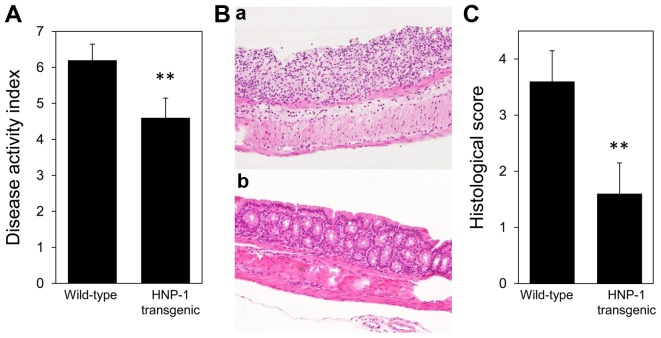
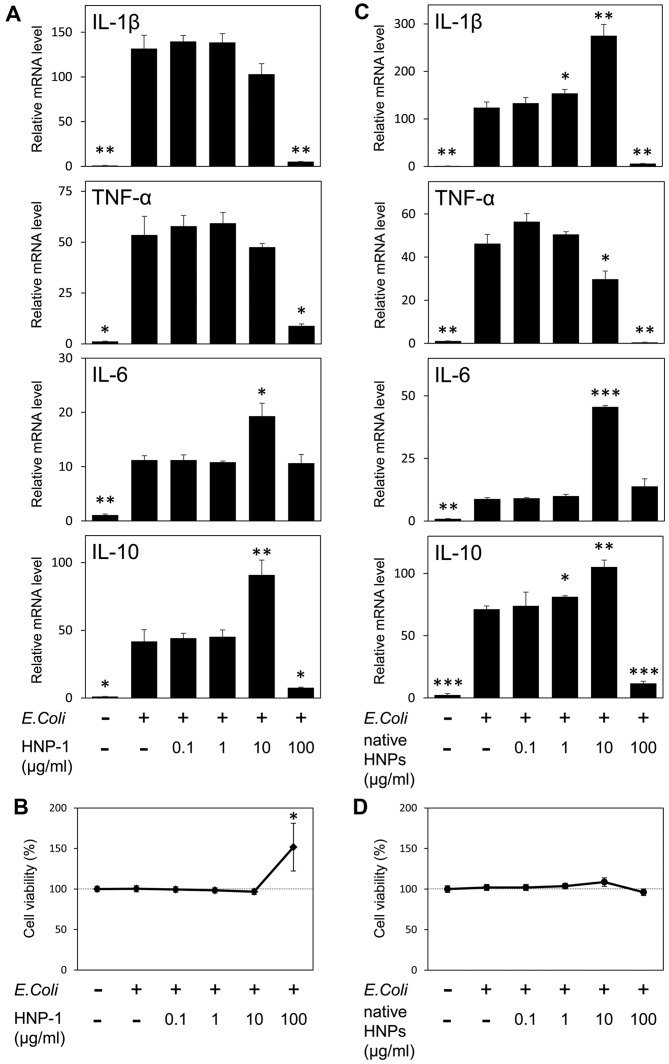
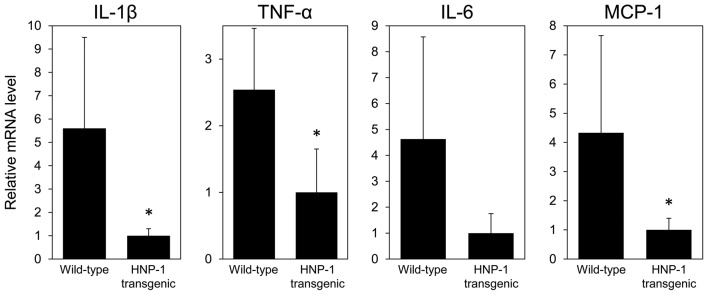
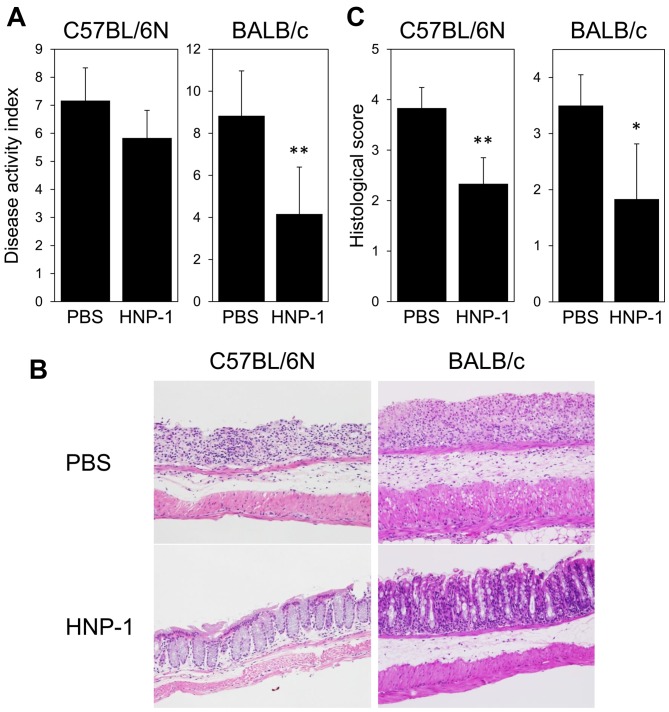
Human neutrophil peptides (HNPs) not only have antimicrobial properties, but also exert multiple immunomodulatory effects depending on the concentration used. We have previously demonstrated that the intraperitoneal administration of high-dose HNP-1 (100 µg/day) aggravates murine dextran sulfate sodium (DSS)-induced colitis, suggesting a potential pro-inflammatory role for HNPs at high concentrations. However, the role of low physiological concentrations of HNPs in the intestinal tract remains largely unknown. The aim of this study was to examine the effects of low concentrations of HNPs on intestinal inflammation. We first examined the effects of the mild transgenic overexpression of HNP-1 in DSS-induced colitis. HNP-1 transgenic mice have plasma HNP-1 levels similar to the physiological concentrations in human plasma. Compared to wild-type mice treated with DSS, HNP-1 transgenic mice treated with DSS had significantly lower clinical and histological scores, and lower colonic mRNA levels of pro-inflammatory cytokines, including interleukin (IL)-1β and tumor necrosis factor (TNF)-α. We then injected low-dose HNP-1 (5 µg/day) or phosphate-buffered saline (PBS) intraperitoneally into C57BL/6N and BALB/c mice administered DSS. The HNP-1-treated mice exhibited significantly milder colitis with reduced expression levels of pro-inflammatory cytokines compared with the PBS-treated mice. Finally, we examined the in vitro effects of HNP-1 on the expression of cytokines associated with macrophage activation. Low physiological concentrations of HNP-1 did not significantly affect the expression levels of IL-1β, TNF-α, IL-6 or IL-10 in colonic lamina propria mononuclear cells activated with heat-killed Escherichia coli, suggesting that the anti-inflammatory effects of HNP-1 on murine colitis may not be exerted by direct action on intestinal macrophages. Collectively, our data demonstrated a biphasic dose-dependent effect of HNP-1 on DSS-induced colitis: an amelioration at low concentrations and an aggravation at high concentrations. Low concentrations of HNPs may contribute to the maintenance of intestinal homeostasis.
人中性粒细胞肽(HNPs)不仅具有抗菌特性,还会根据使用的浓度发挥多种免疫调节作用。我们之前已经证明,腹腔注射高剂量的HNP-1(100μg/天)会加重小鼠葡聚糖硫酸钠(DSS)诱导的结肠炎,这表明高浓度的HNPs具有潜在的促炎作用。然而,低生理浓度的HNPs在肠道中的作用在很大程度上仍然未知。本研究的目的是研究低浓度的HNPs对肠道炎症的影响。我们首先研究了HNP-1轻度转基因过表达在DSS诱导的结肠炎中的作用。HNP-1转基因小鼠的血浆HNP-1水平与人血浆中的生理浓度相似。与用DSS处理的野生型小鼠相比,用DSS处理的HNP-1转基因小鼠的临床和组织学评分显著更低,促炎细胞因子(包括白细胞介素(IL)-1β和肿瘤坏死因子(TNF)-α)的结肠mRNA水平也更低。然后,我们将低剂量的HNP-1(5μg/天)或磷酸盐缓冲盐水(PBS)腹腔注射到给予DSS的C57BL/6N和BALB/c小鼠体内。与PBS处理的小鼠相比,HNP-1处理的小鼠表现出明显较轻的结肠炎,促炎细胞因子的表达水平降低。最后,我们研究了HNP-1对与巨噬细胞活化相关的细胞因子表达的体外影响。低生理浓度的HNP-1对用热灭活大肠杆菌激活的结肠固有层单核细胞中IL-1β、TNF-α、IL-6或IL-10的表达水平没有显著影响,这表明HNP-1对小鼠结肠炎的抗炎作用可能不是通过直接作用于肠道巨噬细胞来发挥的。总的来说,我们的数据证明了HNP-1对DSS诱导的结肠炎具有双相剂量依赖性作用:低浓度时改善,高浓度时加重。低浓度的HNPs可能有助于维持肠道稳态。