Xiang Wu, Lin Haotian, Wang Qilin, Chen Wan, Liu Zhaochuan, Chen Hui, Zhang Hui, Chen Weirong
State Key Laboratory of Ophthalmology, Zhongshan Ophthalmic Center, Sun Yat‑Sen University, Guangzhou, Guangdong 510060, P.R. China.
Institute of Human Virology, Zhongshan School of Medicine, Sun Yat‑Sen University, Guangzhou, Guangdong 510074, P.R. China.
Mol Med Rep. 2016 Dec;14(6):5049-5056. doi: 10.3892/mmr.2016.5901. Epub 2016 Oct 27.
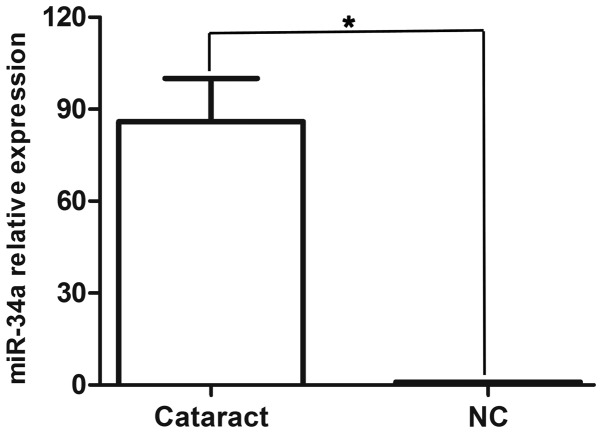
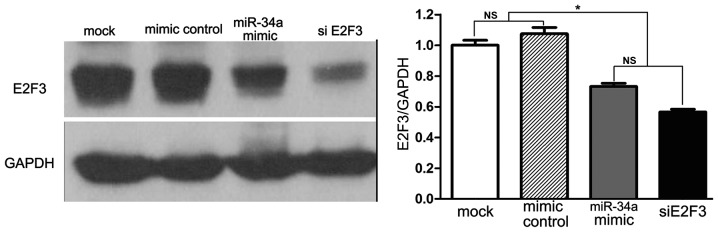
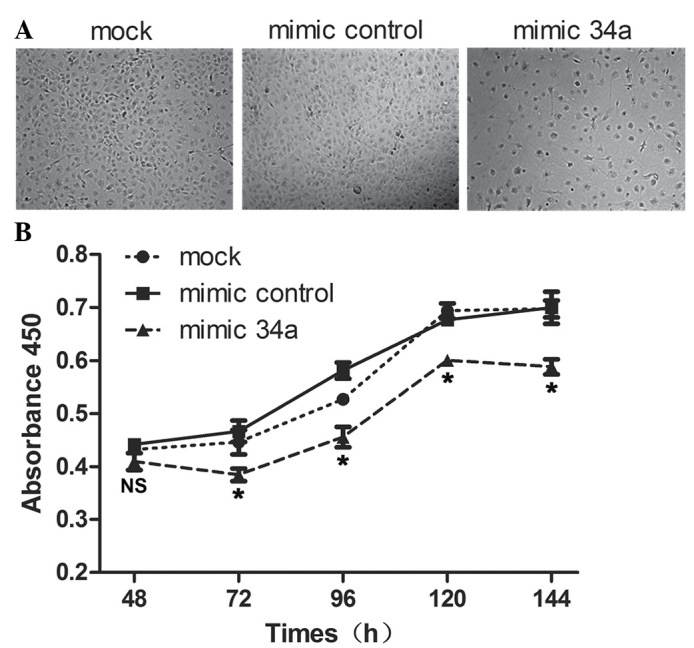
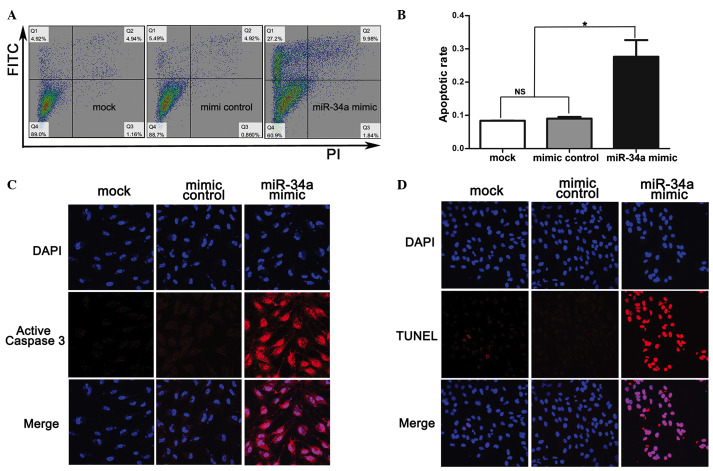
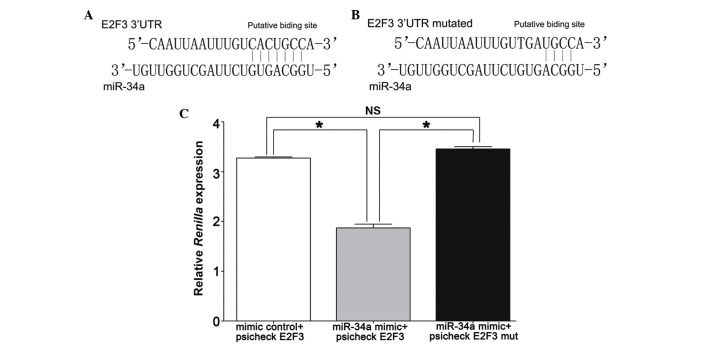
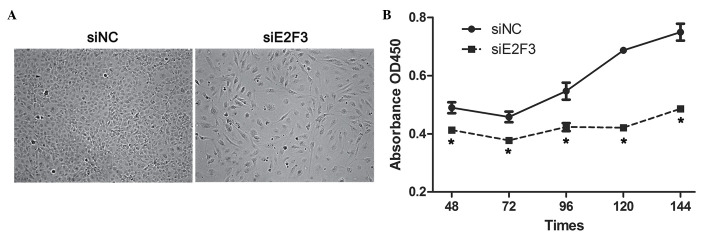
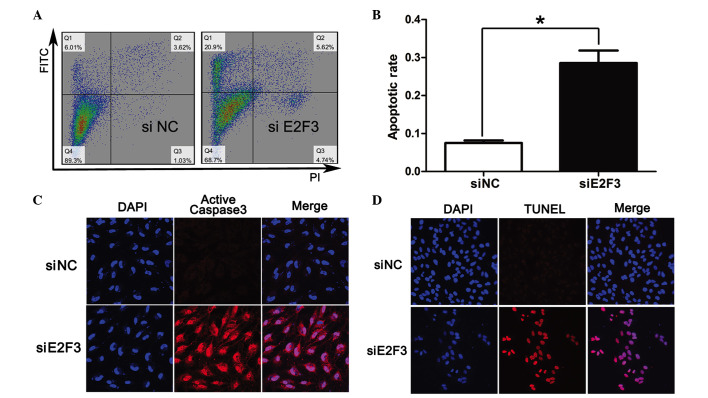
microRNA (miRNA) is abnormally expressed in numerous diseases, and it was intimately associated with cell proliferation and apoptosis. However, the mechanism by which miRNAs control cataractogenesis remains unclear. In the current study, it was demonstrated that miR‑34a was highly expressed in the cataractous lens by stem‑loop reverse transcription‑quantitative polymerase chain reaction. Trying to investigate the role of miR‑34a in human lens epithelial cells, miR‑34a mimics were transfected into SRA01/04 cells, and this suppressed proliferation and induced apoptosis. Subsequently, E2F3 was confirmed as a direct target of miR‑34a. Downregulation of E2F3 by small interfering (si) RNA siE2F3 resulted in proliferation inhibition and apoptosis of SRA01/04 cells. Furthermore, it was demonstrated that miR‑34a and siE2F3 downregulated E2F3 expression at a protein level. In summary, the current study demonstrated that miR‑34a suppressed the proliferation and induced apoptosis of SRA01/04 cells by downregulating E2F3. These observations provide novel insights with potential therapeutic applications for the treatment of cataracts.
微小RNA(miRNA)在多种疾病中表达异常,且与细胞增殖和凋亡密切相关。然而,miRNA调控白内障发生的机制仍不清楚。在本研究中,通过茎环逆转录定量聚合酶链反应证明miR-34a在白内障晶状体中高表达。为了研究miR-34a在人晶状体上皮细胞中的作用,将miR-34a模拟物转染到SRA01/04细胞中,这抑制了细胞增殖并诱导了细胞凋亡。随后,证实E2F3是miR-34a的直接靶标。小干扰(si)RNA siE2F3下调E2F3导致SRA01/04细胞增殖抑制和凋亡。此外,证明miR-34a和siE2F3在蛋白质水平下调E2F3表达。总之,本研究表明miR-34a通过下调E2F3抑制SRA01/04细胞的增殖并诱导其凋亡。这些观察结果为白内障治疗提供了具有潜在治疗应用价值的新见解。