Sweef Osama, Zaabout Elsayed, Bakheet Ahmed, Halawa Mohamed, Gad Ibrahim, Akela Mohamed, Tousson Ehab, Abdelghany Ashraf, Furuta Saori
Division of Cancer Biology, Department of Medicine, MetroHealth Medical Center, Case Western Reserve University School of Medicine, Cleveland, OH 44109, USA.
Department of Zoology, Faculty of Science, Tanta University, Tanta 31527, Egypt.
Pharmaceutics. 2023 Jul 31;15(8):2061. doi: 10.3390/pharmaceutics15082061.
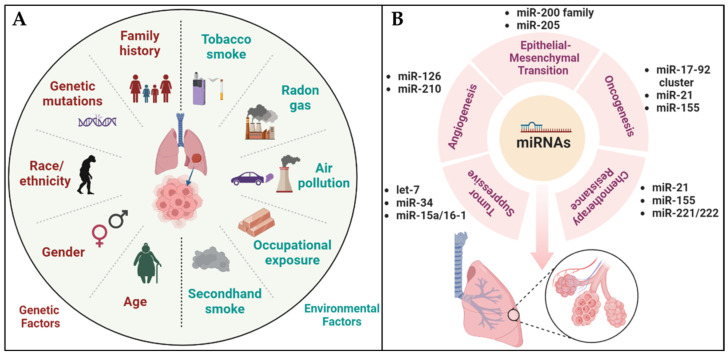
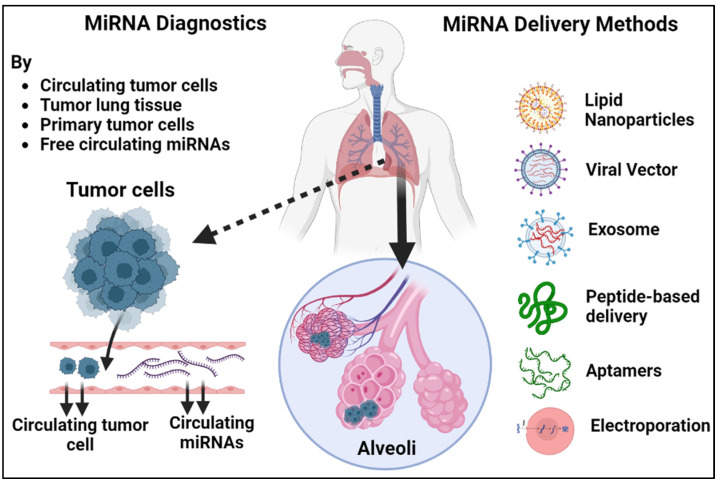
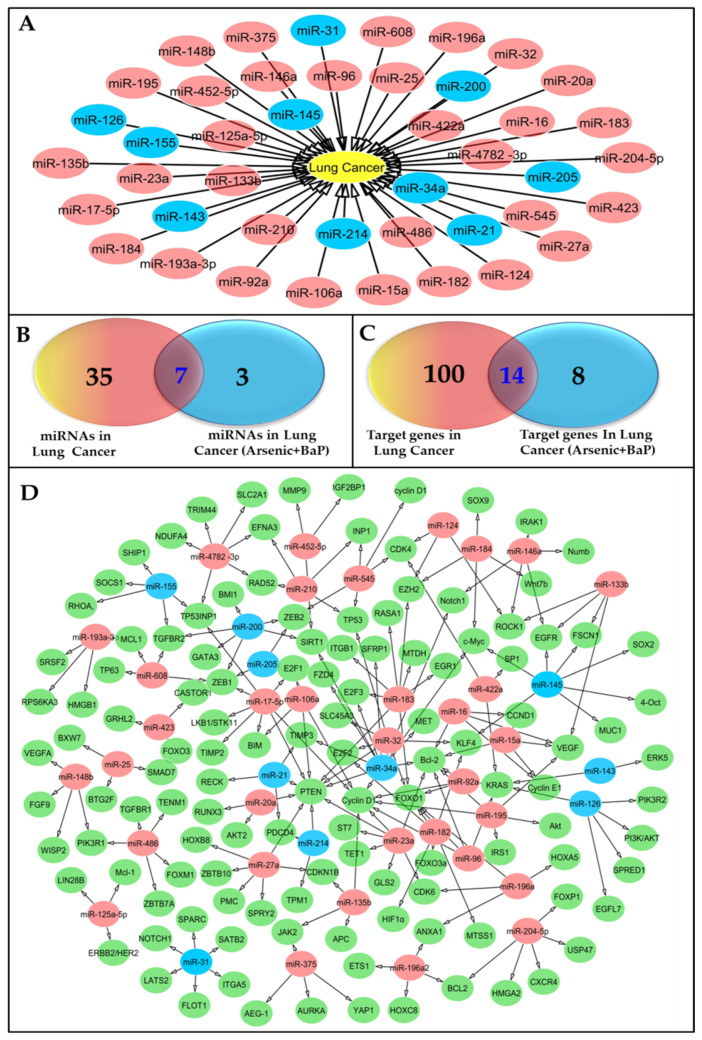
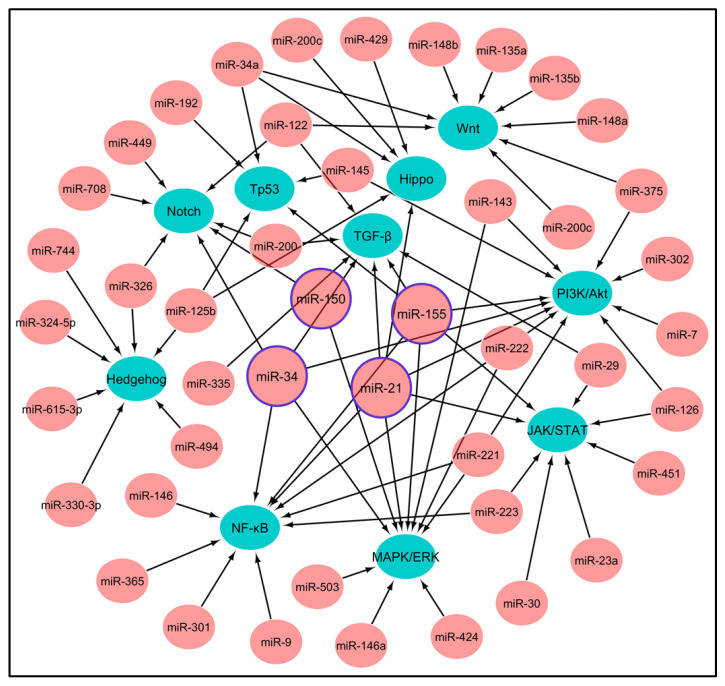
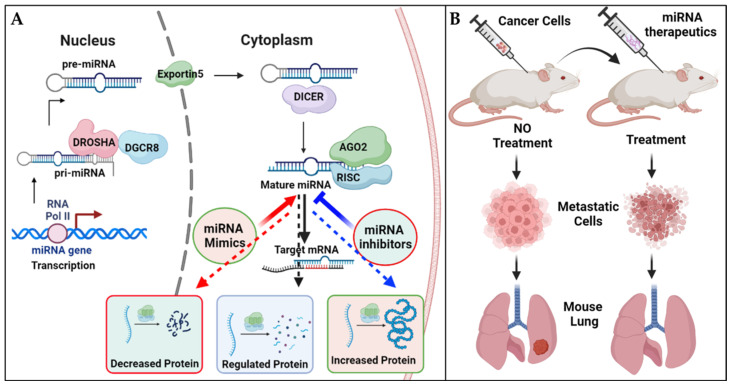
Lung cancer is a major public health problem and a leading cause of cancer-related deaths worldwide. Despite advances in treatment options, the five-year survival rate for lung cancer patients remains low, emphasizing the urgent need for innovative diagnostic and therapeutic strategies. MicroRNAs (miRNAs) have emerged as potential biomarkers and therapeutic targets for lung cancer due to their crucial roles in regulating cell proliferation, differentiation, and apoptosis. For example, miR-34a and miR-150, once delivered to lung cancer via liposomes or nanoparticles, can inhibit tumor growth by downregulating critical cancer promoting genes. Conversely, miR-21 and miR-155, frequently overexpressed in lung cancer, are associated with increased cell proliferation, invasion, and chemotherapy resistance. In this review, we summarize the current knowledge of the roles of miRNAs in lung carcinogenesis, especially those induced by exposure to environmental pollutants, namely, arsenic and benzopyrene, which account for up to 1/10 of lung cancer cases. We then discuss the recent advances in miRNA-based cancer therapeutics and diagnostics. Such information will provide new insights into lung cancer pathogenesis and innovative diagnostic and therapeutic modalities based on miRNAs.
肺癌是一个重大的公共卫生问题,也是全球癌症相关死亡的主要原因。尽管治疗方案有所进步,但肺癌患者的五年生存率仍然很低,这凸显了对创新诊断和治疗策略的迫切需求。微小RNA(miRNA)由于在调节细胞增殖、分化和凋亡中起关键作用,已成为肺癌潜在的生物标志物和治疗靶点。例如,miR-34a和miR-150一旦通过脂质体或纳米颗粒递送至肺癌细胞,可通过下调关键的促癌基因来抑制肿瘤生长。相反,在肺癌中经常过度表达的miR-21和miR-155与细胞增殖增加、侵袭和化疗耐药性相关。在这篇综述中,我们总结了目前关于miRNA在肺癌发生中作用的知识,特别是那些由接触环境污染物(即砷和苯并芘)诱导的miRNA,这些污染物导致的肺癌病例占比高达十分之一。然后我们讨论了基于miRNA的癌症治疗和诊断的最新进展。这些信息将为肺癌发病机制以及基于miRNA的创新诊断和治疗方式提供新的见解。