O'Rourke F, Zavoico G B, Feinstein M B
Department of Pharmacology, University of Connecticut Health Center, Farmington 06032.
Biochem J. 1989 Feb 1;257(3):715-21. doi: 10.1042/bj2570715.
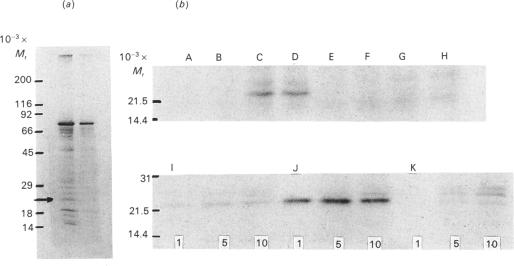
In contrast with previous reports, it was found that membrane-protein phosphorylation by the catalytic subunit (CS) of cyclic AMP-dependent protein kinase had no effect on Ca2+ uptake into platelet membrane vesicles or on subsequent Ca2+ release by inositol 1,4,5-trisphosphate (IP3). Furthermore, IP-20, a highly potent synthetic peptide inhibitor of CS, which totally abolished membrane protein phosphorylation by endogenous or exogenous CS, also had no effect on either Ca2+ uptake or release by IP3. Commercial preparations of protein kinase inhibitor protein (PKI) usually had no effect, but one preparation partially inhibited Ca2+ uptake, which is attributable to the gross impurity of the commercial PKI preparation. IP3-induced release of Ca2+ was also unaffected by the absence of ATP from the medium, supporting the conclusion that Ca2+ release by IP3 does not require the phosphorylation of membrane protein.
与之前的报道相反,研究发现环磷酸腺苷依赖性蛋白激酶的催化亚基(CS)对膜蛋白的磷酸化作用,对钙离子摄入血小板膜囊泡或随后由肌醇1,4,5-三磷酸(IP3)引发的钙离子释放均无影响。此外,IP - 20是一种高效的CS合成肽抑制剂,它能完全消除内源性或外源性CS对膜蛋白的磷酸化作用,但对IP3介导的钙离子摄入或释放同样没有影响。商业制备的蛋白激酶抑制蛋白(PKI)通常无作用,但有一种制剂能部分抑制钙离子摄入,这归因于该商业PKI制剂的严重杂质。培养基中缺乏ATP时,IP3诱导的钙离子释放也不受影响,这支持了IP3引发的钙离子释放不需要膜蛋白磷酸化的结论。