Albecka Anna, Owen Danielle J, Ivanova Lyudmila, Brun Juliane, Liman Rukayya, Davies Laura, Ahmed M Firoz, Colaco Susanna, Hollinshead Michael, Graham Stephen C, Crump Colin M
Division of Virology, Department of Pathology, University of Cambridge, Cambridge, United Kingdom.
Division of Virology, Department of Pathology, University of Cambridge, Cambridge, United Kingdom
J Virol. 2017 Jan 3;91(2). doi: 10.1128/JVI.02196-16. Print 2017 Jan 15.
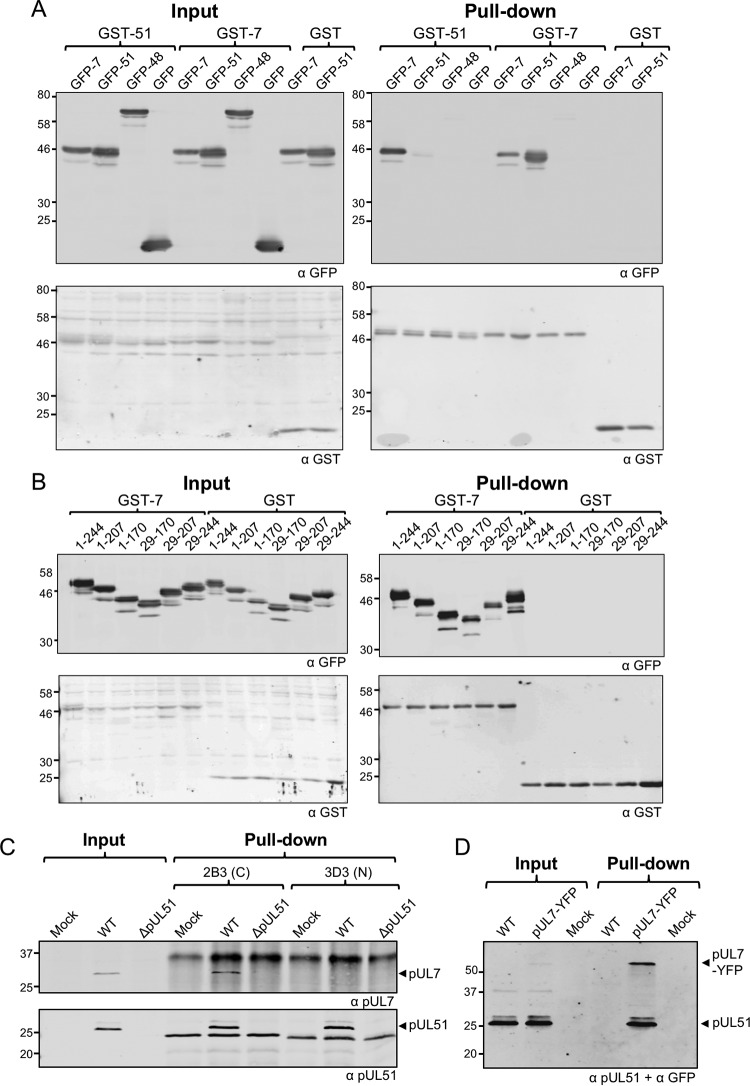
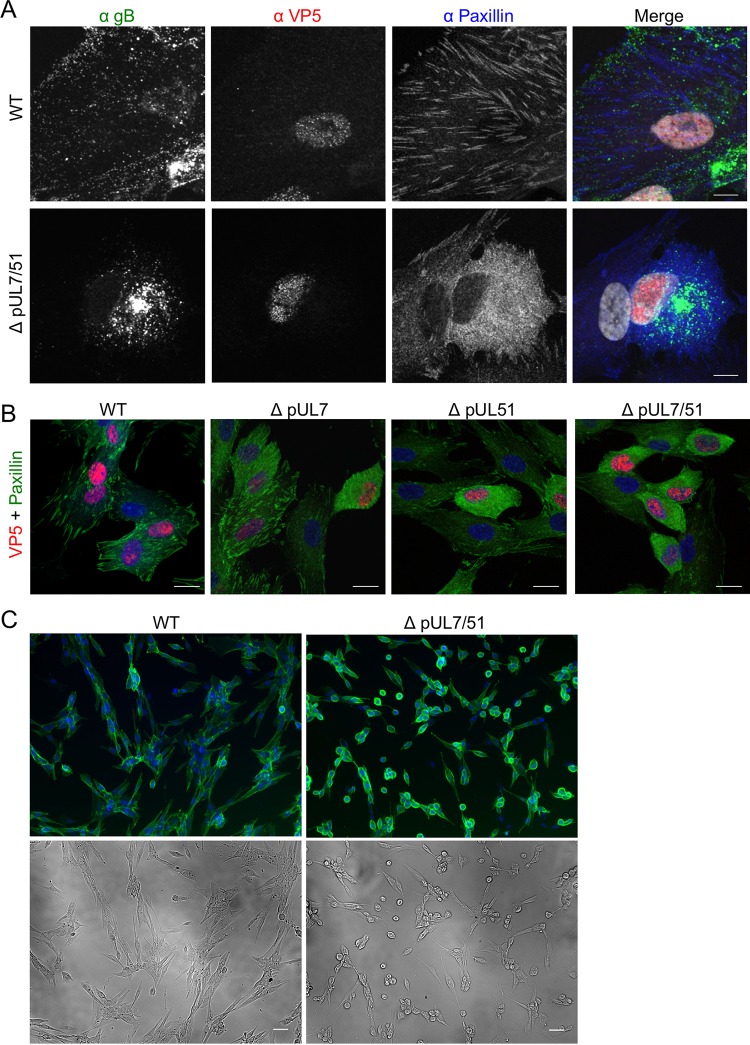
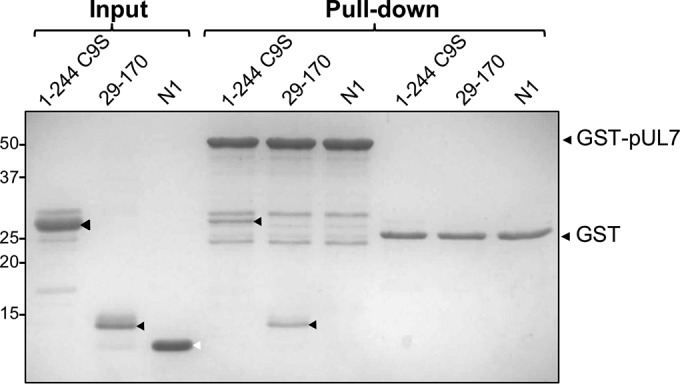
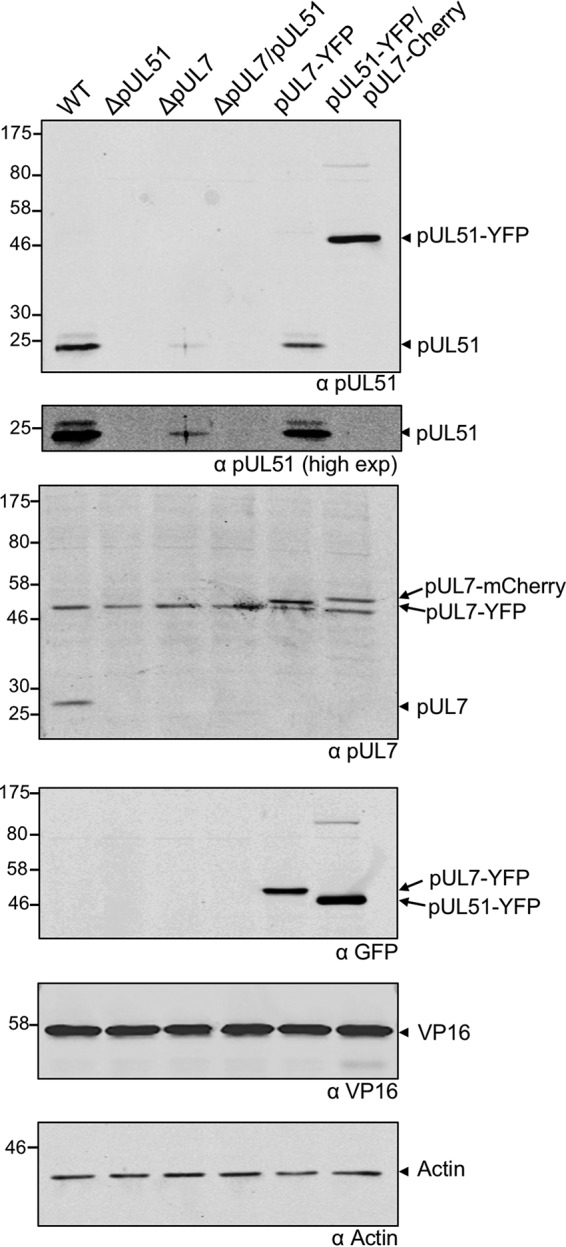
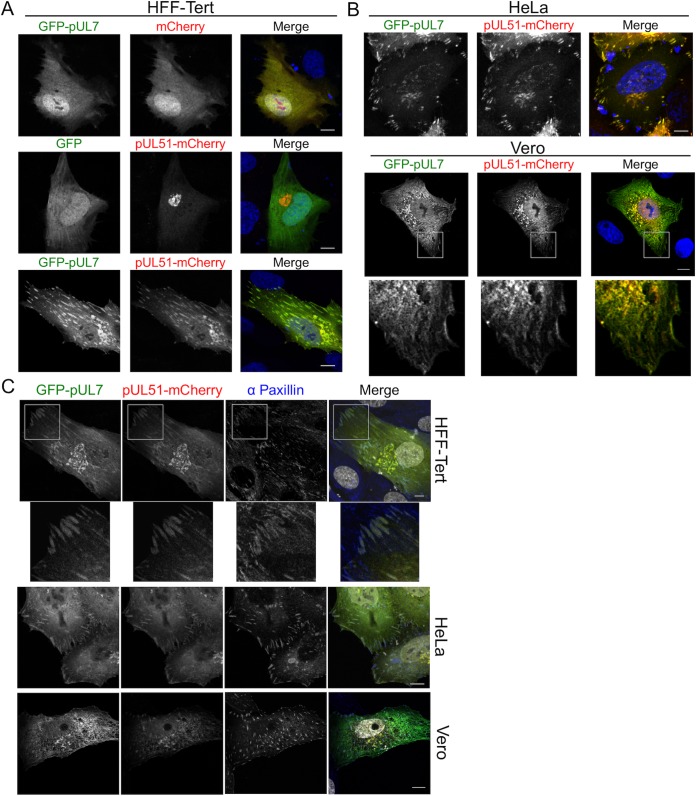
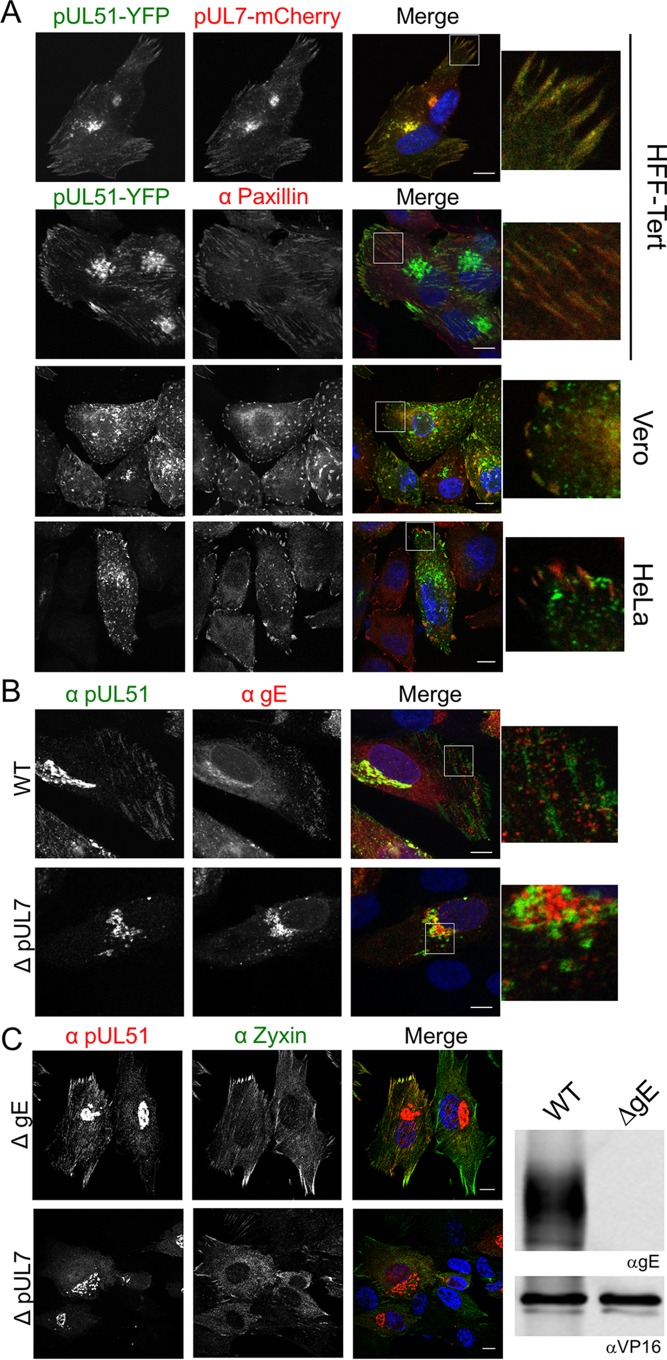
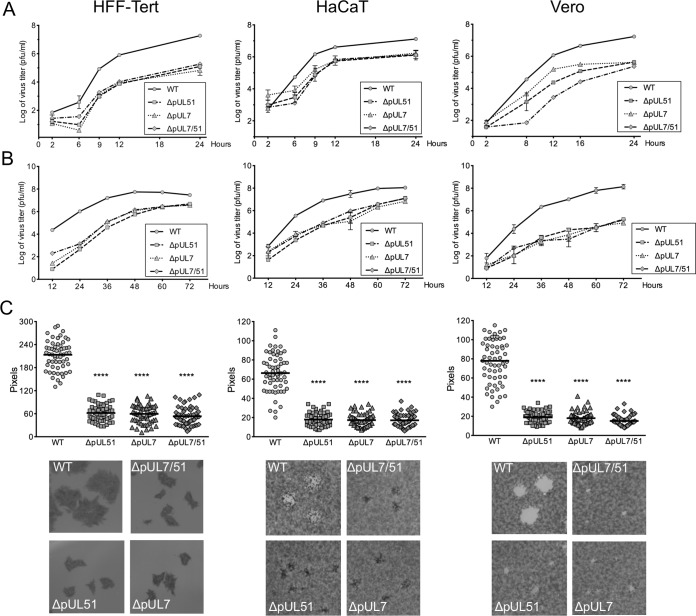
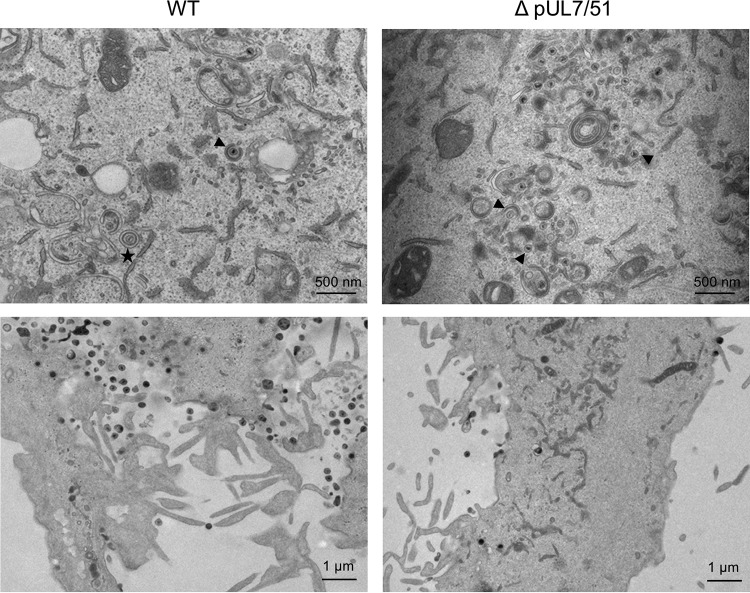
The tegument of herpesviruses is a highly complex structural layer between the nucleocapsid and the envelope of virions. Tegument proteins play both structural and regulatory functions during replication and spread, but the interactions and functions of many of these proteins are poorly understood. Here we focus on two tegument proteins from herpes simplex virus 1 (HSV-1), pUL7 and pUL51, which have homologues in all other herpesviruses. We have now identified that HSV-1 pUL7 and pUL51 form a stable and direct protein-protein interaction, their expression levels rely on the presence of each other, and they function as a complex in infected cells. We demonstrate that expression of the pUL7-pUL51 complex is important for efficient HSV-1 assembly and plaque formation. Furthermore, we also discovered that the pUL7-pUL51 complex localizes to focal adhesions at the plasma membrane in both infected cells and in the absence of other viral proteins. The expression of pUL7-pUL51 is important to stabilize focal adhesions and maintain cell morphology in infected cells and cells infected with viruses lacking pUL7 and/or pUL51 round up more rapidly than cells infected with wild-type HSV-1. Our data suggest that, in addition to the previously reported functions in virus assembly and spread for pUL51, the pUL7-pUL51 complex is important for maintaining the attachment of infected cells to their surroundings through modulating the activity of focal adhesion complexes.
Herpesviridae is a large family of highly successful human and animal pathogens. Virions of these viruses are composed of many different proteins, most of which are contained within the tegument, a complex structural layer between the nucleocapsid and the envelope within virus particles. Tegument proteins have important roles in assembling virus particles as well as modifying host cells to promote virus replication and spread. However, little is known about the function of many tegument proteins during virus replication. Our study focuses on two tegument proteins from herpes simplex virus 1 that are conserved in all herpesviruses: pUL7 and pUL51. We demonstrate that these proteins directly interact and form a functional complex that is important for both virus assembly and modulation of host cell morphology. Further, we identify for the first time that these conserved herpesvirus tegument proteins localize to focal adhesions in addition to cytoplasmic juxtanuclear membranes within infected cells.
疱疹病毒的被膜是病毒体核衣壳与包膜之间高度复杂的结构层。被膜蛋白在病毒复制和传播过程中发挥结构和调节功能,但其中许多蛋白的相互作用和功能仍知之甚少。在这里,我们聚焦于单纯疱疹病毒1型(HSV-1)的两种被膜蛋白pUL7和pUL51,它们在所有其他疱疹病毒中都有同源物。我们现已确定,HSV-1的pUL7和pUL51形成稳定且直接的蛋白质-蛋白质相互作用,它们的表达水平相互依赖,并且在受感染细胞中作为一个复合体发挥作用。我们证明pUL7-pUL51复合体的表达对于HSV-1的有效组装和蚀斑形成很重要。此外,我们还发现,在受感染细胞以及不存在其他病毒蛋白的情况下,pUL7-pUL51复合体定位于质膜上的粘着斑。pUL7-pUL51的表达对于稳定粘着斑和维持受感染细胞的形态很重要,并且缺乏pUL7和/或pUL51的病毒感染的细胞比野生型HSV-1感染的细胞更快地变圆。我们的数据表明,除了先前报道的pUL51在病毒组装和传播中的功能外,pUL7-pUL51复合体对于通过调节粘着斑复合体的活性来维持受感染细胞与其周围环境的附着也很重要。
疱疹病毒科是一大类非常成功的人类和动物病原体。这些病毒的病毒体由许多不同的蛋白质组成,其中大部分包含在被膜中,被膜是病毒颗粒内核衣壳与包膜之间的复杂结构层。被膜蛋白在组装病毒颗粒以及修饰宿主细胞以促进病毒复制和传播方面具有重要作用。然而,对于许多被膜蛋白在病毒复制过程中的功能知之甚少。我们的研究聚焦于单纯疱疹病毒1型的两种在所有疱疹病毒中都保守的被膜蛋白:pUL7和pUL51。我们证明这些蛋白直接相互作用并形成一个功能复合体,这对于病毒组装和宿主细胞形态的调节都很重要。此外,我们首次确定,这些保守的疱疹病毒被膜蛋白除了定位于受感染细胞内的胞质近核膜外,还定位于粘着斑。