Claverie Damien, Becker Chrystel, Ghestem Antoine, Coutan Mathieu, Camus Françoise, Bernard Christophe, Benoliel Jean-Jacques, Canini Frédéric
Département Neurosciences and Contraintes Opérationnelles, Institut de Recherche Biomédicale des ArméesBrétigny-sur-Orge, France; Sorbonne Universités, Pierre and Marie Curie University Univ Paris 06, INSERM, CNRS, Neurosciences Paris Seine - Institut de Biologie Paris Seine (NPS - IBPS), Site Pitié-SalpêtrièreParis, France; Institut National de la Santé et de la Recherche Médicale, U1130Paris, France; Centre National de la Recherche Scientifique, UMR8246Paris, France.
Sorbonne Universités, Pierre and Marie Curie University Univ Paris 06, INSERM, CNRS, Neurosciences Paris Seine - Institut de Biologie Paris Seine (NPS - IBPS), Site Pitié-SalpêtrièreParis, France; Institut National de la Santé et de la Recherche Médicale, U1130Paris, France; Centre National de la Recherche Scientifique, UMR8246Paris, France; Université Paris Descartes, Sorbonne Paris Cité, Faculté de MédecineParis, France.
Front Neurosci. 2016 Nov 2;10:495. doi: 10.3389/fnins.2016.00495. eCollection 2016.
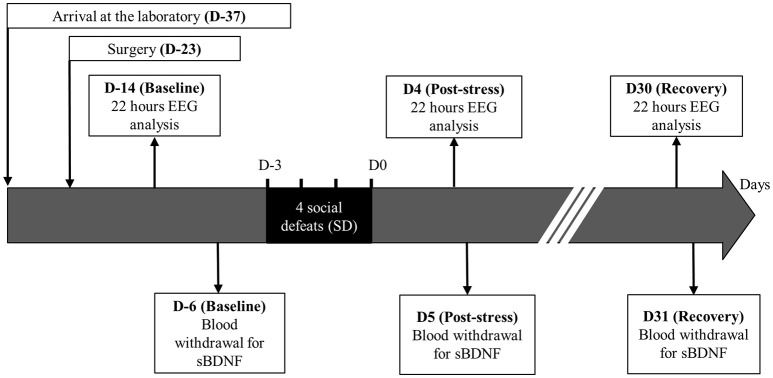
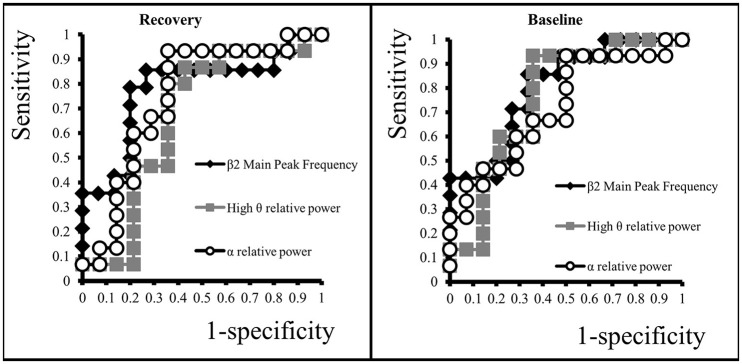
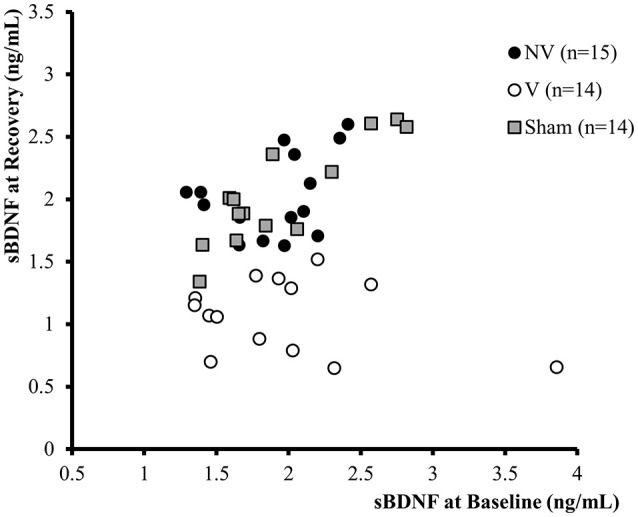
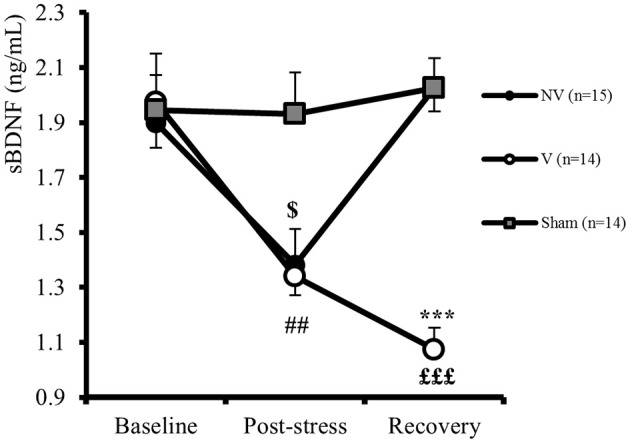
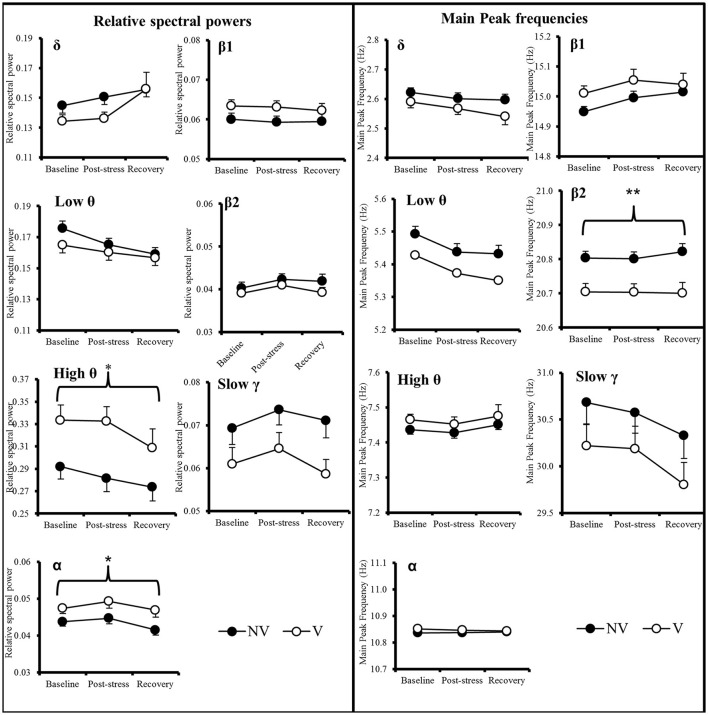
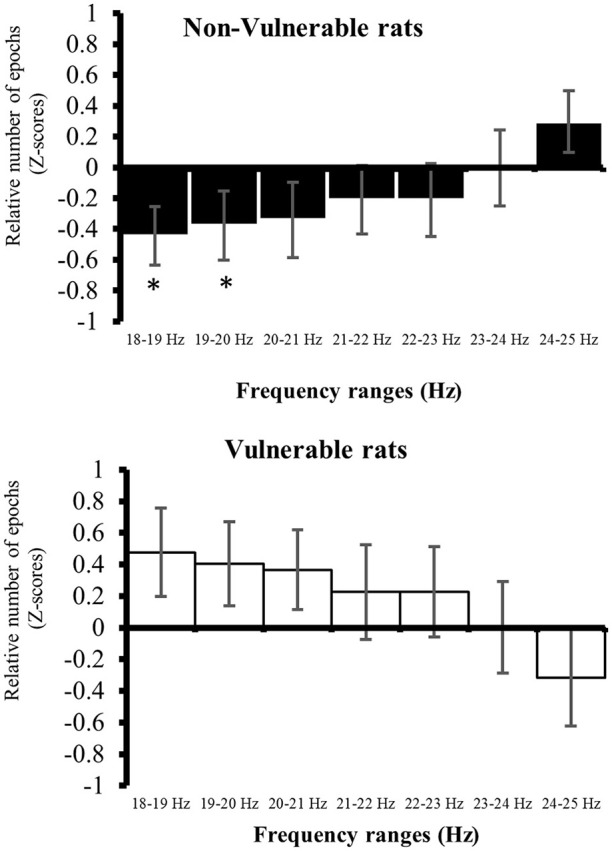
After an intense and repeated stress some rats become vulnerable to depression. This state is characterized by persistent low serum BDNF concentration. Our objective was to determine whether electrophysiological markers can sign vulnerability to depression. Forty-three Sprague Dawley rats were recorded with supradural electrodes above hippocampus and connected to wireless EEG transmitters. Twenty-nine animals experienced four daily social defeats (SD) followed by 1 month recovery. After SD, 14 rats had persistent low serum BDNF level and were considered as vulnerable (V) while the 15 others were considered as non-vulnerable (NV). EEG signals were analyzed during active waking before SD (Baseline), just after SD (Post-Stress) and 1 month after SD (Recovery). We found that V animals are characterized by higher high θ and α spectral relative powers and lower β2 main peak frequency before SD. These differences are maintained at Post-Stress and Recovery for α spectral relative powers and β2 main peak frequency. Using ROC analysis, we show that low β2 main peak frequency assessed during Baseline is a good predictor of the future state of vulnerability to depression. Given the straightforwardness of EEG recordings, these results open the way to prospective studies in humans aiming to identify population at-risk for depression.
在经历强烈且反复的应激后,一些大鼠会变得易患抑郁症。这种状态的特征是血清脑源性神经营养因子(BDNF)浓度持续偏低。我们的目的是确定电生理指标是否可以表明对抑郁症的易感性。用硬膜上电极在43只斯普拉格-道利大鼠海马上方进行记录,并连接到无线脑电图发射器。29只动物每天经历四次社交挫败(SD),随后恢复1个月。SD后,14只大鼠血清BDNF水平持续偏低,被视为易患抑郁症(V)组,另外15只则被视为不易患抑郁症(NV)组。在SD前的清醒活跃期(基线)、SD刚结束后(应激后)以及SD后1个月(恢复期)对脑电图信号进行分析。我们发现,V组动物在SD前的特征是较高的高θ和α频谱相对功率以及较低的β2主峰频率。这些差异在应激后和恢复期的α频谱相对功率和β2主峰频率方面仍然存在。使用ROC分析,我们表明在基线期评估的低β2主峰频率是未来患抑郁症易感性状态的良好预测指标。鉴于脑电图记录的简便性,这些结果为旨在识别抑郁症高危人群的人类前瞻性研究开辟了道路。