Newberry Elizabeth P, Xie Yan, Kennedy Susan M, Graham Mark J, Crooke Rosanne M, Jiang Hui, Chen Anping, Ory Daniel S, Davidson Nicholas O
Department of Medicine, Washington University School of Medicine, St. Louis, MO.
Ionis Pharmaceuticals, Inc., Carlsbad, CA.
Hepatology. 2017 Mar;65(3):836-852. doi: 10.1002/hep.28941. Epub 2017 Jan 19.
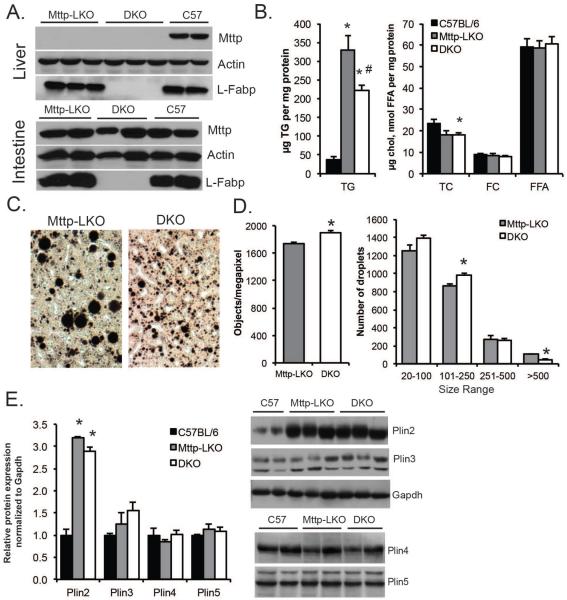
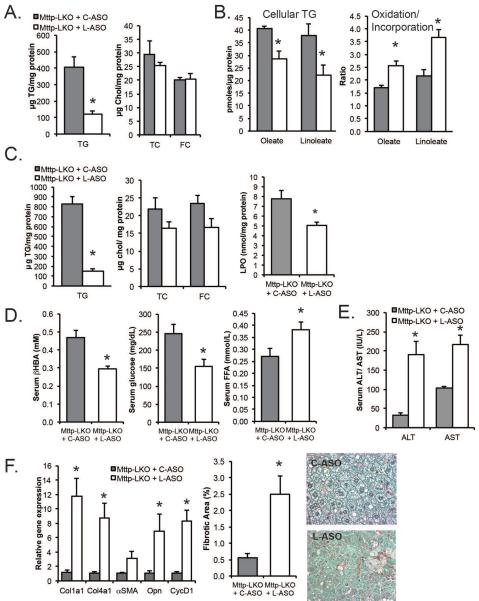
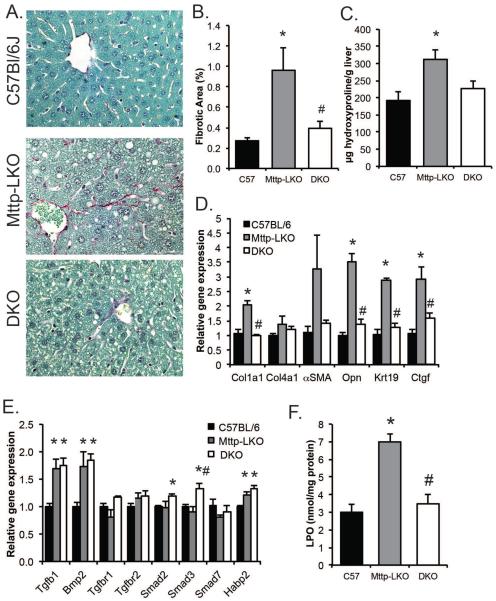
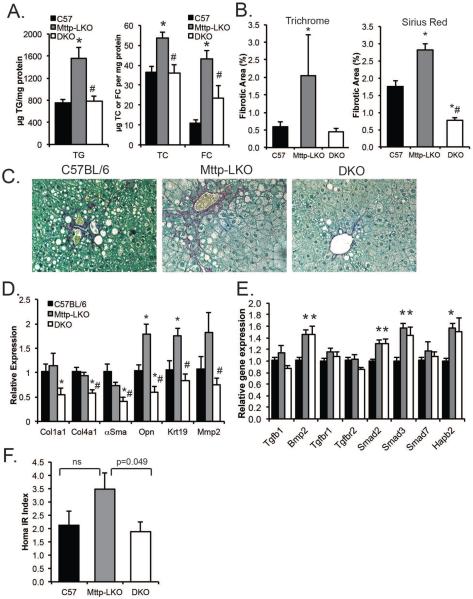
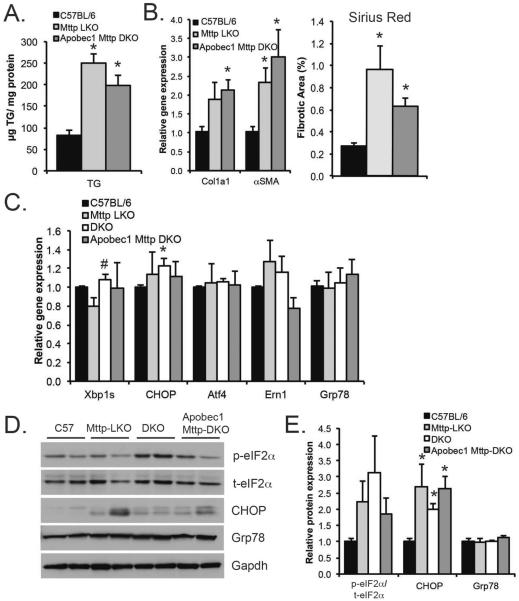
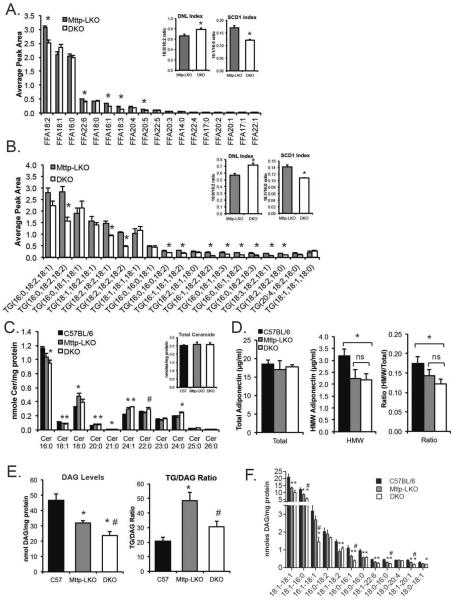
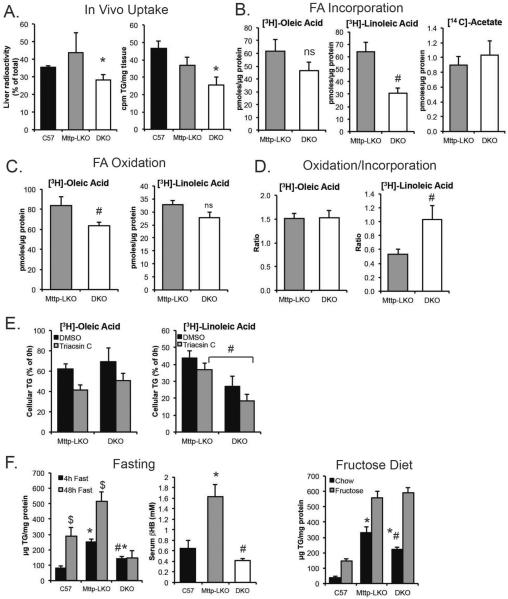
Blocking hepatic very low-density lipoprotein secretion through genetic or pharmacologic inhibition of microsomal triglyceride transfer protein (Mttp) causes hepatic steatosis, yet the risks for developing hepatic fibrosis are poorly understood. We report that liver-specific Mttp knockout mice (Mttp-LKO) exhibit both steatosis and fibrosis, which is exacerbated by a high-transfat/fructose diet. When crossed into germline liver fatty acid (FA) binding protein null mice (Mttp-LKO, i.e., double knockout mice) hepatic steatosis was greatly diminished and fibrosis prevented, on both low-fat and high-fat diets. The mechanisms underlying protection include reduced long chain FA uptake, shifts in FA distribution (lipidomic profiling), and metabolic turnover, specifically decreased hepatic 18:2 FA and triglyceride species and a shift in 18:2 FA use for oxidation versus incorporation into newly synthesized triglyceride. Double knockout mice were protected against fasting-induced hepatic steatosis (a model of enhanced exogenous FA delivery) yet developed steatosis upon induction of hepatic de novo lipogenesis with fructose feeding. Mttp-LKO mice, on either the liver FA binding protein null or Apobec-1 null background (i.e., apolipoprotein B100 only) exhibited only subtle increases in endoplasmic reticulum stress, suggesting that an altered unfolded protein response is unlikely to account for the attenuated phenotype in double knockout mice. Acute, antisense-mediated liver FA binding protein knockdown in Mttp-LKO mice also reduced FA uptake, increased oxidation versus incorporation of 18:2 species with complete reversal of hepatic steatosis, increased hepatic injury, and worsened fibrosis.
Perturbing exogenous hepatic FA use modulates both hepatic steatosis and fibrosis in the setting of hepatic Mttp deletion, adding new insight into the pathophysiological mechanisms and consequences of defective very low-density lipoprotein secretion. (Hepatology 2017;65:836-852).
通过微粒体甘油三酯转移蛋白(Mttp)的基因或药物抑制来阻断肝脏极低密度脂蛋白的分泌会导致肝脂肪变性,但对发生肝纤维化的风险了解甚少。我们报告肝脏特异性Mttp基因敲除小鼠(Mttp-LKO)表现出脂肪变性和纤维化,而高脂/果糖饮食会加剧这种情况。当与种系肝脏脂肪酸(FA)结合蛋白缺失小鼠杂交(Mttp-LKO,即双敲除小鼠)时,无论低脂还是高脂饮食,肝脂肪变性都大大减轻,纤维化得到预防。保护机制包括减少长链FA摄取、FA分布改变(脂质组学分析)和代谢周转,特别是肝脏18:2 FA和甘油三酯种类减少,以及18:2 FA用于氧化与掺入新合成甘油三酯的比例发生变化。双敲除小鼠对禁食诱导的肝脂肪变性(外源性FA输送增加的模型)具有抵抗力,但在果糖喂养诱导肝脏从头脂肪生成时会发生脂肪变性。在肝脏FA结合蛋白缺失或载脂蛋白B编辑酶1缺失背景(即仅载脂蛋白B100)下的Mttp-LKO小鼠仅表现出内质网应激的轻微增加,这表明未折叠蛋白反应改变不太可能解释双敲除小鼠的减弱表型。在Mttp-LKO小鼠中急性反义介导的肝脏FA结合蛋白敲低也减少了FA摄取,增加了18:2种类的氧化与掺入,肝脂肪变性完全逆转,肝损伤增加,纤维化恶化。
在肝脏Mttp缺失的情况下,干扰外源性肝脏FA的利用可调节肝脂肪变性和纤维化,为极低密度脂蛋白分泌缺陷的病理生理机制和后果提供了新的见解。(《肝脏病学》2017年;65:836 - 852)