Long Hannah K, Prescott Sara L, Wysocka Joanna
Department of Chemical and Systems Biology, Stanford School of Medicine, Stanford University, Stanford, CA 94305, USA; Institute of Stem Cell Biology and Regenerative Medicine, Stanford School of Medicine, Stanford University, Stanford, CA 94305, USA.
Department of Chemical and Systems Biology, Stanford School of Medicine, Stanford University, Stanford, CA 94305, USA; Department of Developmental Biology, Stanford School of Medicine, Stanford University, Stanford, CA 94305, USA.
Cell. 2016 Nov 17;167(5):1170-1187. doi: 10.1016/j.cell.2016.09.018.
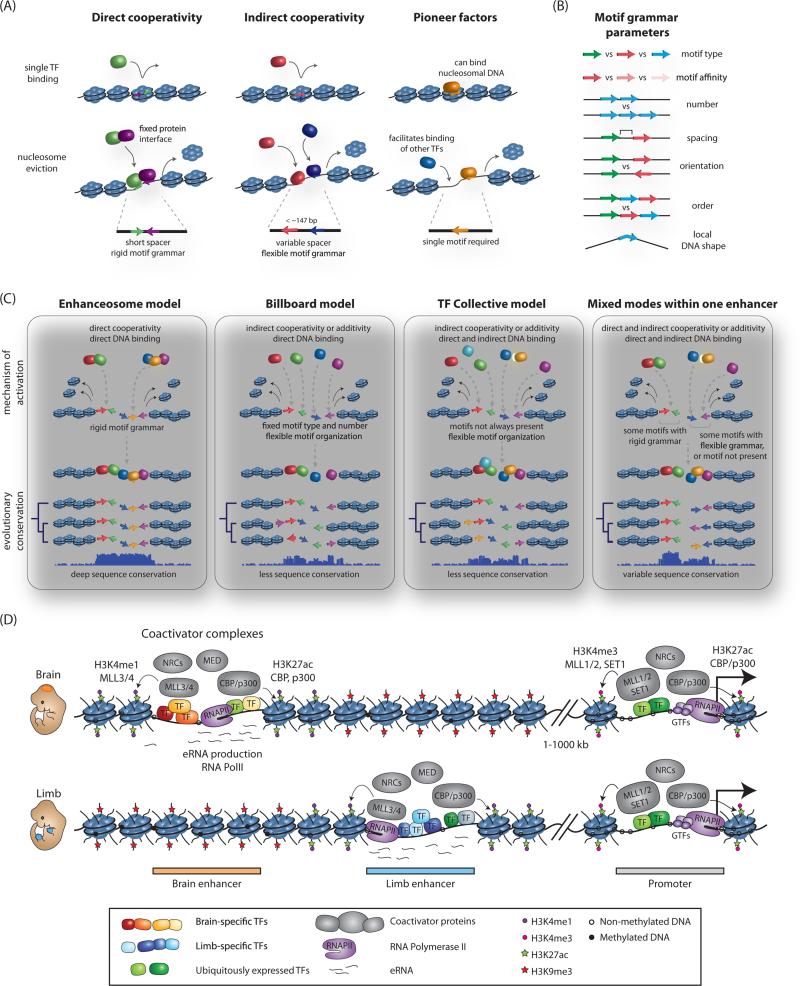
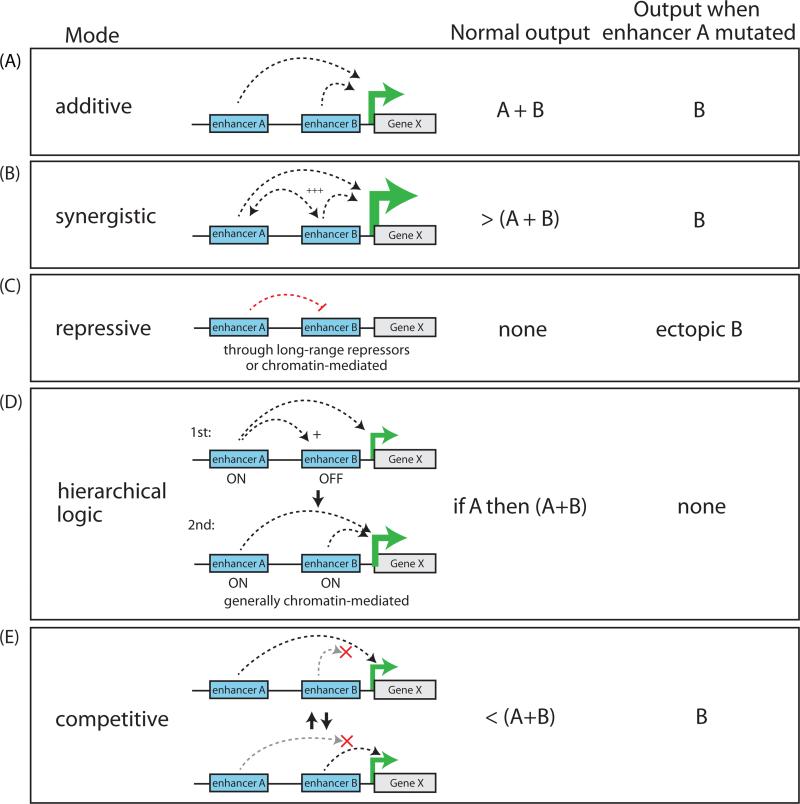
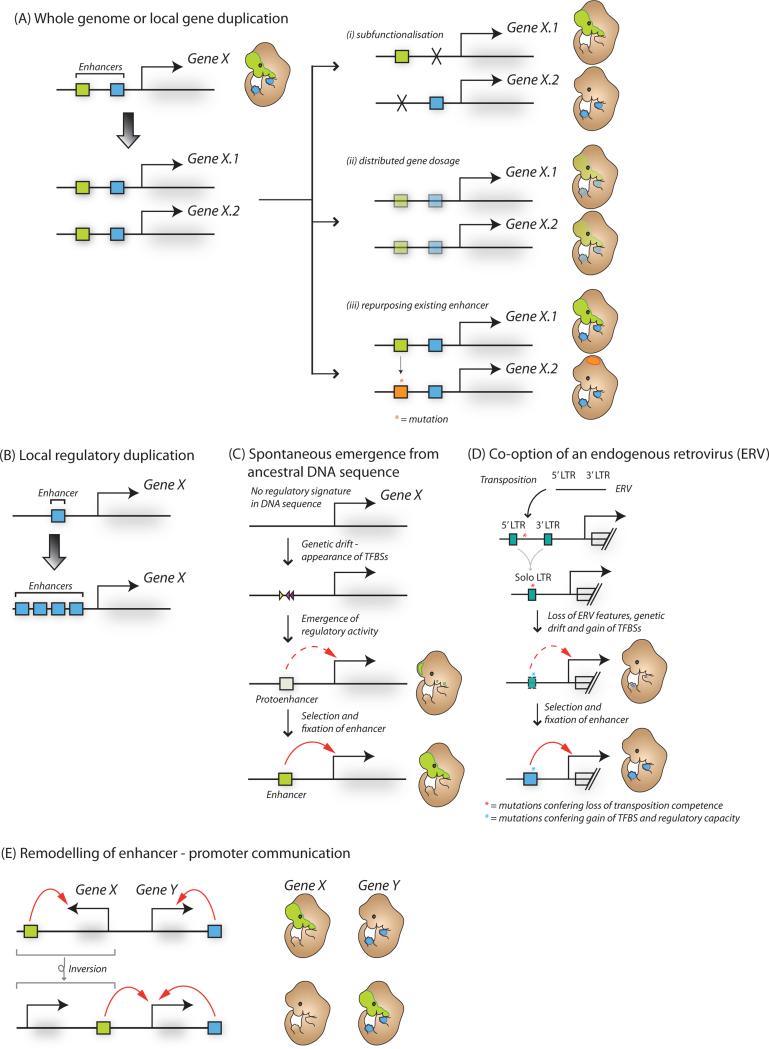
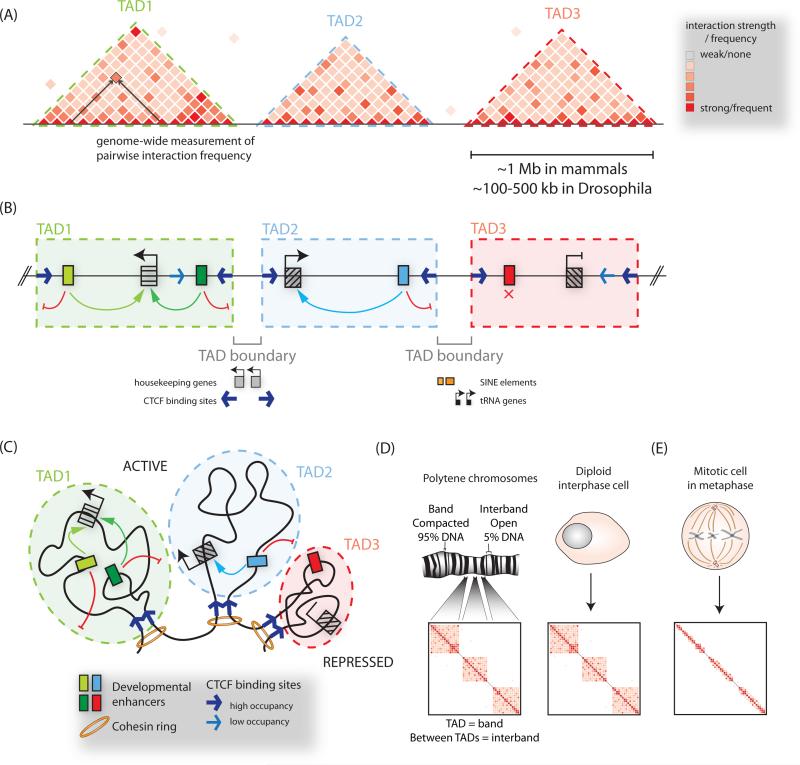
A class of cis-regulatory elements, called enhancers, play a central role in orchestrating spatiotemporally precise gene-expression programs during development. Consequently, divergence in enhancer sequence and activity is thought to be an important mediator of inter- and intra-species phenotypic variation. Here, we give an overview of emerging principles of enhancer function, current models of enhancer architecture, genomic substrates from which enhancers emerge during evolution, and the influence of three-dimensional genome organization on long-range gene regulation. We discuss intricate relationships between distinct elements within complex regulatory landscapes and consider their potential impact on specificity and robustness of transcriptional regulation.
一类被称为增强子的顺式调控元件在发育过程中协调时空精确的基因表达程序方面发挥着核心作用。因此,增强子序列和活性的差异被认为是物种间和物种内表型变异的重要介导因素。在这里,我们概述了增强子功能的新出现原则、增强子结构的当前模型、进化过程中增强子出现的基因组底物,以及三维基因组组织对远程基因调控的影响。我们讨论了复杂调控景观中不同元件之间的复杂关系,并考虑它们对转录调控的特异性和稳健性的潜在影响。