Cramer Shira L, Saha Achinto, Liu Jinyun, Tadi Surendar, Tiziani Stefano, Yan Wupeng, Triplett Kendra, Lamb Candice, Alters Susan E, Rowlinson Scott, Zhang Yan Jessie, Keating Michael J, Huang Peng, DiGiovanni John, Georgiou George, Stone Everett
Department of Chemical Engineering, University of Texas at Austin, Austin, Texas, USA.
Division of Pharmacology and Toxicology and Dell Pediatric Research Institute, University of Texas at Austin, Austin, Texas, USA.
Nat Med. 2017 Jan;23(1):120-127. doi: 10.1038/nm.4232. Epub 2016 Nov 21.
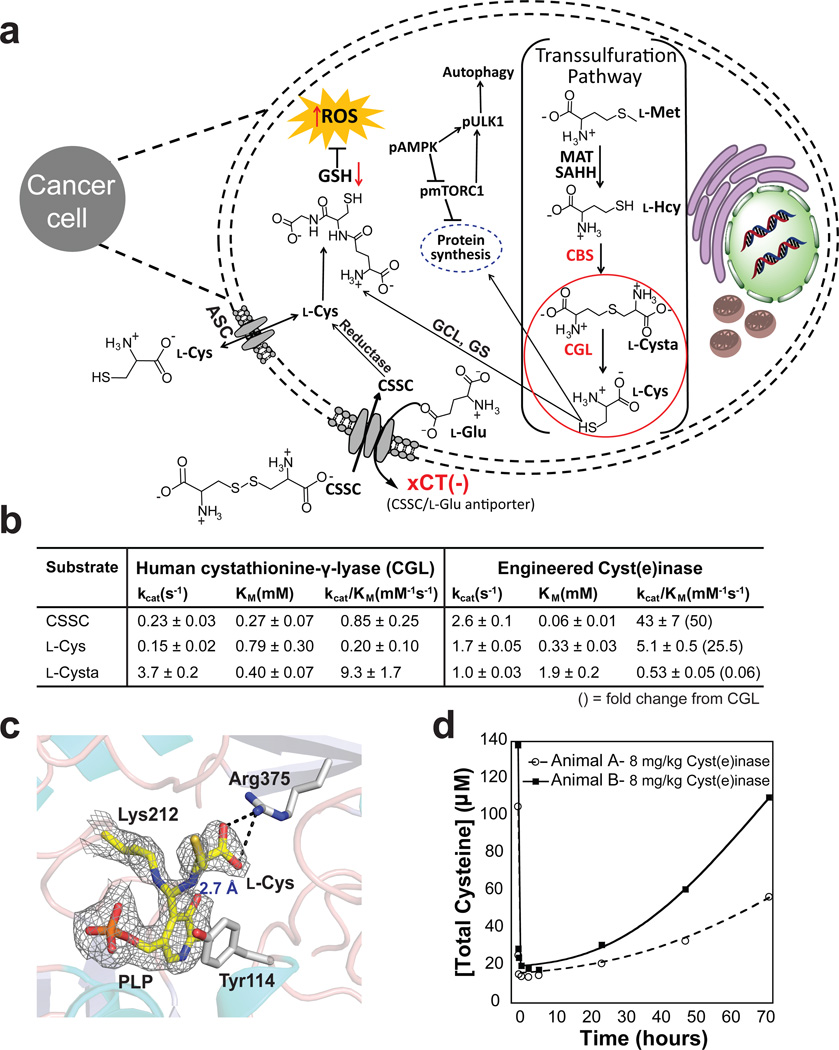
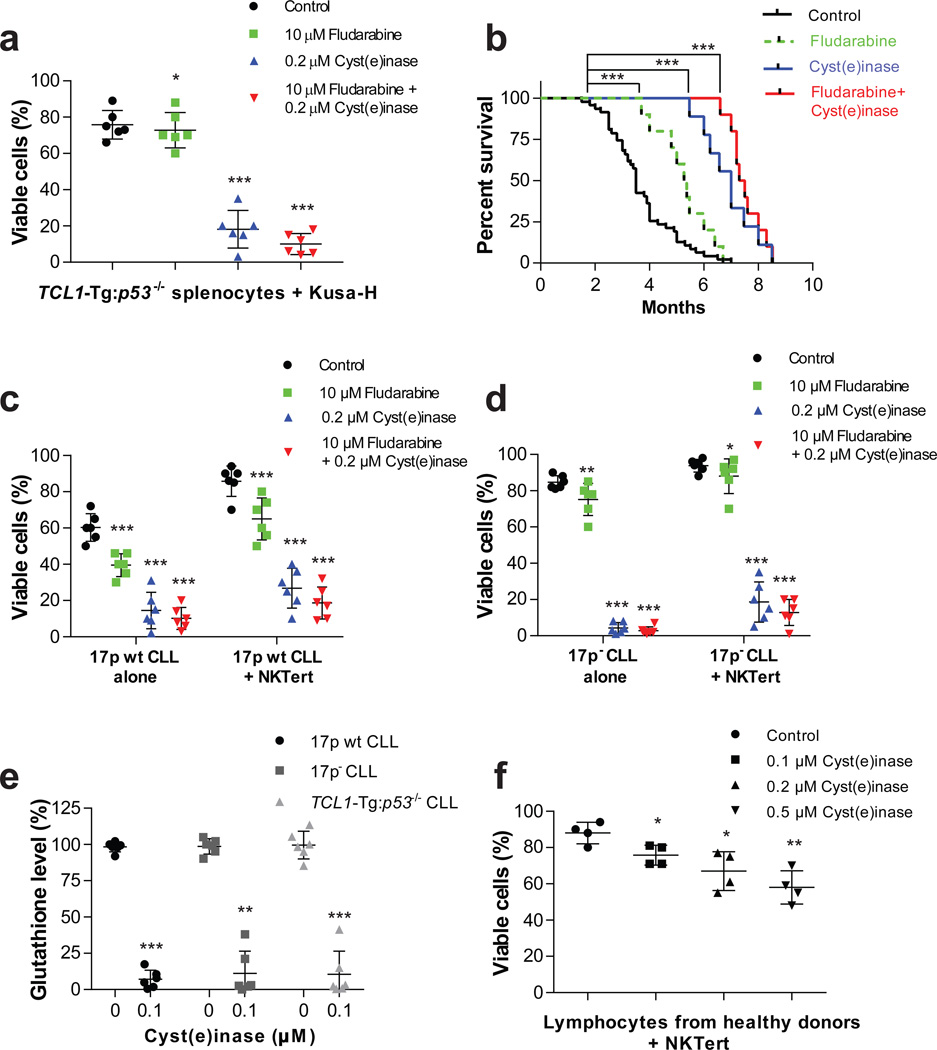
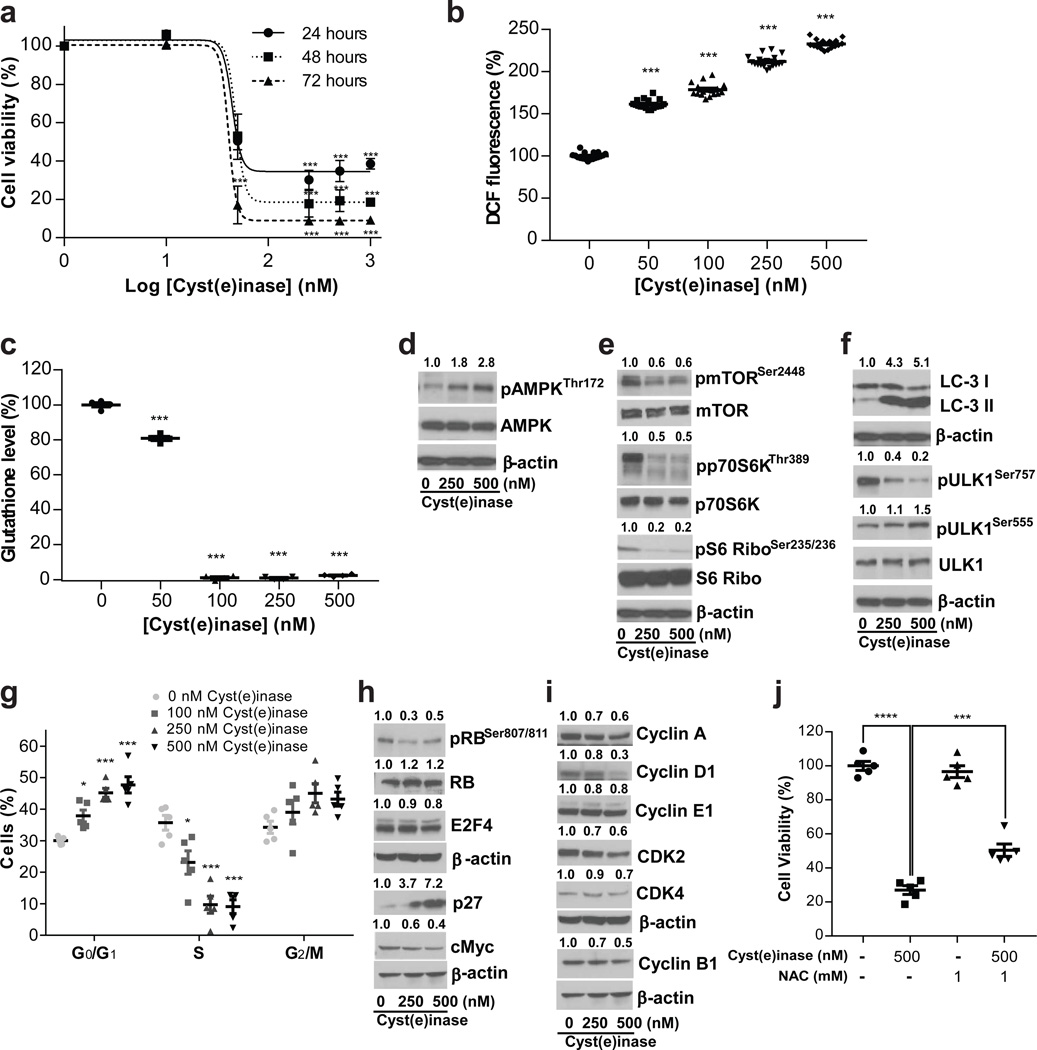
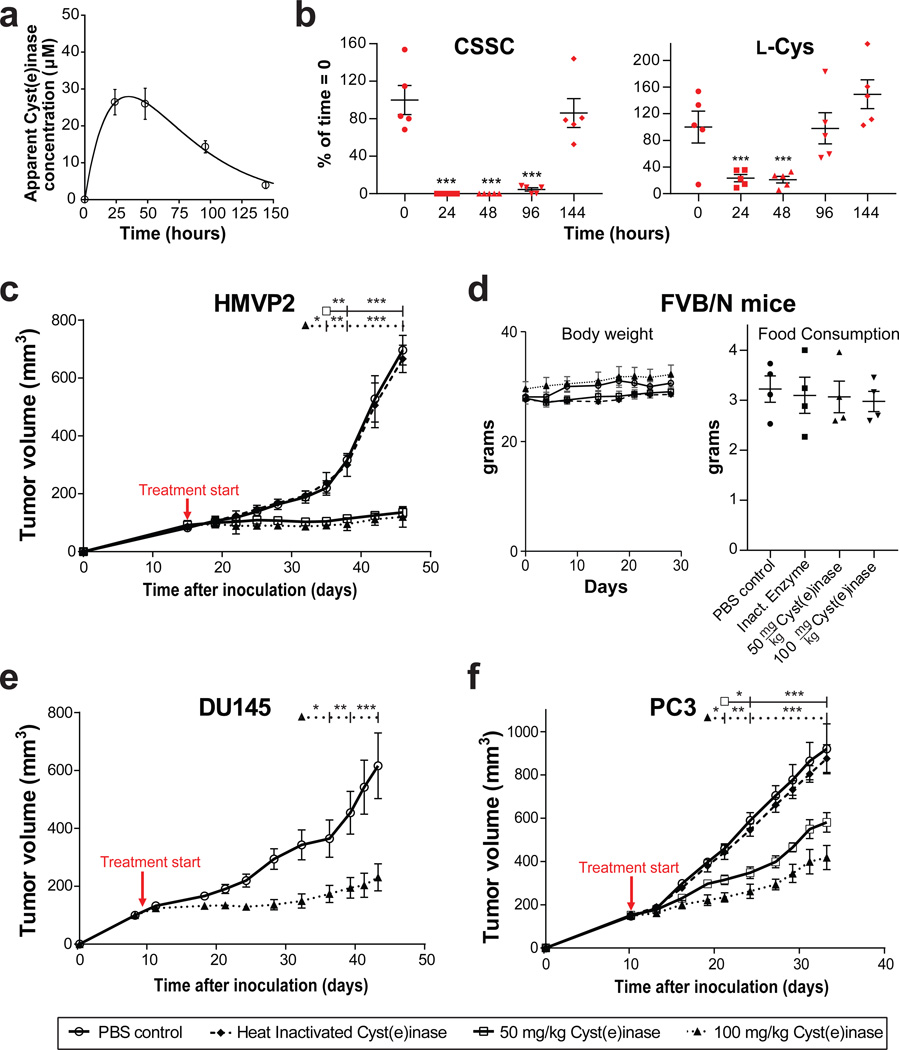
Cancer cells experience higher oxidative stress from reactive oxygen species (ROS) than do non-malignant cells because of genetic alterations and abnormal growth; as a result, maintenance of the antioxidant glutathione (GSH) is essential for their survival and proliferation. Under conditions of elevated ROS, endogenous L-cysteine (L-Cys) production is insufficient for GSH synthesis. This necessitates uptake of L-Cys that is predominantly in its disulfide form, L-cystine (CSSC), via the xCT(-) transporter. We show that administration of an engineered and pharmacologically optimized human cyst(e)inase enzyme mediates sustained depletion of the extracellular L-Cys and CSSC pool in mice and non-human primates. Treatment with this enzyme selectively causes cell cycle arrest and death in cancer cells due to depletion of intracellular GSH and ensuing elevated ROS; yet this treatment results in no apparent toxicities in mice even after months of continuous treatment. Cyst(e)inase suppressed the growth of prostate carcinoma allografts, reduced tumor growth in both prostate and breast cancer xenografts and doubled the median survival time of TCL1-Tg:p53 mice, which develop disease resembling human chronic lymphocytic leukemia. It was observed that enzyme-mediated depletion of the serum L-Cys and CSSC pool suppresses the growth of multiple tumors, yet is very well tolerated for prolonged periods, suggesting that cyst(e)inase represents a safe and effective therapeutic modality for inactivating antioxidant cellular responses in a wide range of malignancies.
由于基因改变和异常生长,癌细胞比非恶性细胞承受更高的来自活性氧(ROS)的氧化应激;因此,维持抗氧化剂谷胱甘肽(GSH)对其存活和增殖至关重要。在ROS升高的情况下,内源性L-半胱氨酸(L-Cys)的产生不足以用于GSH合成。这就需要通过xCT(-)转运体摄取主要以其二硫键形式存在的L-胱氨酸(CSSC)。我们表明,给予一种经过工程改造和药理学优化的人胱氨酸酶可介导小鼠和非人类灵长类动物细胞外L-Cys和CSSC池的持续消耗。用这种酶进行治疗会因细胞内GSH耗竭和随之而来的ROS升高而选择性地导致癌细胞的细胞周期停滞和死亡;然而,即使经过数月的连续治疗,这种治疗在小鼠中也没有导致明显的毒性。胱氨酸酶抑制了前列腺癌同种异体移植瘤的生长,减少了前列腺癌和乳腺癌异种移植瘤的肿瘤生长,并使TCL1-Tg:p53小鼠(其患有一种类似于人类慢性淋巴细胞白血病的疾病)的中位生存时间延长了一倍。据观察,酶介导的血清L-Cys和CSSC池的消耗抑制了多种肿瘤的生长,但在长时间内耐受性良好,这表明胱氨酸酶代表了一种安全有效的治疗方式,可在多种恶性肿瘤中使细胞抗氧化反应失活。