Liu Min, Hammers David W, Barton Elisabeth R, Sweeney H Lee
Department of Physiology, University of Pennsylvania, Philadelphia, Pennsylvania, United States of America.
Department of Pharmacology & Therapeutics, University of Florida College of Medicine, Gainesville, Florida, United States of America.
PLoS One. 2016 Nov 21;11(11):e0166803. doi: 10.1371/journal.pone.0166803. eCollection 2016.
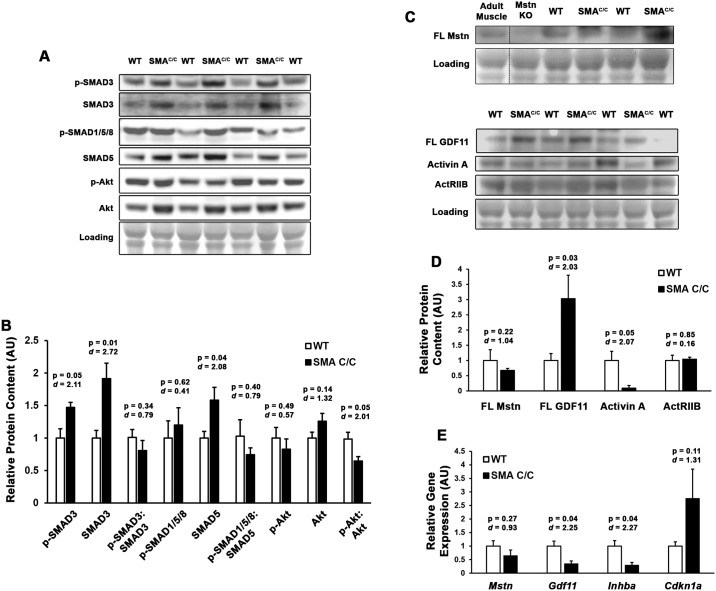
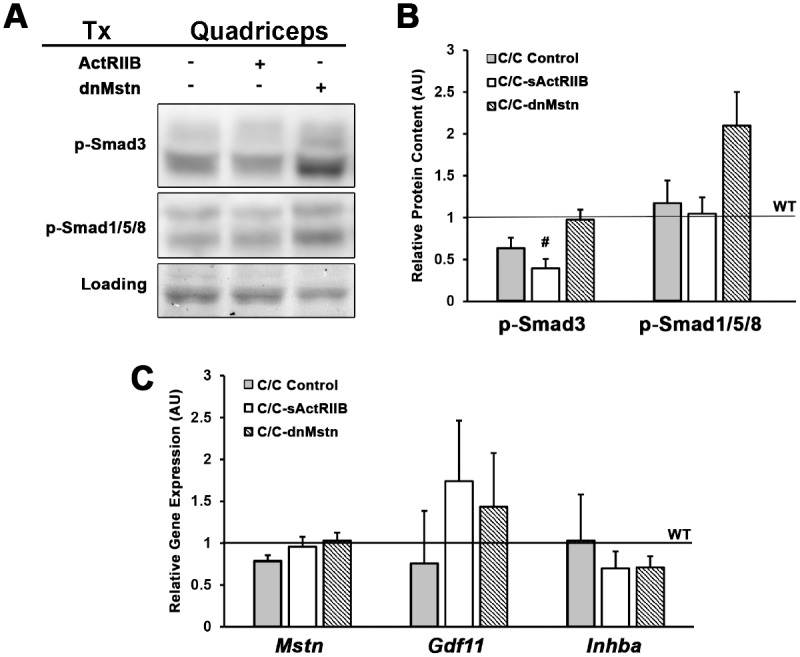
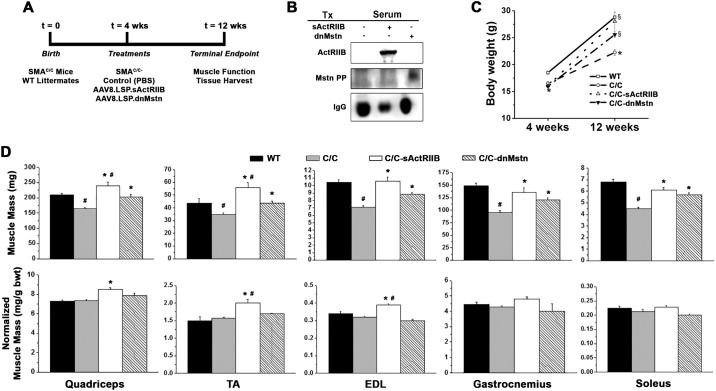
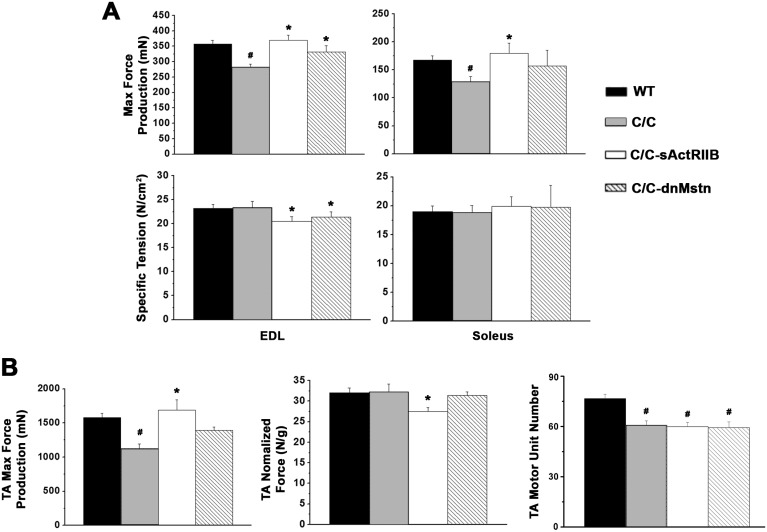
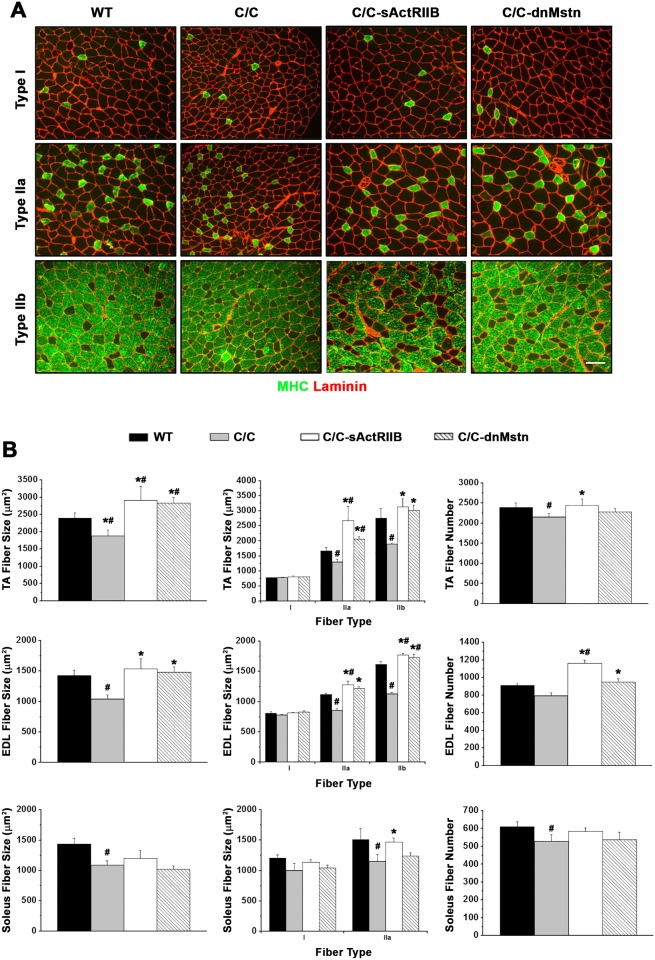
Spinal muscular atrophy (SMA) is a devastating neurodegenerative disorder that causes progressive muscle atrophy and weakness. Using adeno-associated virus-mediated gene transfer, we evaluated the potential to improve skeletal muscle weakness via systemic, postnatal inhibition of either myostatin or all signaling via the activin receptor type IIB (ActRIIB). After demonstrating elevated p-SMAD3 content and differential content of ActRIIB ligands, 4-week-old male C/C SMA model mice were treated intraperitoneally with 1x10¹² genome copies of pseudotype 2/8 virus encoding a soluble form of the ActRIIB extracellular domain (sActRIIB) or protease-resistant myostatin propeptide (dnMstn) driven by a liver specific promoter. At 12 weeks of age, muscle mass and function were improved in treated C/C mice by both treatments, compared to controls. The fast fiber type muscles had a greater response to treatment than did slow muscles, and the greatest therapeutic effects were found with sActRIIB treatment. Myostatin/activin inhibition, however, did not rescue C/C mice from the reduction in motor unit numbers of the tibialis anterior muscle. Collectively, this study indicates that myostatin/activin inhibition represents a potential therapeutic strategy to increase muscle mass and strength, but not neuromuscular junction defects, in less severe forms of SMA.
脊髓性肌萎缩症(SMA)是一种毁灭性的神经退行性疾病,会导致进行性肌肉萎缩和无力。我们利用腺相关病毒介导的基因转移,评估了通过全身、产后抑制肌肉生长抑制素或经由IIB型激活素受体(ActRIIB)的所有信号传导来改善骨骼肌无力的潜力。在证实p-SMAD3含量升高以及ActRIIB配体的含量存在差异后,对4周龄的雄性C/C SMA模型小鼠进行腹腔注射,注射由肝脏特异性启动子驱动的、编码ActRIIB胞外域可溶性形式(sActRIIB)或抗蛋白酶肌肉生长抑制素前肽(dnMstn)的2/8型假型病毒,病毒基因组拷贝数为1×10¹²。在12周龄时,与对照组相比,两种治疗方法均改善了接受治疗的C/C小鼠的肌肉质量和功能。快肌纤维类型的肌肉对治疗的反应比慢肌更大,且sActRIIB治疗的效果最为显著。然而,抑制肌肉生长抑制素/激活素并不能使C/C小鼠免于胫前肌运动单位数量的减少。总体而言,本研究表明,抑制肌肉生长抑制素/激活素是一种潜在的治疗策略,可增加症状较轻的SMA患者的肌肉质量和力量,但无法改善神经肌肉接头缺陷。