Elovaara Heli, Parkash Vimal, Fair-Mäkelä Ruth, Salo-Ahen Outi M H, Guédez Gabriela, Bligt-Lindén Eva, Grönholm Janne, Jalkanen Sirpa, Salminen Tiina A
Medicity Research Laboratory, University of Turku, Turku, Finland.
Structural Bioinformatics Laboratory, Biochemistry, Faculty of Science and Engineering, Åbo Akademi University, Turku, Finland.
PLoS One. 2016 Nov 28;11(11):e0166935. doi: 10.1371/journal.pone.0166935. eCollection 2016.
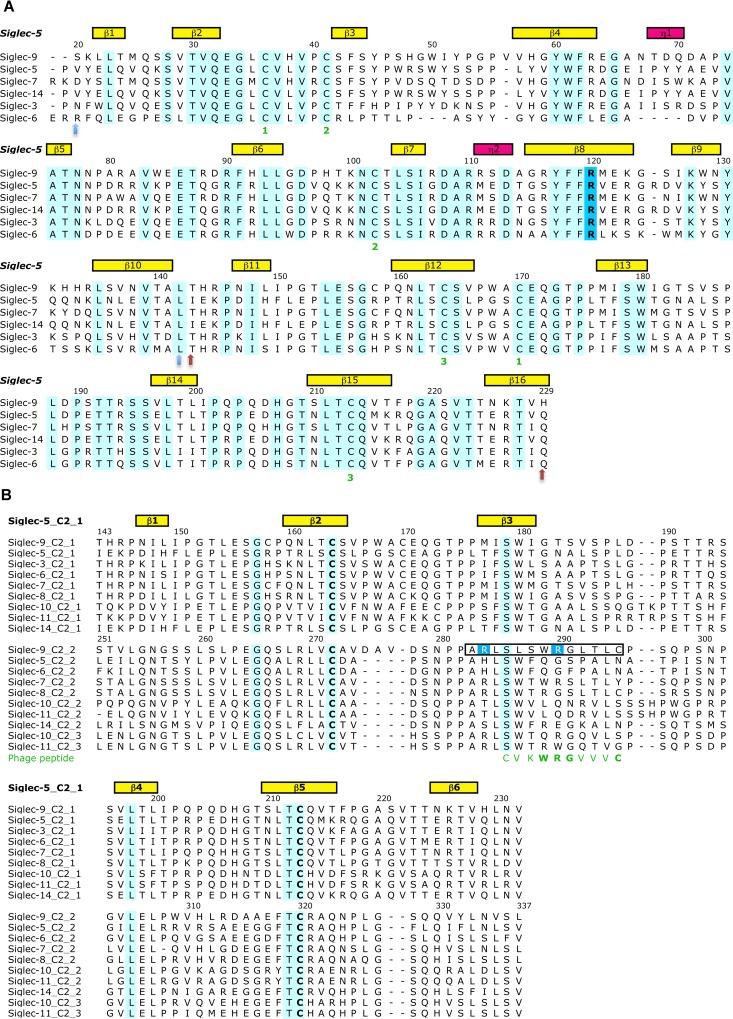
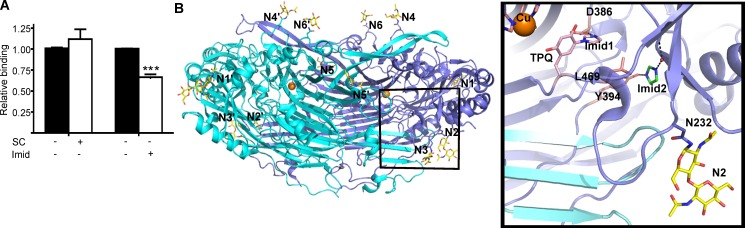
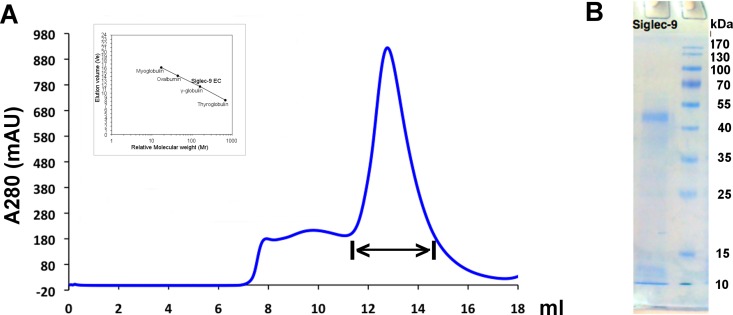
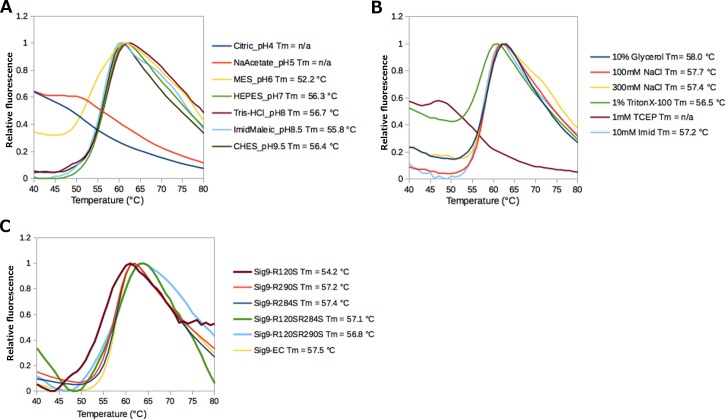
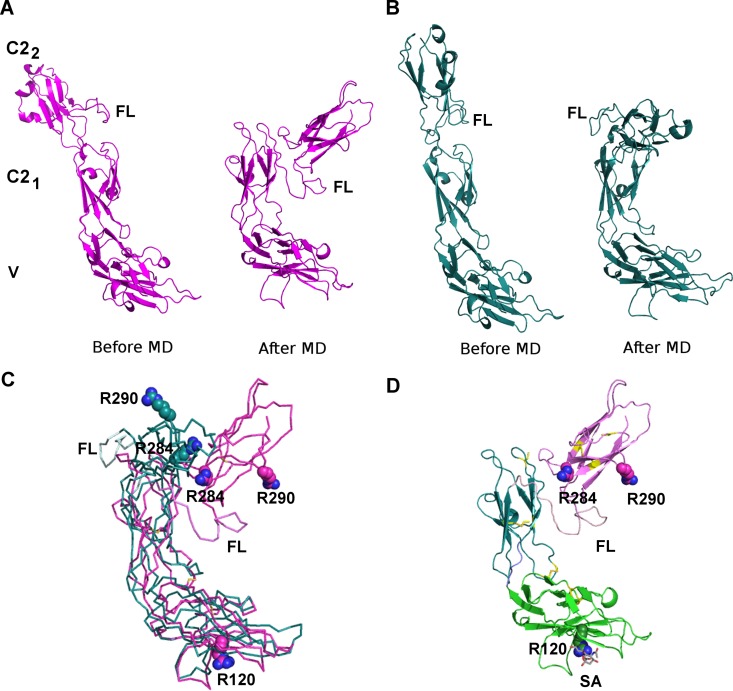
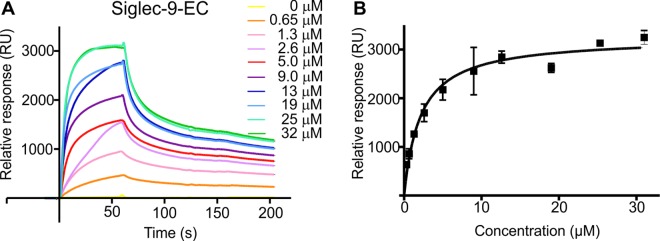
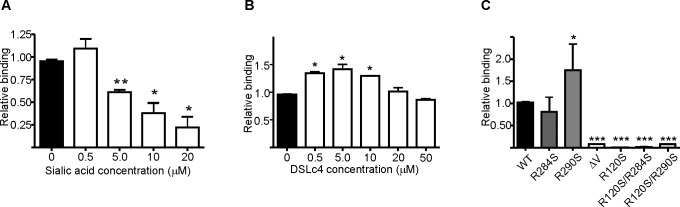
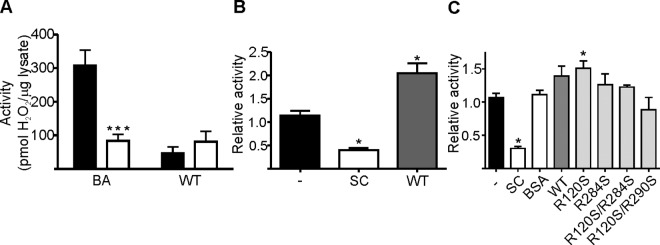
Sialic acid-binding immunoglobulin-like lectin-9 (Siglec-9) on leukocyte surface is a counter-receptor for endothelial cell surface adhesin, human primary amine oxidase (hAOC3), a target protein for anti-inflammatory agents. This interaction can be used to detect inflammation and cancer in vivo, since the labeled peptides derived from the second C2 domain (C22) of Siglec-9 specifically bind to the inflammation-inducible hAOC3. As limited knowledge on the interaction between Siglec-9 and hAOC3 has hampered both hAOC3-targeted drug design and in vivo imaging applications, we have now produced and purified the extracellular region of Siglec-9 (Siglec-9-EC) consisting of the V, C21 and C22 domains, modeled its 3D structure and characterized the hAOC3-Siglec-9 interactions using biophysical methods and activity/inhibition assays. Our results assign individual, previously unknown roles for the V and C22 domains. The V domain is responsible for the unusually tight Siglec-9-hAOC3 interactions whereas the intact C22 domain of Siglec-9 is required for modulating the enzymatic activity of hAOC3, crucial for the hAOC3-mediated leukocyte trafficking. By characterizing the Siglec-9-EC mutants, we could conclude that R120 in the V domain likely interacts with the terminal sialic acids of hAOC3 attached glycans whereas residues R284 and R290 in C22 are involved in the interactions with the active site channel of hAOC3. Furthermore, the C22 domain binding enhances the enzymatic activity of hAOC3 although the sialic acid-binding capacity of the V domain of Siglec-9 is abolished by the R120S mutation. To conclude, our results prove that the V and C22 domains of Siglec-9-EC interact with hAOC3 in a multifaceted and unique way, forming both glycan-mediated and direct protein-protein interactions, respectively. The reported results on the mechanism of the Siglec-9-hAOC3 interaction are valuable for the development of hAOC3-targeted therapeutics and diagnostic tools.
白细胞表面的唾液酸结合免疫球蛋白样凝集素-9(Siglec-9)是内皮细胞表面黏附分子人原发性胺氧化酶(hAOC3)的反受体,hAOC3是抗炎药物的靶蛋白。这种相互作用可用于体内炎症和癌症检测,因为源自Siglec-9第二个C2结构域(C22)的标记肽可特异性结合炎症诱导的hAOC3。由于对Siglec-9与hAOC3之间相互作用的了解有限,阻碍了以hAOC3为靶点的药物设计和体内成像应用,我们现已制备并纯化了由V、C21和C22结构域组成的Siglec-9细胞外区域(Siglec-9-EC),对其三维结构进行了建模,并使用生物物理方法和活性/抑制试验对hAOC3与Siglec-9的相互作用进行了表征。我们的结果确定了V和C22结构域各自以前未知的作用。V结构域负责Siglec-9与hAOC3异常紧密的相互作用,而Siglec-9完整的C22结构域是调节hAOC3酶活性所必需的,这对hAOC3介导的白细胞运输至关重要。通过对Siglec-9-EC突变体的表征,我们可以得出结论,V结构域中的R120可能与hAOC3连接聚糖的末端唾液酸相互作用,而C22中的R284和R290残基参与与hAOC3活性位点通道的相互作用。此外,尽管Siglec-9的V结构域的唾液酸结合能力因R120S突变而丧失,但C22结构域的结合增强了hAOC3的酶活性。总之,我们的结果证明Siglec-9-EC的V和C22结构域以多方面且独特的方式与hAOC3相互作用,分别形成聚糖介导的和直接的蛋白质-蛋白质相互作用。所报道的关于Siglec-9与hAOC3相互作用机制的结果对于开发以hAOC3为靶点的治疗方法和诊断工具具有重要价值。