Marusina Alina I, Ono Yoko, Merleev Alexander A, Shimoda Michiko, Ogawa Hiromi, Wang Elizabeth A, Kondo Kayo, Olney Laura, Luxardi Guillaume, Miyamura Yoshinori, Yilma Tilahun D, Villalobos Itzel Bustos, Bergstrom Jennifer W, Kronenberg Daniel G, Soulika Athena M, Adamopoulos Iannis E, Maverakis Emanual
Department of Dermatology, School of Medicine, University of California, Sacramento, Davis, CA 95817, United States.
International Laboratory of Molecular Biology for Tropical Disease Agents, School of Veterinary Medicine, University of California, Davis, CA 95616, United States; Department of Medical Microbiology and Immunology, School of Medicine, University of California, Davis, CA 95616, United States.
J Autoimmun. 2017 Feb;77:76-88. doi: 10.1016/j.jaut.2016.11.001. Epub 2016 Nov 25.
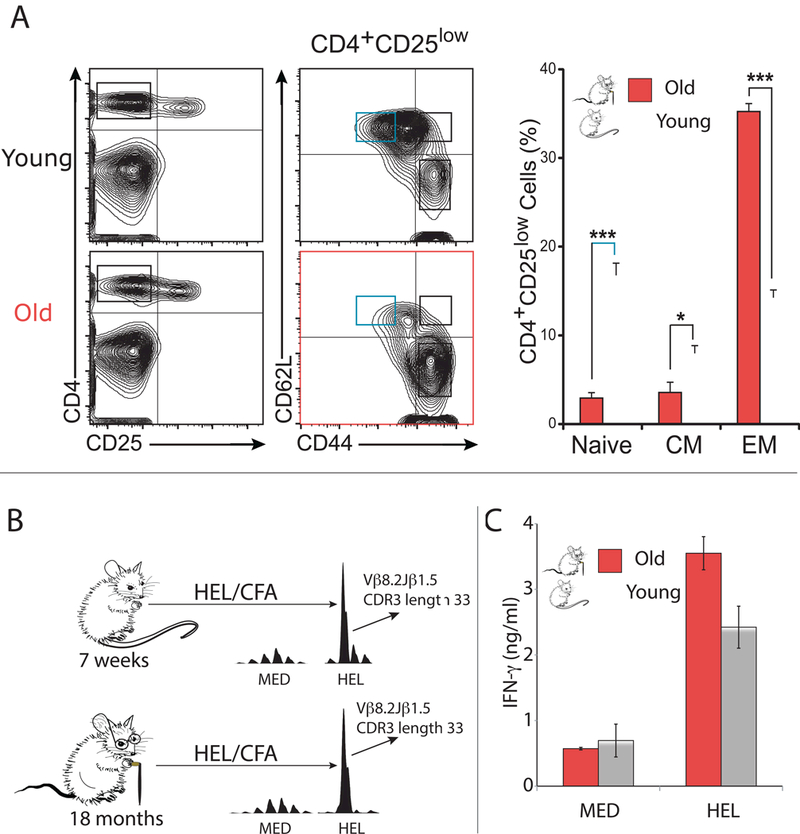
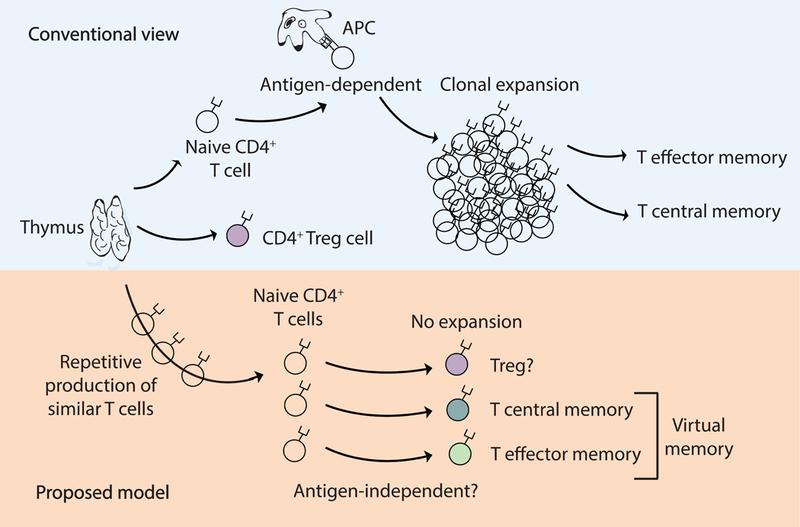
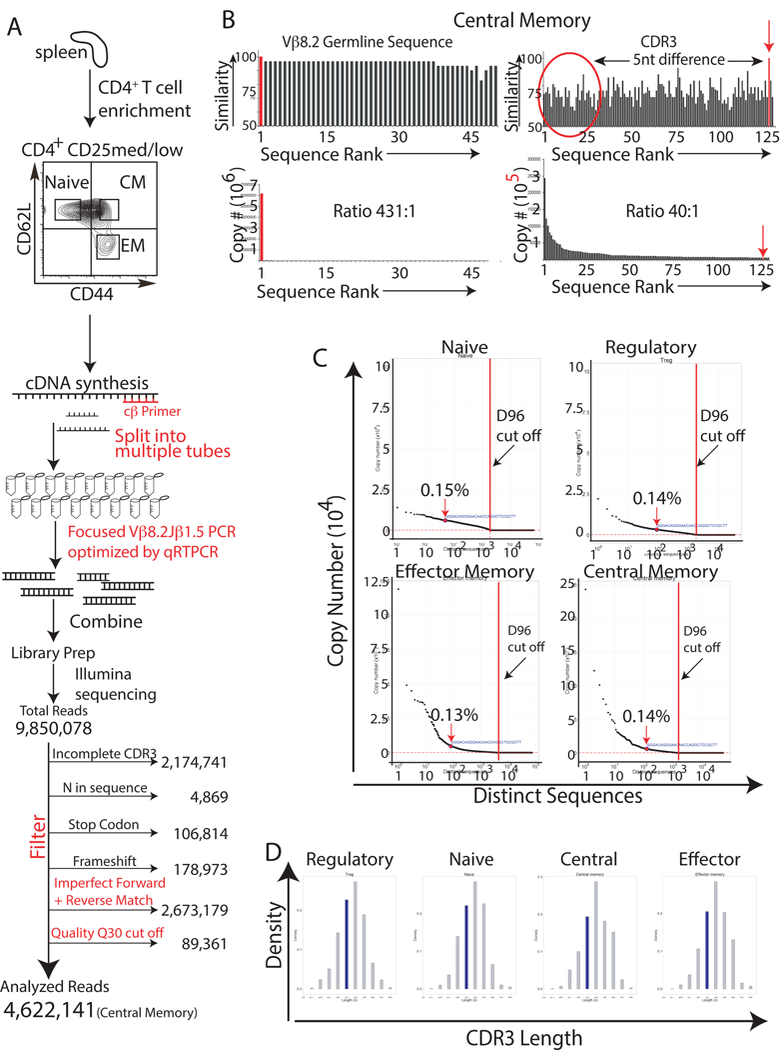
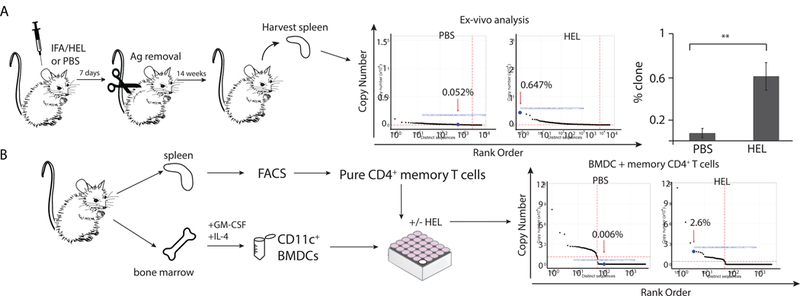
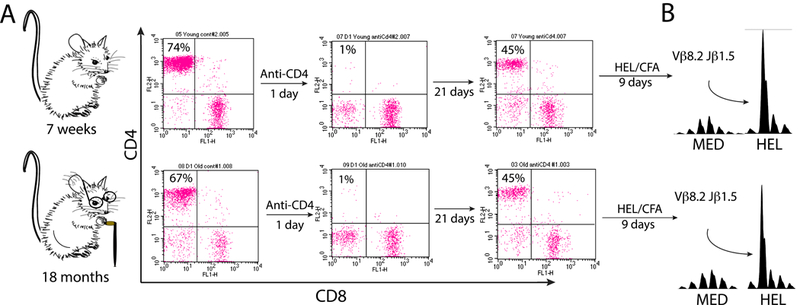
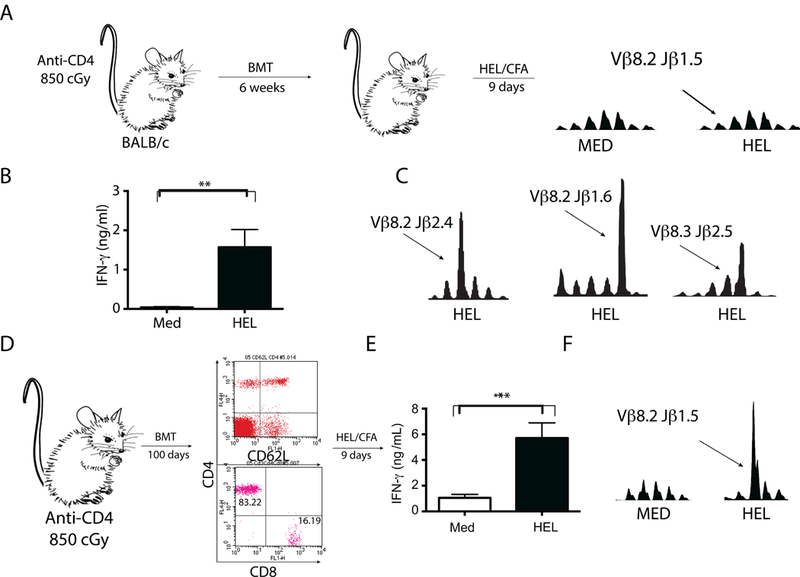
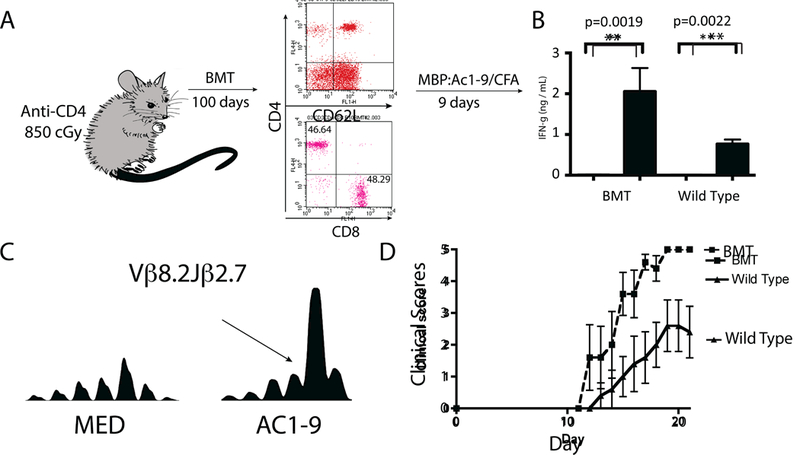
It is widely accepted that central and effector memory CD4 T cells originate from naïve T cells after they have encountered their cognate antigen in the setting of appropriate co-stimulation. However, if this were true the diversity of T cell receptor (TCR) sequences within the naïve T cell compartment should be far greater than that of the memory T cell compartment, which is not supported by TCR sequencing data. Here we demonstrate that aged mice with far fewer naïve T cells, respond to the model antigen, hen eggwhite lysozyme (HEL), by utilizing the same TCR sequence as their younger counterparts. CD4 T cell repertoire analysis of highly purified T cell populations from naive animals revealed that the HEL-specific clones displayed effector and central "memory" cell surface phenotypes even prior to having encountered their cognate antigen. Furthermore, HEL-inexperienced CD4 T cells were found to reside within the naïve, regulatory, central memory, and effector memory T cell populations at similar frequencies and the majority of the CD4 T cells within the regulatory and memory populations were unexpanded. These findings support a new paradigm for CD4 T cell maturation in which a specific clone can undergo a differentiation process to exhibit a "memory" or regulatory phenotype without having undergone a clonal expansion event. It also demonstrates that a foreign-specific T cell is just as likely to reside within the regulatory T cell compartment as it would the naïve compartment, arguing against the specificity of the regulatory T cell compartment being skewed towards self-reactive T cell clones. Finally, we demonstrate that the same set of foreign and autoreactive CD4 T cell clones are repetitively generated throughout adulthood. The latter observation argues against T cell-depleting strategies or autologous stem cell transplantation as therapies for autoimmunity-as the immune system has the ability to regenerate pathogenic clones.
人们普遍认为,中枢记忆和效应记忆CD4 T细胞起源于初始T细胞,它们在适当的共刺激环境中遇到其同源抗原后产生。然而,如果真是这样,初始T细胞库中T细胞受体(TCR)序列的多样性应该远大于记忆T细胞库,而TCR测序数据并不支持这一点。在这里,我们证明,幼稚T细胞数量少得多的老年小鼠,对模型抗原蛋清溶菌酶(HEL)的反应,使用的TCR序列与其年轻对应物相同。对来自幼稚动物的高度纯化T细胞群体进行CD4 T细胞库分析发现,即使在遇到其同源抗原之前,HEL特异性克隆就显示出效应和中枢“记忆”细胞表面表型。此外,发现未接触过HEL的CD4 T细胞以相似的频率存在于幼稚、调节性、中枢记忆和效应记忆T细胞群体中,并且调节性和记忆性群体中的大多数CD4 T细胞未扩增。这些发现支持了CD4 T细胞成熟的新范式,即特定克隆可以经历分化过程,以表现出“记忆”或调节表型,而无需经历克隆扩增事件。这也表明,外来特异性T细胞存在于调节性T细胞库中的可能性与存在于幼稚T细胞库中的可能性一样,这与调节性T细胞库的特异性偏向自身反应性T细胞克隆的观点相悖。最后,我们证明,在成年期会重复产生同一组外来和自身反应性CD4 T细胞克隆。后一观察结果反对将T细胞耗竭策略或自体干细胞移植作为自身免疫性疾病的治疗方法,因为免疫系统有能力再生致病克隆。