Larbi Anis
Medical and Scientific Affairs, Beckman Coulter Life Sciences, 22 Avenue des Nations, 93420 Villepinte, France.
Department of Medicine, Division of Geriatrics, Faculty of Medicine and Health Sciences, Université de Sherbrooke, Sherbrooke, QC J1K 2R1, Canada.
Biomedicines. 2024 Jul 3;12(7):1469. doi: 10.3390/biomedicines12071469.
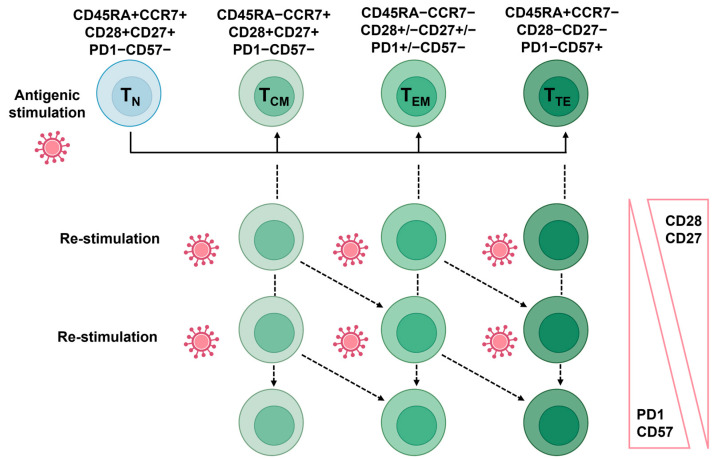
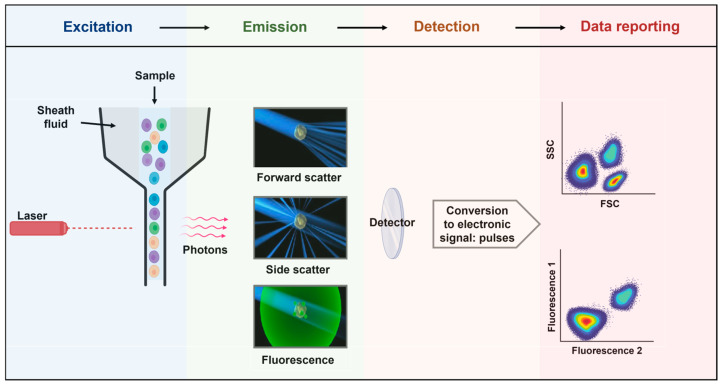
The immune system is a highly complex and tightly regulated system that plays a crucial role in protecting the body against external threats, such as pathogens, and internal abnormalities, like cancer cells. It undergoes development during fetal stages and continuously learns from each encounter with pathogens, allowing it to develop immunological memory and provide a wide range of immune protection. Over time, after numerous encounters and years of functioning, the immune system can begin to show signs of erosion, which is commonly named immunosenescence. In this review, we aim to explore how the immune system responds to initial encounters with antigens and how it handles persistent stimulations throughout a person's lifetime. Our understanding of the immune system has greatly benefited from advanced technologies like flow cytometry. In this context, we will discuss the valuable contribution of flow cytometry in enhancing our knowledge of the immune system behavior in aging, with a specific focus on T-cells. Moreover, we will expand our discussion to the flow cytometry-based assessment of extracellular vesicles, a recently discovered communication channel in biology, and their implications for immune system functioning.
免疫系统是一个高度复杂且受到严格调控的系统,在保护身体抵御外部威胁(如病原体)和内部异常(如癌细胞)方面发挥着关键作用。它在胎儿阶段发育,并不断从每次与病原体的接触中学习,从而形成免疫记忆并提供广泛的免疫保护。随着时间的推移,在经历无数次接触并经过多年运作后,免疫系统可能开始出现衰退迹象,这通常被称为免疫衰老。在本综述中,我们旨在探讨免疫系统如何应对初次接触抗原的情况,以及它在人的一生中如何处理持续的刺激。我们对免疫系统的理解很大程度上受益于诸如流式细胞术等先进技术。在此背景下,我们将讨论流式细胞术在增强我们对衰老过程中免疫系统行为的认识方面的宝贵贡献,特别关注T细胞。此外,我们将把讨论扩展到基于流式细胞术的细胞外囊泡评估,细胞外囊泡是生物学中最近发现的一种通讯渠道,及其对免疫系统功能的影响。