Liang Gaofeng, Li Yang, Feng Wenpo, Wang Xinshuai, Jing Aihua, Li Jinghua, Ma Kaiwang
Department of Biomedical Engineering, School of Medical Technology & Engineering.
Department of Oncology, The First Affiliated Hospital, Henan University of Science & Technology, Luoyang, People's Republic of China.
Int J Nanomedicine. 2016 Nov 15;11:6079-6088. doi: 10.2147/IJN.S120828. eCollection 2016.
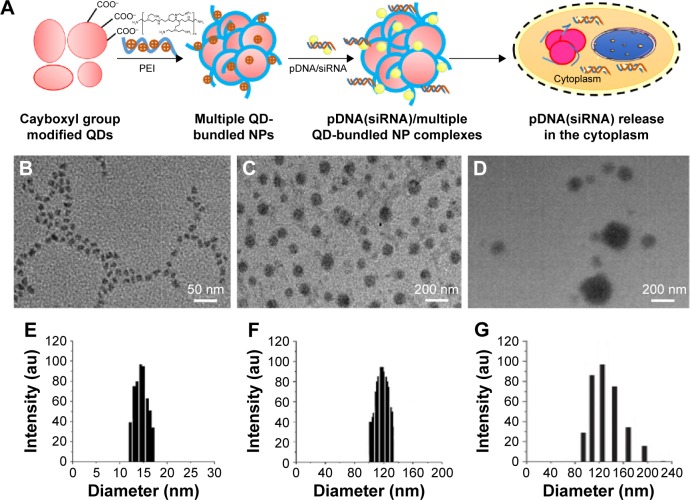
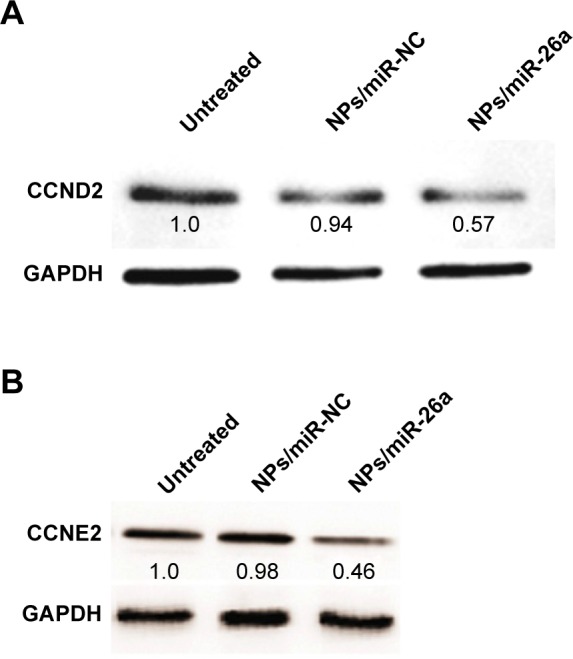
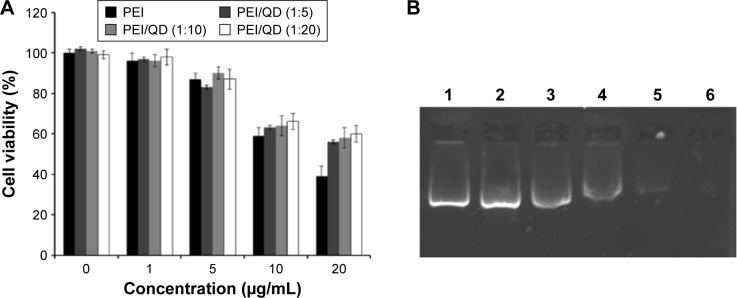
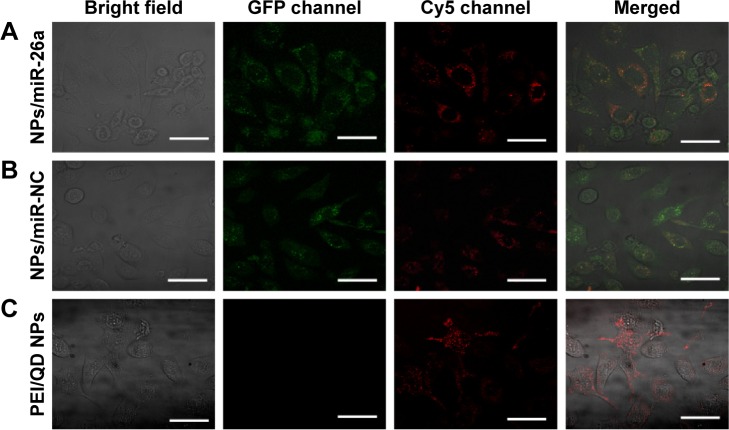
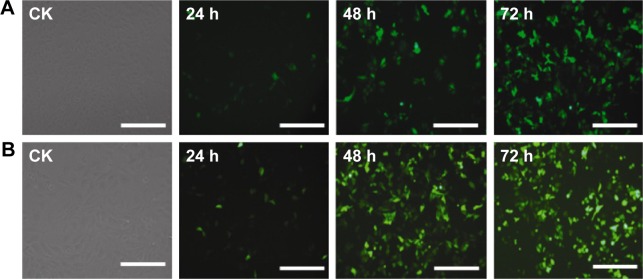
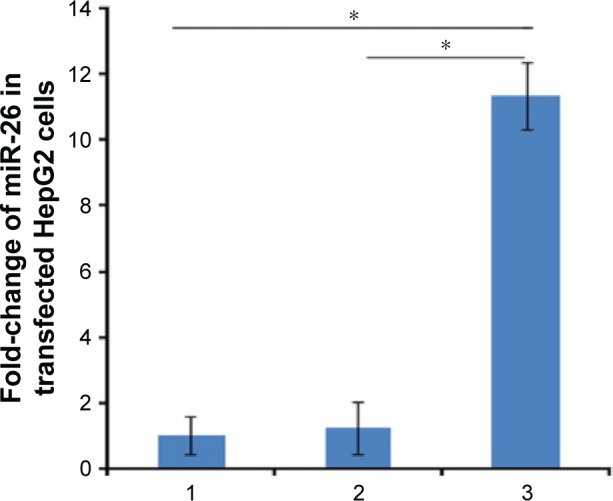
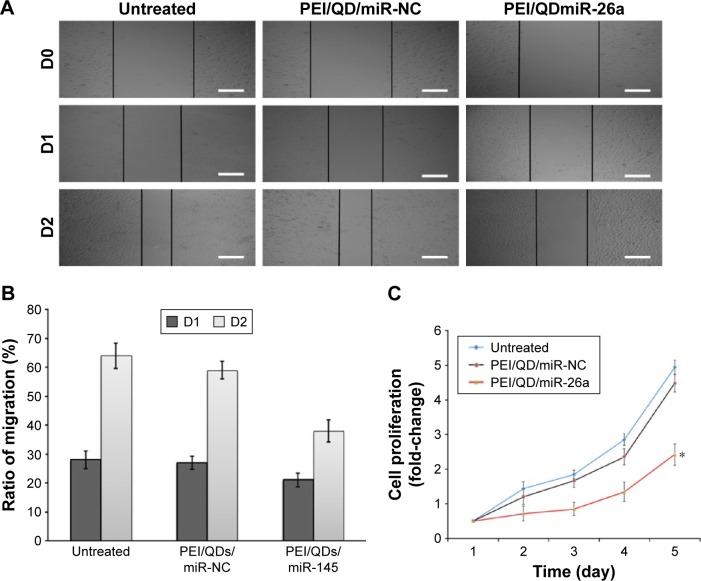
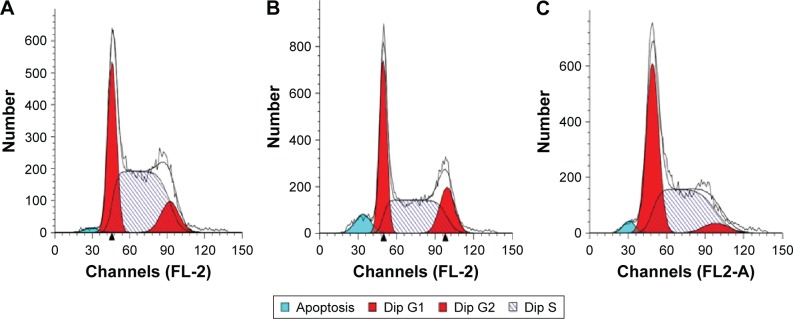
Quantum dots (QDs) have been intensively investigated for bioimaging, drug delivery, and labeling probes because of their unique optical properties. In this study, CdSe/ZnS QDs-based nonviral vectors with the dual functions of delivering miR-26a plasmid and bioimaging were formulated by capping the surface of CdSe/ZnS QDs with polyethyleneimine (PEI). The PEI-coated QDs were capable of condensing miR-26a expression vector into nanocomplexes that can emit strong red luminescence when loaded with CdSe/ZnS QDs. Further results showed that PEI-modified nanoparticles (NPs) could transfect miR-26a plasmid into HepG2 cells in vitro. Meanwhile, imaging of living cells could be achieved based on the CdSe/ZnS QDs. Further study suggested that miR-26a transfection up-regulated miR-26a expression, induced cycle arrest, and triggered proliferation inhibition in HepG2 cells. The results indicated that PEI-coated QD NPs possess the capability of bioimaging and gene delivery and could be a promising vehicle with the engineering of QD NPs for gene therapy in the future.
由于量子点(QDs)具有独特的光学性质,因此已被广泛研究用于生物成像、药物递送和标记探针。在本研究中,通过用聚乙烯亚胺(PEI)覆盖CdSe/ZnS量子点的表面,制备了具有递送miR-26a质粒和生物成像双重功能的基于CdSe/ZnS量子点的非病毒载体。PEI包被的量子点能够将miR-26a表达载体浓缩成纳米复合物,当装载CdSe/ZnS量子点时,该纳米复合物能发出强烈的红色荧光。进一步的结果表明,PEI修饰的纳米颗粒(NPs)能够在体外将miR-26a质粒转染到HepG2细胞中。同时,基于CdSe/ZnS量子点可以实现活细胞成像。进一步的研究表明,miR-26a转染上调了miR-26a的表达,诱导了细胞周期停滞,并触发了HepG2细胞的增殖抑制。结果表明,PEI包被的量子点纳米颗粒具有生物成像和基因递送能力,未来有望成为用于基因治疗的量子点纳米颗粒工程载体。