Przybylski Andrew K, Wang John C
Oxford Internet Institute, University of Oxford , Oxford , United Kingdom.
Nanyang Technological University , Singapore.
PeerJ. 2016 Nov 16;4:e2710. doi: 10.7717/peerj.2710. eCollection 2016.
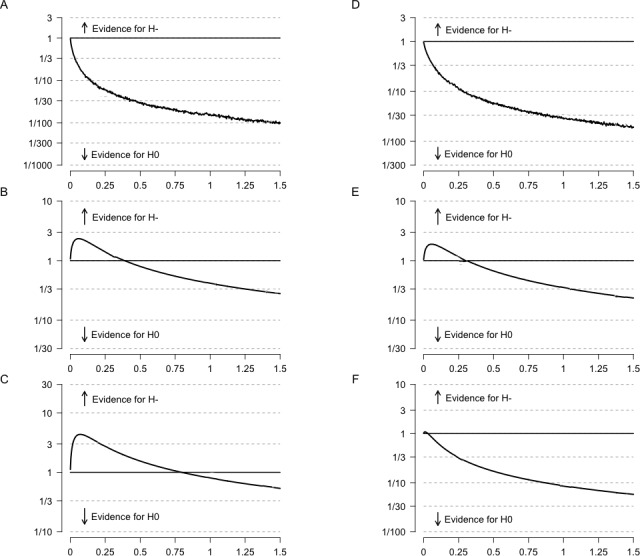
A growing research literature suggests that regular electronic game play and game-based training programs may confer practically significant benefits to cognitive functioning. Most evidence supporting this idea, the , has been collected in small-scale studies of university students and older adults. This research investigated the hypothesis in a general way with a large sample of 1,847 school-aged children. Our aim was to examine the relations between young people's gaming experiences and an objective test of reasoning performance. Using a Bayesian hypothesis testing approach, evidence for the gaming-enhancement and null hypotheses were compared. Results provided no substantive evidence supporting the idea that having preference for or regularly playing commercially available games was positively associated with reasoning ability. Evidence ranged from equivocal to very strong in support for the null hypothesis over what was predicted. The discussion focuses on the value of Bayesian hypothesis testing for investigating electronic gaming effects, the importance of open science practices, and pre-registered designs to improve the quality of future work.
越来越多的研究文献表明,定期玩电子游戏和基于游戏的训练项目可能会给认知功能带来切实显著的益处。支持这一观点的大多数证据,是在针对大学生和老年人的小规模研究中收集到的。本研究以1847名学龄儿童为大样本,以一般方式对这一假设进行了调查。我们的目的是研究青少年的游戏体验与推理能力客观测试之间的关系。使用贝叶斯假设检验方法,比较了游戏增强假设和零假设的证据。结果没有提供实质性证据支持这样一种观点,即对商业游戏有偏好或经常玩商业游戏与推理能力呈正相关。证据从模棱两可到非常有力,都支持零假设而非预测结果。讨论聚焦于贝叶斯假设检验在研究电子游戏影响方面的价值、开放科学实践的重要性以及预先注册设计对提高未来研究质量的作用。