School of Materials Science and Engineering, Nanyang Technological University, 50 Nanyang Avenue, 639798, Singapore.
Centre for Biomimetic Sensor Science, Nanyang Technological University, 50 Nanyang Drive, 637553, Singapore.
Sci Rep. 2016 Nov 29;6:37427. doi: 10.1038/srep37427.
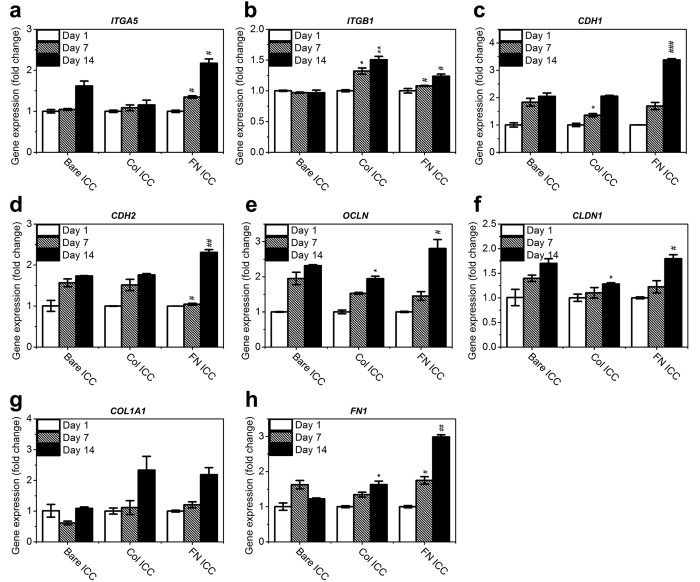
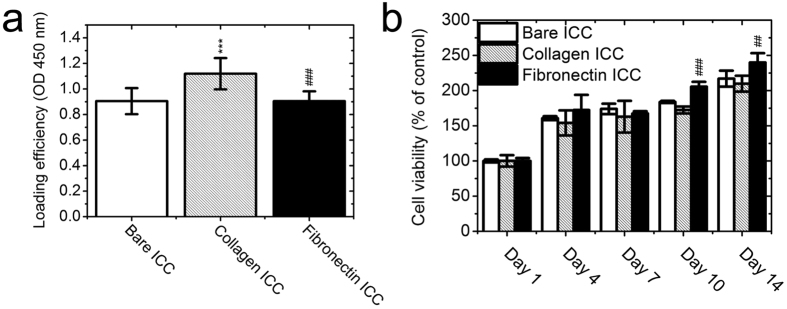
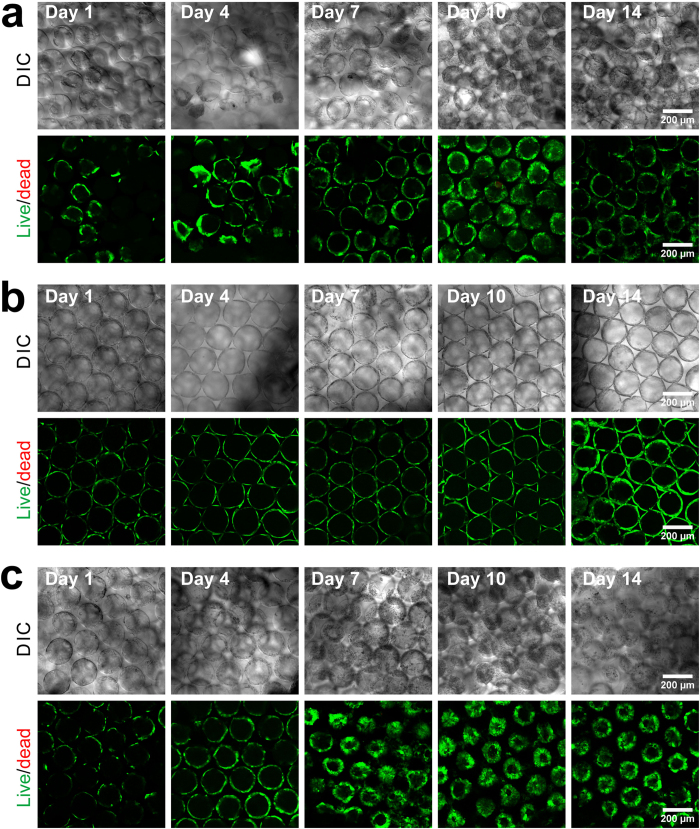
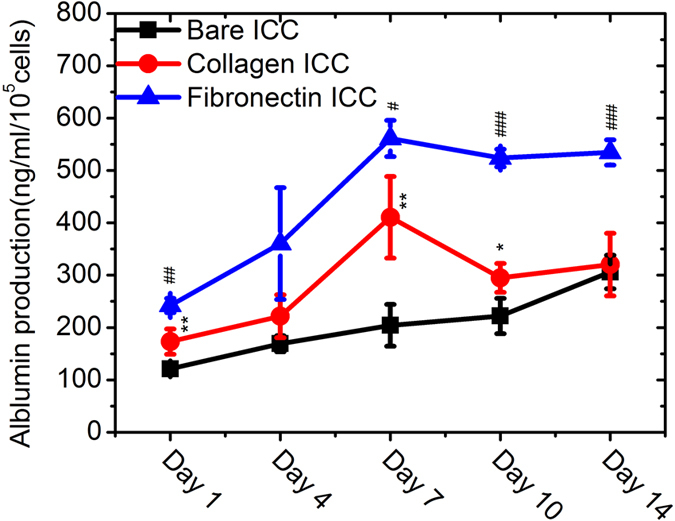
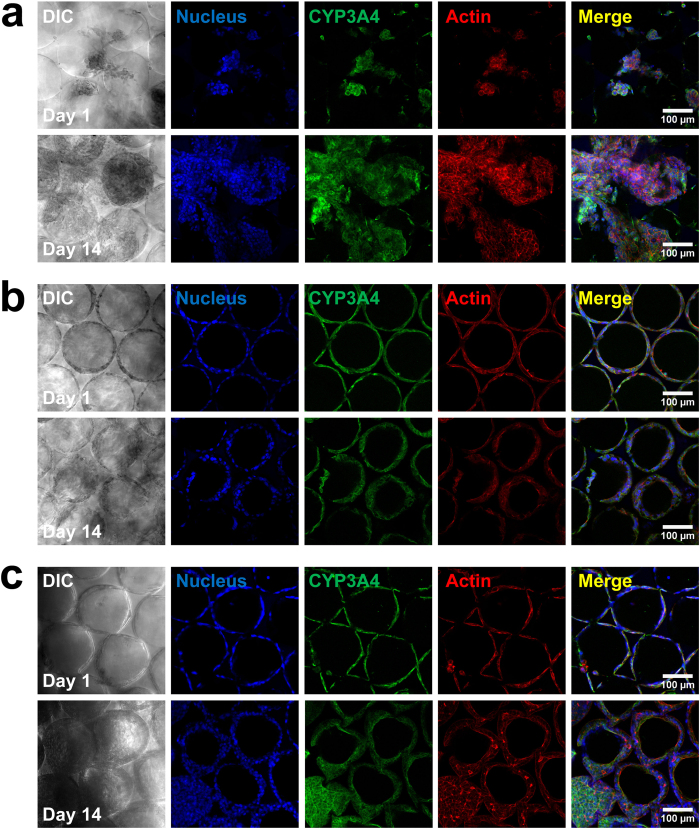
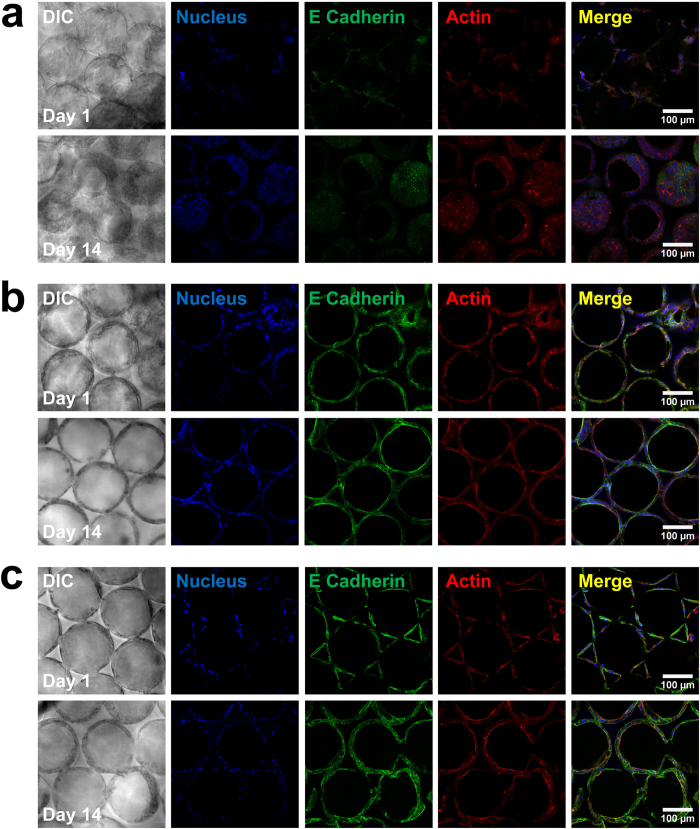
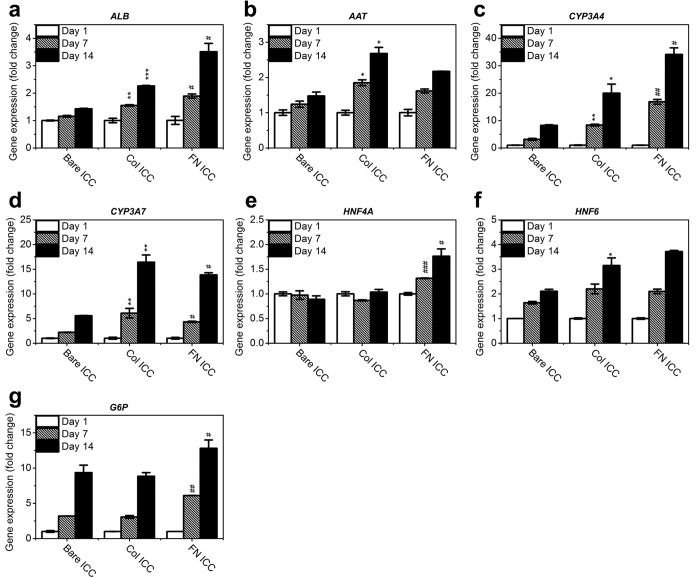
It is well known that a three-dimensional (3D) culture environment and the presence of extracellular matrix (ECM) proteins facilitate hepatocyte viability and maintenance of the liver-specific phenotype in vitro. However, it is not clear whether specific ECM components such as collagen or fibronectin differentially regulate such processes, especially in 3D scaffolds. In this study, a series of ECM-functionalized inverted colloidal crystal (ICC) microporous scaffolds were fabricated and their influence on Huh-7.5 cell proliferation, morphology, hepatic-specific functions, and patterns of gene expression were compared. Both collagen and fibronectin promoted albumin production and liver-specific gene expression of Huh-7.5 cells, compared with the bare ICC scaffold. Interestingly, cells in the fibronectin-functionalized scaffold exhibited different aggregation patterns to those in the collagen-functionalized scaffold, a variation that could be related to the distinct mRNA expression levels of cell adhesion-related genes. Based on these results, we can conclude that different ECM proteins, such as fibronectin and collagen, indeed play distinct roles in the phenotypic regulation of cells cultured in a 3D environment.
众所周知,三维(3D)培养环境和细胞外基质(ECM)蛋白的存在有利于肝细胞在体外的活力和肝脏特异性表型的维持。然而,目前尚不清楚特定的 ECM 成分(如胶原蛋白或纤维连接蛋白)是否会以不同的方式调节这些过程,特别是在 3D 支架中。在这项研究中,我们制备了一系列 ECM 功能化的倒置胶体晶体(ICC)微孔支架,并比较了它们对 Huh-7.5 细胞增殖、形态、肝脏特异性功能和基因表达模式的影响。与裸 ICC 支架相比,胶原蛋白和纤维连接蛋白都能促进 Huh-7.5 细胞的白蛋白产生和肝脏特异性基因表达。有趣的是,纤维连接蛋白功能化支架中的细胞表现出与胶原蛋白功能化支架中不同的聚集模式,这种差异可能与细胞黏附相关基因的不同 mRNA 表达水平有关。基于这些结果,我们可以得出结论,不同的 ECM 蛋白,如纤维连接蛋白和胶原蛋白,确实在 3D 环境中培养的细胞的表型调节中发挥着不同的作用。