Mokrysz C, Freeman T P, Korkki S, Griffiths K, Curran H V
Clinical Psychopharmacology Unit, Clinical Educational and Health Psychology, University College London, London, UK.
Behavioural and Clinical Neuroscience Institute, University of Cambridge, Cambridge, UK.
Transl Psychiatry. 2016 Nov 29;6(11):e961. doi: 10.1038/tp.2016.225.
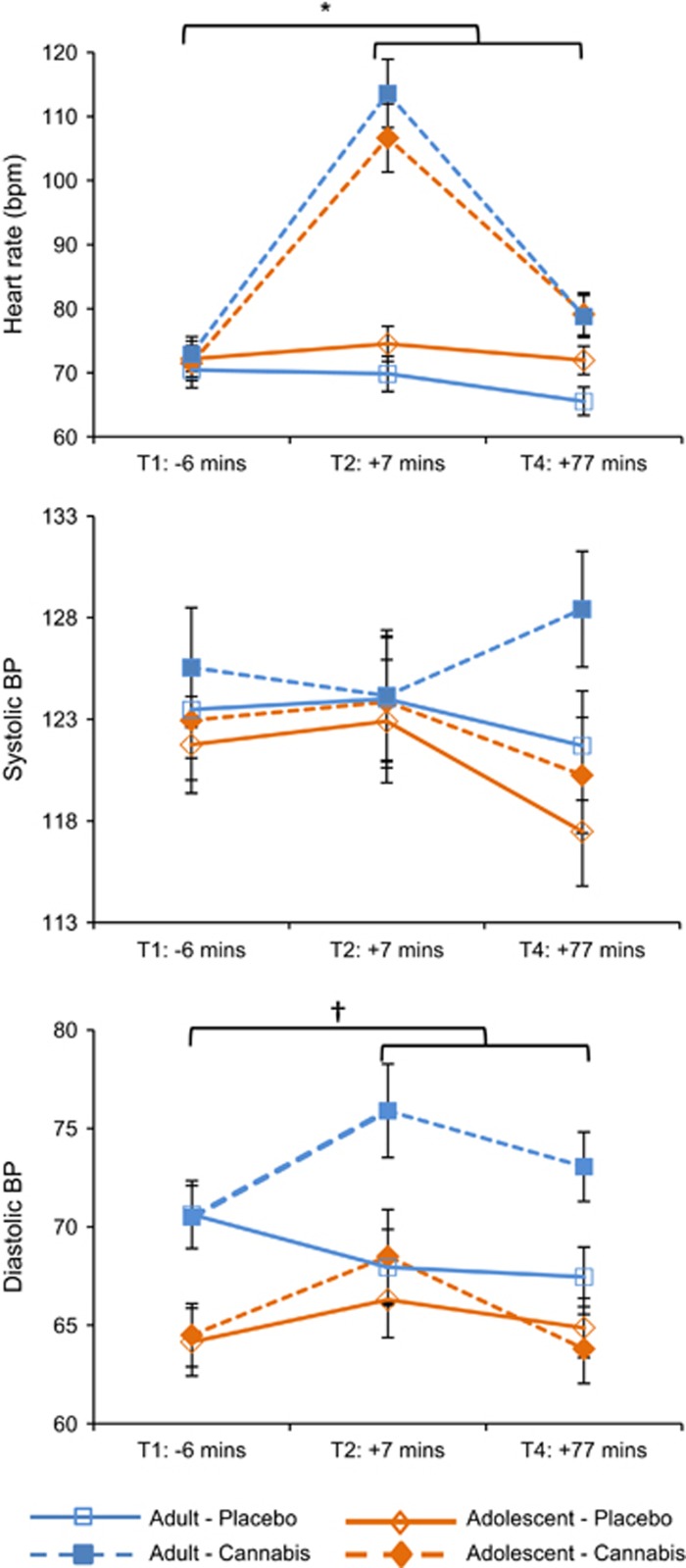
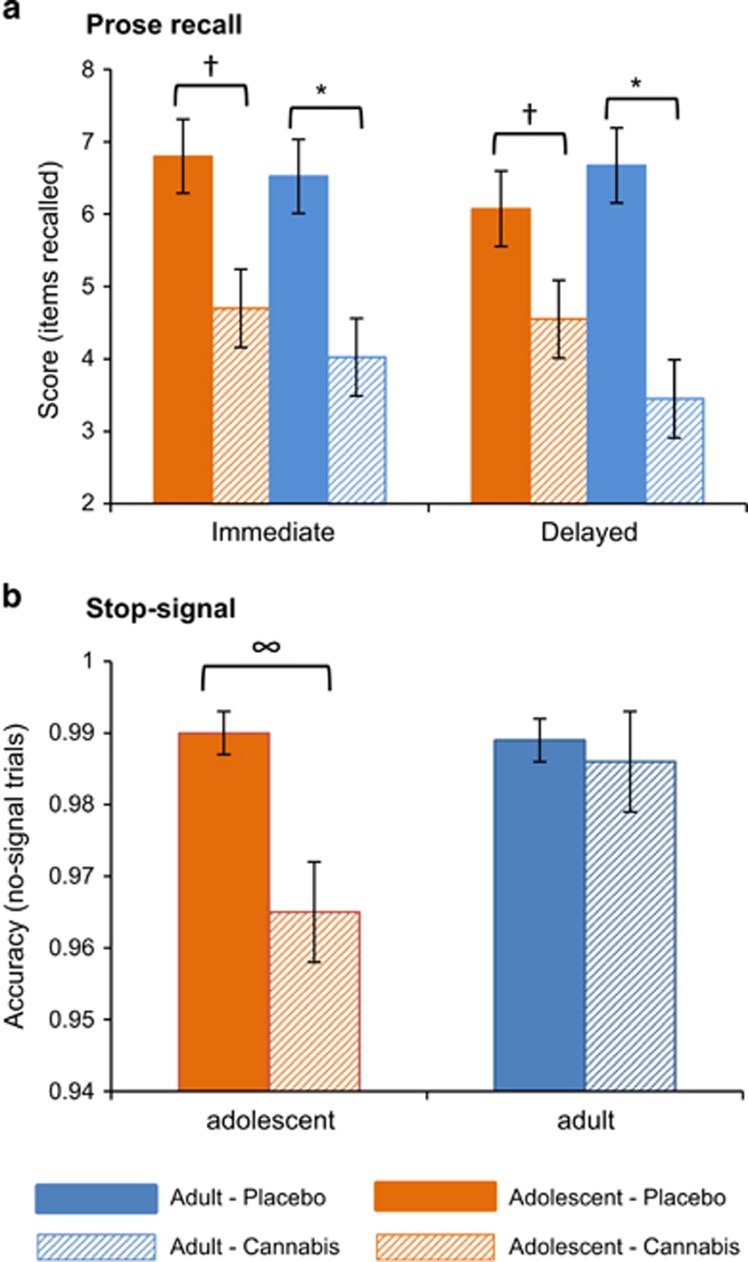
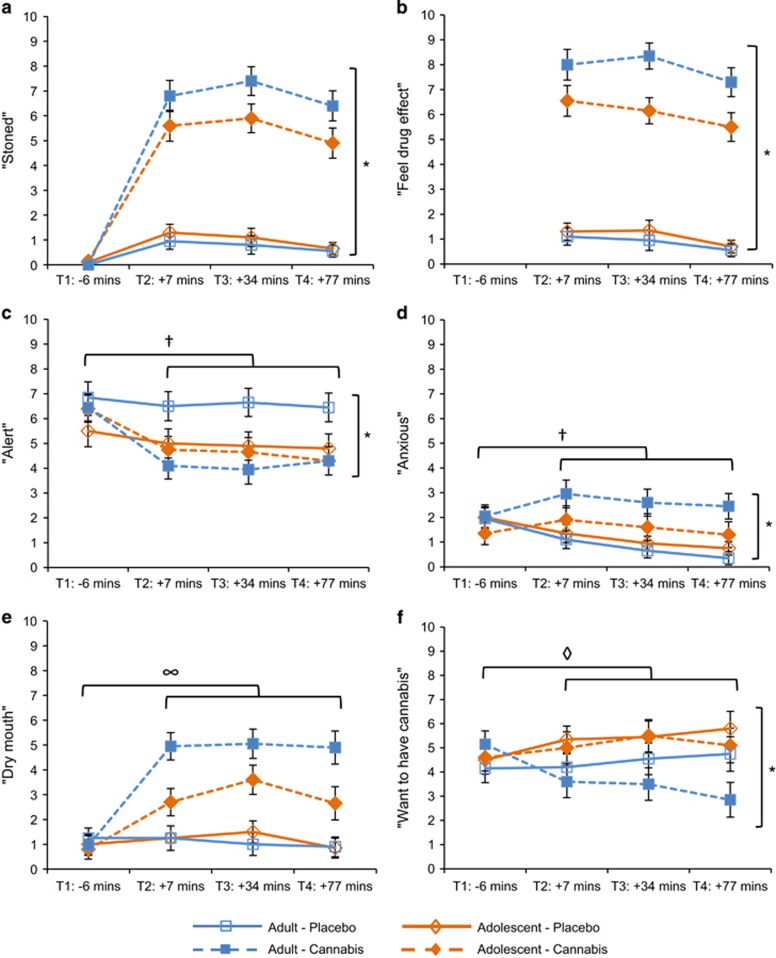
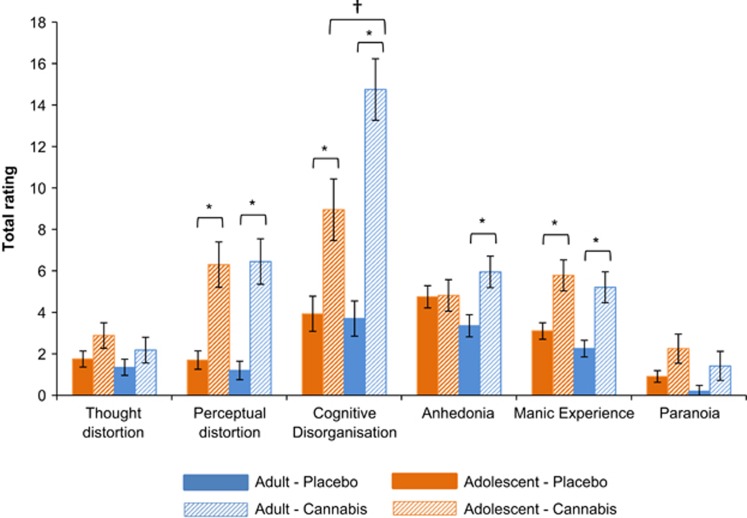
Preclinical research demonstrates that cannabinoids have differing effects in adolescent and adult animals. Whether these findings translate to humans has not yet been investigated. Here we believe we conducted the first study to compare the acute effects of cannabis in human adolescent (n=20; 16-17 years old) and adult (n=20; 24-28 years old) male cannabis users, in a placebo-controlled, double-blind cross-over design. After inhaling vaporized active or placebo cannabis, participants completed tasks assessing spatial working memory, episodic memory and response inhibition, alongside measures of blood pressure and heart rate, psychotomimetic symptoms and subjective drug effects (for example, 'stoned', 'want to have cannabis'). Results showed that on active cannabis, adolescents felt less stoned and reported fewer psychotomimetic symptoms than adults. Further, adults but not adolescents were more anxious and less alert during the active cannabis session (both pre- and post-drug administration). Following cannabis, cognitive impairment (reaction time on spatial working memory and prose recall following a delay) was greater in adults than adolescents. By contrast, cannabis impaired response inhibition accuracy in adolescents but not in adults. Moreover, following drug administration, the adolescents did not show satiety; instead they wanted more cannabis regardless of whether they had taken active or placebo cannabis, while the opposite was seen for adults. These contrasting profiles of adolescent resilience (blunted subjective, memory, physiological and psychotomimetic effects) and vulnerability (lack of satiety, impaired inhibitory processes) show some degree of translation from preclinical findings, and may contribute to escalated cannabis use by human adolescents.
临床前研究表明,大麻素对青少年和成年动物有不同影响。这些研究结果是否适用于人类尚未得到研究。在此,我们认为我们开展了第一项研究,以安慰剂对照、双盲交叉设计比较大麻对人类青少年男性(n = 20;16 - 17岁)和成年男性(n = 20;24 - 28岁)大麻使用者的急性影响。在吸入汽化的活性或安慰剂大麻后,参与者完成了评估空间工作记忆、情景记忆和反应抑制的任务,同时测量了血压、心率、拟精神病症状和主观药物效应(例如,“飘飘然”、“想吸食大麻”)。结果显示,吸食活性大麻时,青少年比成年人感觉飘飘然的程度更低,报告的拟精神病症状也更少。此外,在吸食活性大麻期间(给药前和给药后),成年人比青少年更焦虑、警觉性更低。吸食大麻后,成年人的认知障碍(空间工作记忆的反应时间和延迟后的散文回忆)比青少年更严重。相比之下,大麻损害了青少年的反应抑制准确性,但对成年人没有影响。此外,给药后,青少年没有表现出饱腹感;相反,无论他们吸食的是活性大麻还是安慰剂大麻,他们都想要更多大麻,而成年人则相反。青少年的这种弹性(主观、记忆、生理和拟精神病效应减弱)和易损性(缺乏饱腹感、抑制过程受损)的对比特征在一定程度上与临床前研究结果相符,可能导致人类青少年大麻使用量增加。