Zakaria Z A, Jaios E S, Omar M H, Abd Rahman S, Hamid S S A, Ching S M, Teh L K, Salleh M Z, Deny S, Taher M
Department of Biomedical Sciences, Faculty of Medicine and Health Sciences, Universiti Putra Malaysia (UPM), 43400, Serdang, Selangor D.E, Malaysia.
Integrative Pharmacogenomics Institute (iPROMISE), Universiti Teknologi MARA (UiTM), Level 7, FF3 Building, 42300, Puncak Alam, Selangor D.E, Malaysia.
BMC Complement Altern Med. 2016 Nov 29;16(1):488. doi: 10.1186/s12906-016-1478-1.
Melastoma malabathricum L. (family Melastomaceae) has been traditionally used as remedies against various ailments including those related to pain. The methanol extract of M. malabathricum leaves has been proven to show antinociceptive activity. Thus, the present study aimed to determine the most effective fraction among the petroleum ether- (PEMM), ethyl acetate- (EAMM) and aqueous- (AQMM) fractions obtained through successive fractionation of crude, dried methanol extract of M. malabathricum (MEMM) and to elucidate the possible mechanisms of antinociception involved.
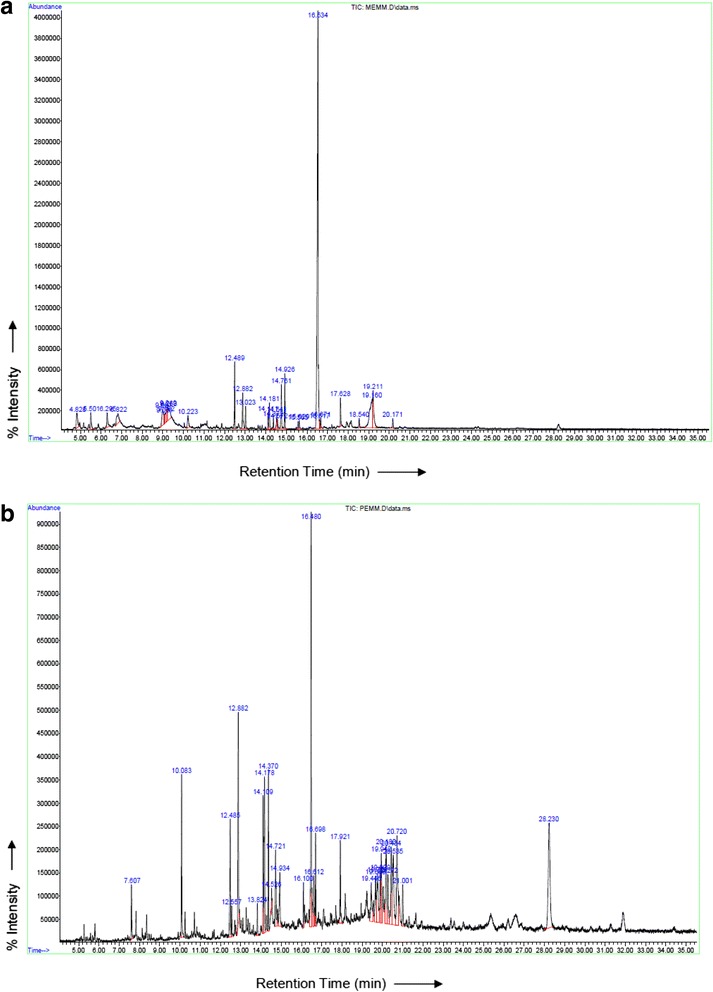
The effectiveness of fractions (100, 250 and 500 mg/kg; orally) were determine using the acetic acid-induced abdominal constriction test and the most effective extract was further subjected to the hot plate- or formalin-induced paw licking-test to establish its antinociceptive profile. Further elucidation of the role of opioid and vanilloid receptors, glutamatergic system, and nitric oxide/cyclic guanosine phosphate (NO/cGMP) pathway was also performed using the appropriate nociceptive models while the phytoconstituents analyses were performed using the phytochemical screening test and, HPLC-ESI and GCMS analyses.
PEMM, EAMM and AQMM significantly (p < 0.05) attenuated acetic acid-induced nociception with the recorded EC of 119.5, 125.9 and 352.6 mg/kg. Based on the EC value, PEMM was further studied and also exerted significant (p < 0.05) antinociception against the hot plate- and formalin-induced paw licking-test. With regards to the mechanisms of antinociception,: i) PEMM significantly (p < 0.05) attenuated the nociceptive action in capsaicin- and glutamate-induced paw licking test.; ii) naloxone (5 mg/kg), a non-selective opioid antagonist, failed to significantly (p < 0.05) inhibit PEMM's antinociception iii) L-arginine (a nitric oxide precursor), but not N-nitro-L-arginine methyl esters (L-NAME; an inhibitor of NO synthase), methylene blue (MB; an inhibitor of cGMP), or their respective combination, significantly (p < 0.05) reversed the antinociception of PEMM. Phytochemical analyses revealed the presence of several antinociceptive-bearing bioactive compounds, such as triterpenes and volatile compounds like oleoamide and palmitic acid. The presence of low flavonoids, such as gallocatechin and epigallocatechin, saponins and tannins in PEMM might synergistically contribute to enhance the major compounds antinociceptive effect.
PEMM exerted a non-opioid-mediated antinociceptive activity at the central and peripheral levels via the inhibition of vanilloid receptors and glutamatergic system, and the activation of NO-mediated/cGMP-independent pathway. Triterpenes, as well as volatile oleoamide and palmitic acid, might be responsible for the observed antinociceptive activity of PEMM.
毛稔(野牡丹科)传统上被用作治疗各种疾病的药物,包括与疼痛相关的疾病。毛稔叶的甲醇提取物已被证明具有抗伤害感受活性。因此,本研究旨在确定通过对毛稔粗制干燥甲醇提取物(MEMM)进行连续分馏得到的石油醚馏分(PEMM)、乙酸乙酯馏分(EAMM)和水馏分(AQMM)中最有效的馏分,并阐明其可能涉及的抗伤害感受机制。
使用醋酸诱导的腹部收缩试验确定各馏分(100、250和500mg/kg;口服)的有效性,并对最有效的提取物进一步进行热板或福尔马林诱导的舔足试验,以确定其抗伤害感受特征。还使用适当的伤害感受模型进一步阐明阿片样物质和香草酸受体、谷氨酸能系统以及一氧化氮/环磷酸鸟苷(NO/cGMP)途径的作用,同时使用植物化学筛选试验、HPLC-ESI和GCMS分析进行植物成分分析。
PEMM、EAMM和AQMM均能显著(p<0.05)减轻醋酸诱导的伤害感受,记录的半数有效浓度(EC)分别为119.5、125.9和352.6mg/kg。基于EC值,对PEMM进行了进一步研究,其对热板和福尔马林诱导的舔足试验也具有显著(p<0.05)的抗伤害感受作用。关于抗伤害感受机制:i)PEMM在辣椒素和谷氨酸诱导的舔足试验中能显著(p<0.05)减轻伤害感受作用;ii)非选择性阿片样物质拮抗剂纳洛酮(5mg/kg)未能显著(p<0.05)抑制PEMM的抗伤害感受作用;iii)L-精氨酸(一氧化氮前体),而非N-硝基-L-精氨酸甲酯(L-NAME;一氧化氮合酶抑制剂)、亚甲蓝(MB;cGMP抑制剂)或它们各自的组合,能显著(p<0.05)逆转PEMM的抗伤害感受作用。植物化学分析显示存在几种具有抗伤害感受作用的生物活性化合物,如三萜类以及挥发性化合物,如油酰胺和棕榈酸。PEMM中低含量的黄酮类化合物,如没食子儿茶素和表没食子儿茶素、皂苷和单宁可能协同增强主要化合物的抗伤害感受作用。
PEMM通过抑制香草酸受体和谷氨酸能系统以及激活NO介导的/cGMP非依赖途径,在中枢和外周水平发挥非阿片样物质介导的抗伤害感受活性。三萜类以及挥发性油酰胺和棕榈酸可能是PEMM观察到的抗伤害感受活性的原因。