Delhaye Jessica, Aletti Consolée, Glaizot Olivier, Christe Philippe
Department of Ecology and Evolution, Biophore Unil Sorge, University of Lausanne, Lausanne, CH-1015, Switzerland.
Museum of Zoology, Place de la Riponne 6, Lausanne, CH-1005, Switzerland.
Parasit Vectors. 2016 Nov 29;9(1):616. doi: 10.1186/s13071-016-1905-7.
The intake of a Plasmodium-infected blood meal may affect mosquito physiology and a series of trade-offs may occur, in particular between immune defences, reproduction and self-maintenance. We evaluated the cost of exposure to Plasmodium in the mosquito vector by investigating the effect of exposure on fecundity and survival and the implication of immune and antioxidant defences in mediating this cost.
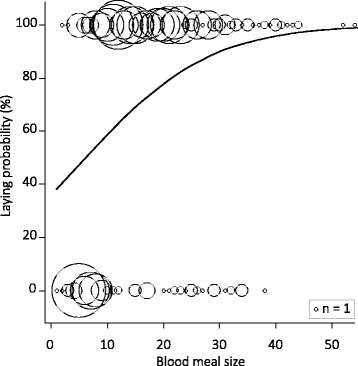
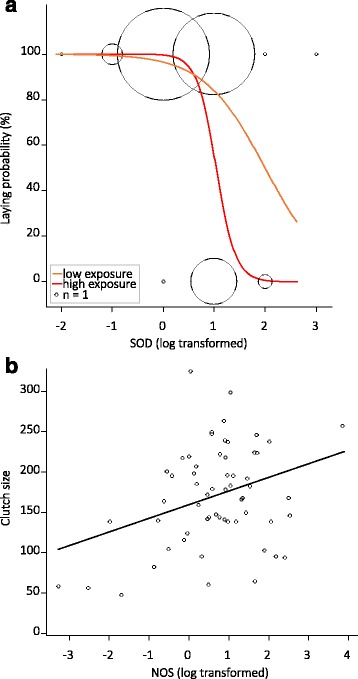
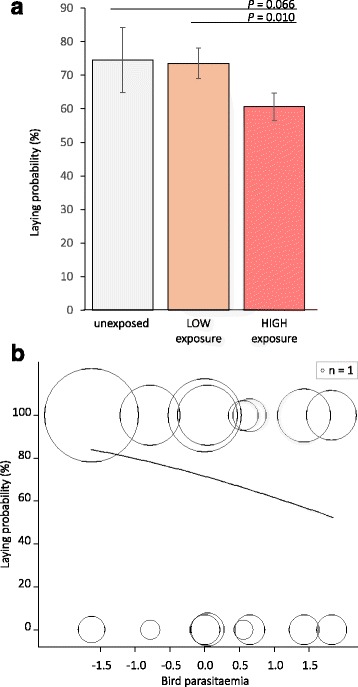
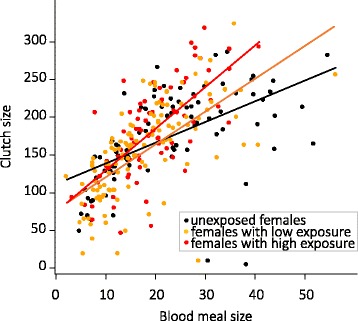
We used the natural Culex pipiens-Plasmodium relictum association. We exposed female mosquitoes to increasing levels of parasites by allowing them to feed either on uninfected canaries, Serinus canaria, (unexposed mosquitoes) or on infected canaries with low (low exposure) or high (high exposure) parasitaemia. We recorded blood meal size, fecundity (laying probability and clutch size) and survival. We quantified the expression of genes involved in immune and antioxidant defences (nitric oxide synthase, NOS; superoxide dismutase, SOD; glucose-6-phosphate dehydrogenase, G6PDH).
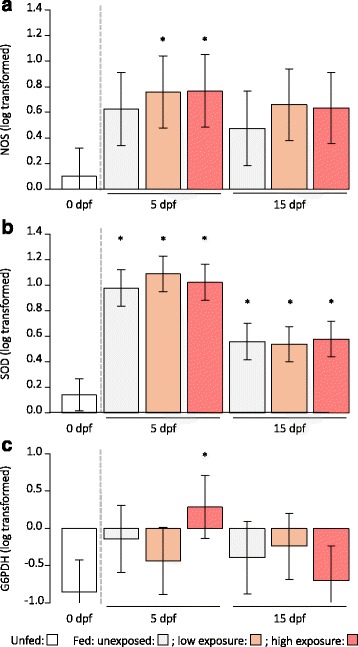
We found that the laying probability of exposed females decreased with increasing exposure to the parasite and with increasing SOD expression. Clutch size of exposed females was higher compared to unexposed ones for similar blood meal size and was positively correlated to the NOS expression. We found no effect of exposure on survival. After blood meal intake, SOD increased in the three groups, NOS increased in exposed females and G6PDH increased in highly exposed females only.
Our results illustrated a trade-off between fight against the parasite and reproduction and a cost of exposure which might be mediated by the investment in immune and/or antioxidant defences. They also showed that this trade-off could lead to opposed outcome, potentially depending on the vector physiological status. Finally, they highlighted that the ingestion of a Plasmodium-infected blood meal may affect mosquito life history traits in a complex way.
摄取感染疟原虫的血餐可能会影响蚊子的生理机能,并且可能会出现一系列权衡取舍,尤其是在免疫防御、繁殖和自我维持之间。我们通过研究暴露于疟原虫对繁殖力和存活率的影响以及免疫和抗氧化防御在介导这种代价中的作用,评估了蚊子媒介暴露于疟原虫的代价。
我们利用了淡色库蚊与残疟原虫的自然关联。通过让雌蚊取食未感染的金丝雀(未暴露的蚊子)或感染了低(低暴露)或高(高暴露)寄生虫血症的金丝雀,使雌蚊暴露于不同水平的寄生虫。我们记录了血餐大小、繁殖力(产卵概率和窝卵数)和存活率。我们对参与免疫和抗氧化防御的基因(一氧化氮合酶,NOS;超氧化物歧化酶,SOD;葡萄糖-6-磷酸脱氢酶,G6PDH)的表达进行了定量。
我们发现,暴露雌蚊的产卵概率随着对寄生虫暴露程度的增加以及SOD表达的增加而降低。对于相似的血餐大小,暴露雌蚊的窝卵数高于未暴露雌蚊,并且与NOS表达呈正相关。我们发现暴露对存活率没有影响。取食血餐后,三组中的SOD均增加,暴露雌蚊中的NOS增加,仅高暴露雌蚊中的G6PDH增加。
我们的结果说明了在对抗寄生虫和繁殖之间的权衡以及暴露的代价,这可能由对免疫和/或抗氧化防御的投入介导。它们还表明,这种权衡可能导致相反的结果,这可能取决于媒介的生理状态。最后,它们强调摄取感染疟原虫的血餐可能会以复杂的方式影响蚊子的生活史特征。