Müller M J, Geisler C
Institut für Humanernährung und Lebensmittelkunde, Agrar- und Ernährungswissenschaftliche Fakultät, Christian-Albrechts-Universität zu Kiel, Kiel, Germany.
Eur J Clin Nutr. 2017 Mar;71(3):358-364. doi: 10.1038/ejcn.2016.231. Epub 2016 Nov 30.
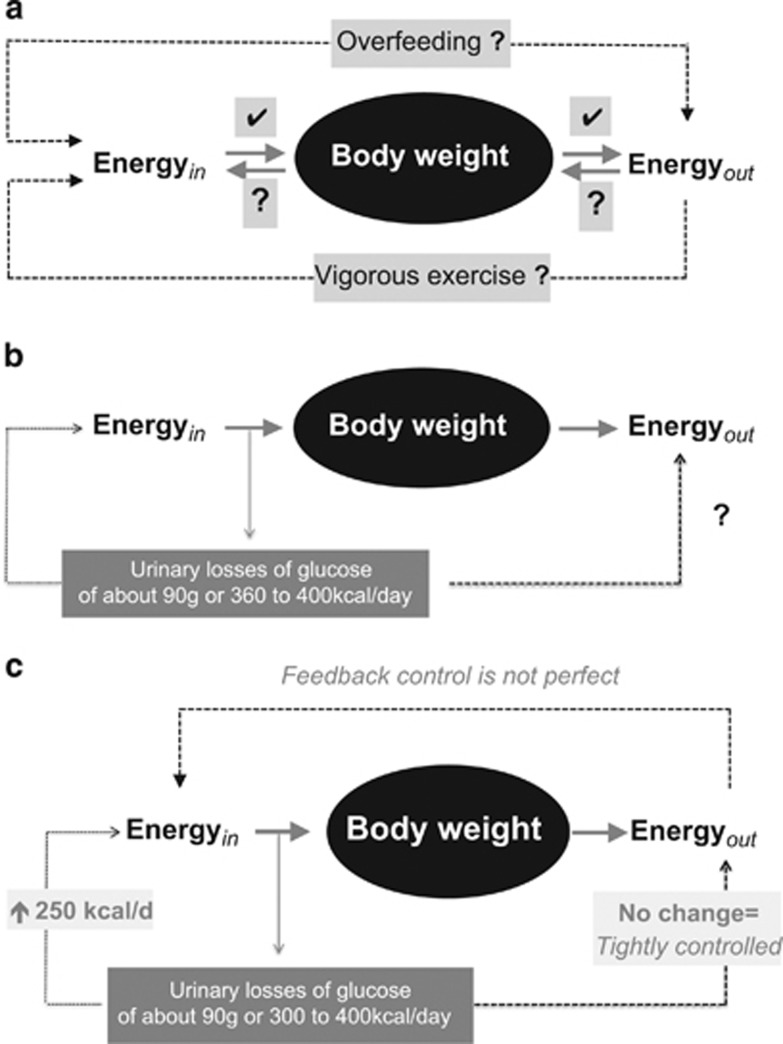
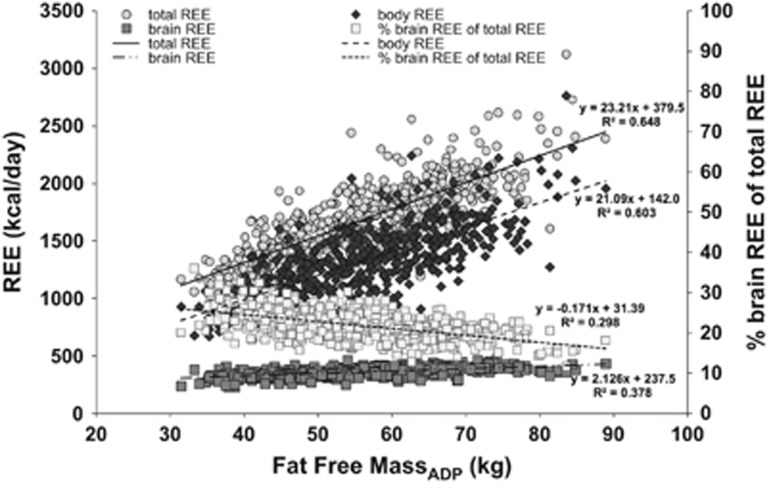
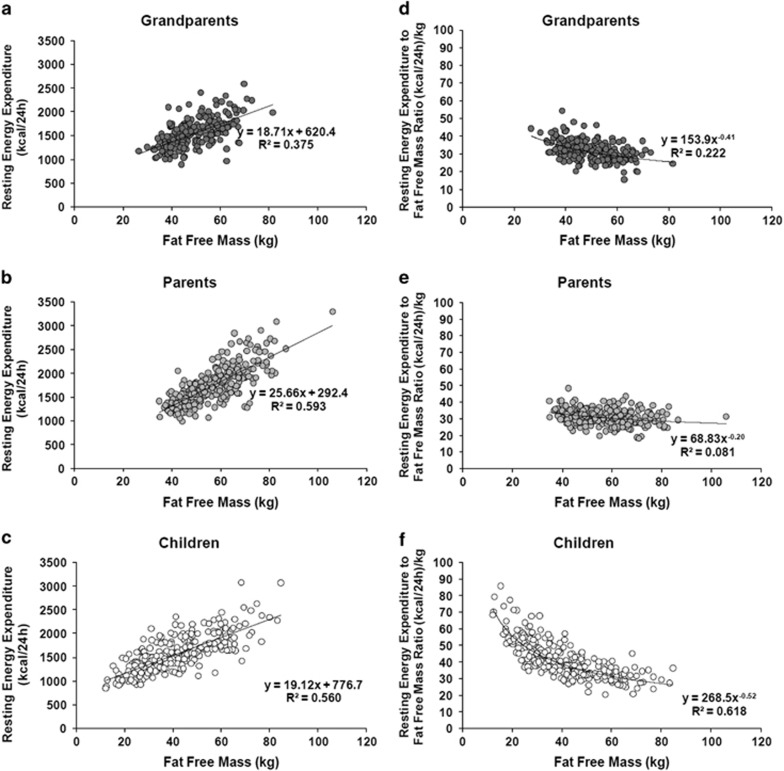
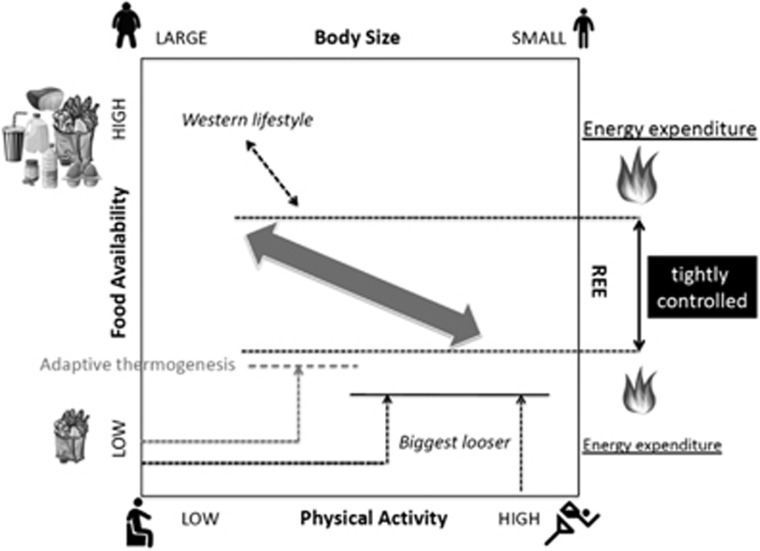
Although most recent research on energy balance focusses on energy intake (EI) there is still need to think about both sides of the energy balance. Current research on energy expenditure (EE) relates to metabolic adaptation to negative energy balance, mitochondrial metabolism associated with aging, obesity and type 2 diabetes mellitus, the role of EE in hunger and appetite control, non-shivering thermogenesis and brown adipose tissue activity, cellular bioenergetics as a target of obesity treatment and the evolutionary and ecological determinants of EE in humans and other primates. As far as regulation of energy balance is concerned there is recent evidence that EE rather than body weight is under tight control. Biologically, EE is maintained within a narrow physiological range. An EE-set point has been proposed as the width between the upper and lower boundaries of the individual EE range. Regulation of EE may fail in very obese patients with an EI above their upper boundary and after drastic weight loss when patients may go far below their lower EE boundary and thus are loosing control. In population studies, fat-free mass (FFM) and its composition (that is, the proportion of high to low metabolic rate organs) are major determinants of EE. It is tempting to speculate that tight biologic control of EE is related to brain energy need, which is preserved at the cost of peripheral metabolism. There is a moderate heritability of EE, which is independent of the heritability of FFM. In future, metabolic phenotyping should focus on the EE-FFM relationship rather than on EE-values alone.
尽管最近关于能量平衡的研究大多集中在能量摄入(EI)上,但仍有必要考虑能量平衡的两个方面。目前关于能量消耗(EE)的研究涉及对负能量平衡的代谢适应、与衰老、肥胖和2型糖尿病相关的线粒体代谢、EE在饥饿和食欲控制中的作用、非颤抖性产热和棕色脂肪组织活性、作为肥胖治疗靶点的细胞生物能学以及人类和其他灵长类动物EE的进化和生态决定因素。就能量平衡的调节而言,最近有证据表明,受到严格控制的是EE而非体重。从生物学角度来看,EE维持在一个狭窄的生理范围内。有人提出了一个EE设定点,即个体EE范围上下限之间的宽度。在EI高于其上限的极度肥胖患者以及大幅减重后,当患者的EE可能远低于其下限从而失去控制时,EE的调节可能会失效。在人群研究中,去脂体重(FFM)及其组成(即高代谢率器官与低代谢率器官的比例)是EE的主要决定因素。人们不禁推测,对EE的严格生物学控制与大脑的能量需求有关,大脑的能量需求是以牺牲外周代谢为代价得以维持的。EE具有中等程度的遗传力,且独立于FFM的遗传力。未来,代谢表型分析应关注EE与FFM的关系,而不是仅关注EE值。