Bosserhoff Anja Katrin, Schneider Nadja, Ellmann Lisa, Heinzerling Lucie, Kuphal Silke
Institute of Biochemistry (Emil-Fischer-Center), Friedrich Alexander University Erlangen-Nürnberg, Erlangen, 91054, Germany.
Institute for Functional Genomics, University Regensburg, Regensburg, 93053, Germany.
Oncotarget. 2017 Jan 3;8(1):1117-1131. doi: 10.18632/oncotarget.13585.
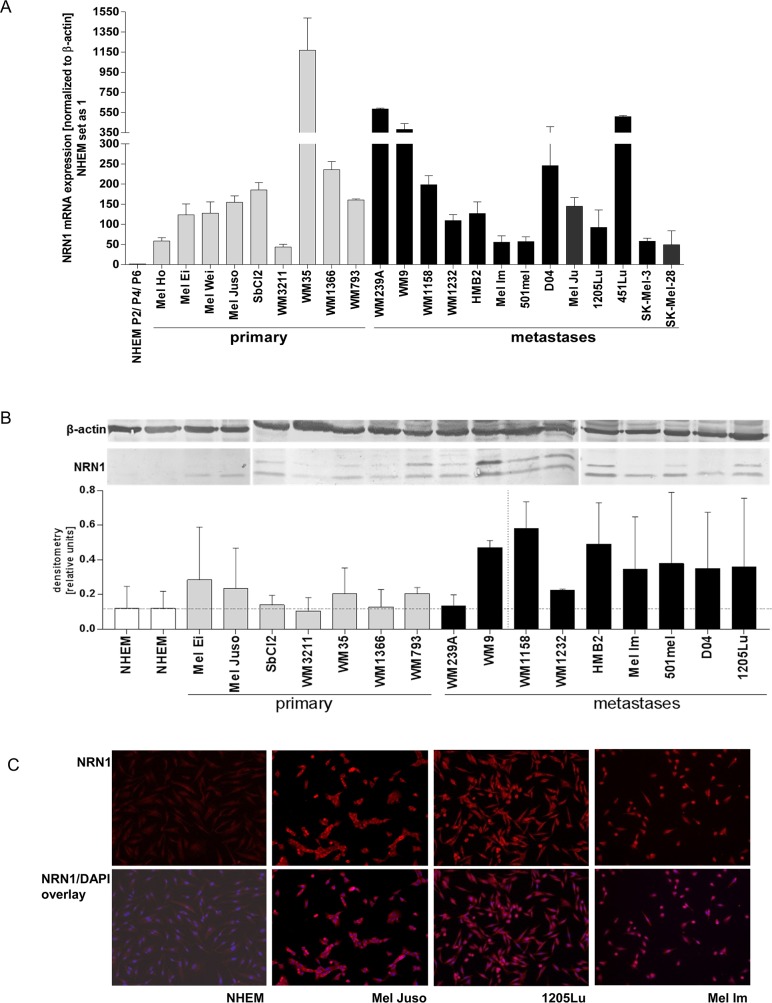
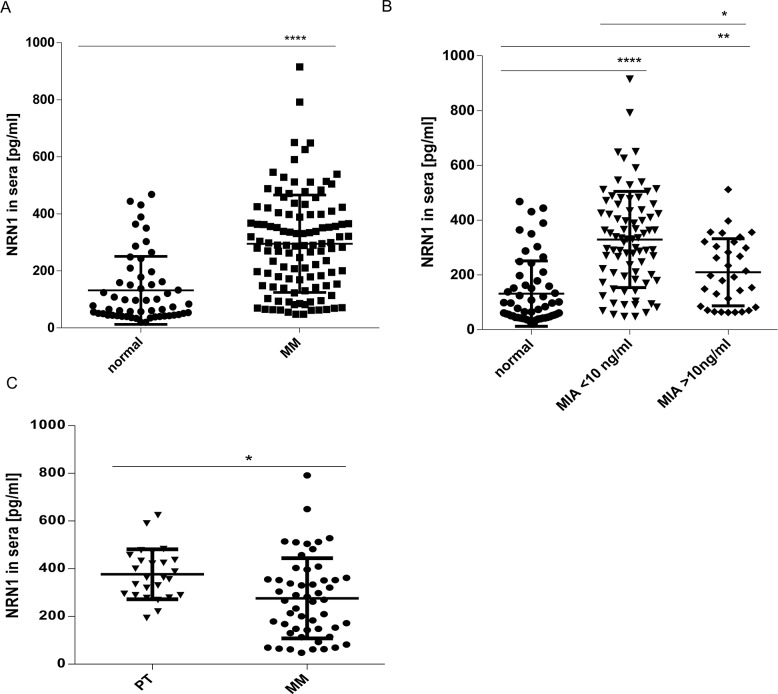
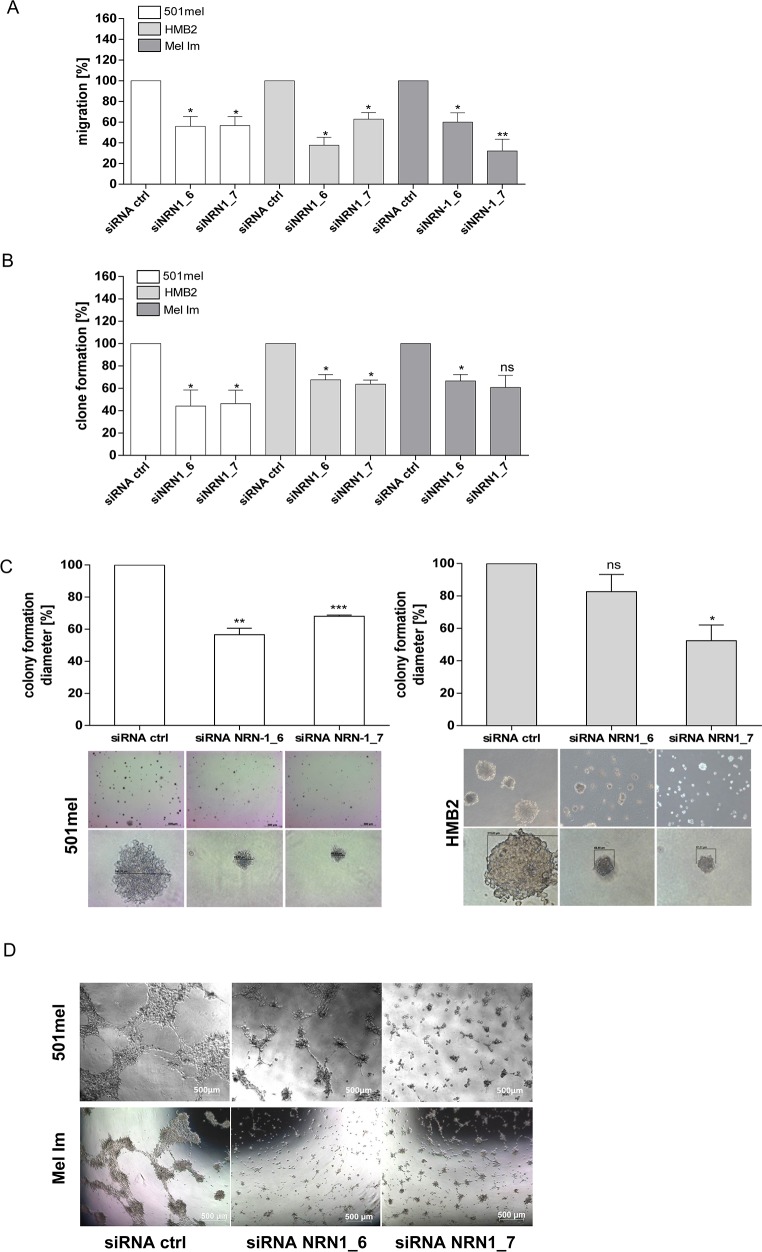
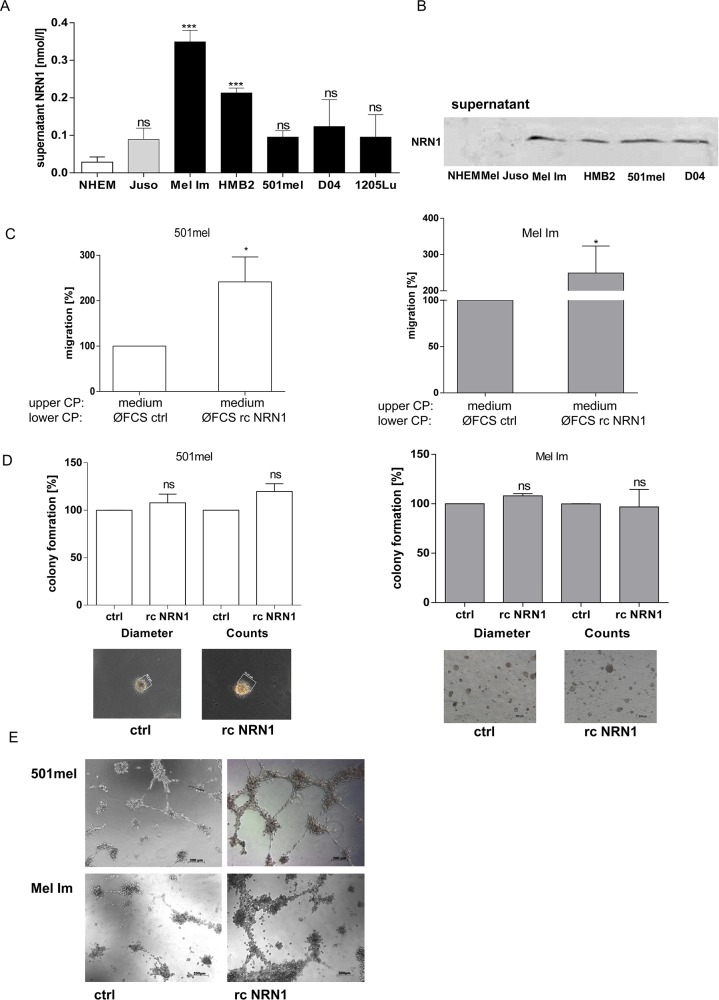
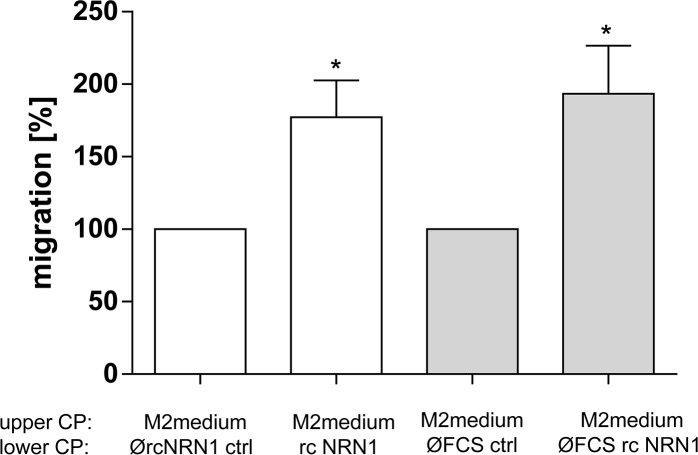
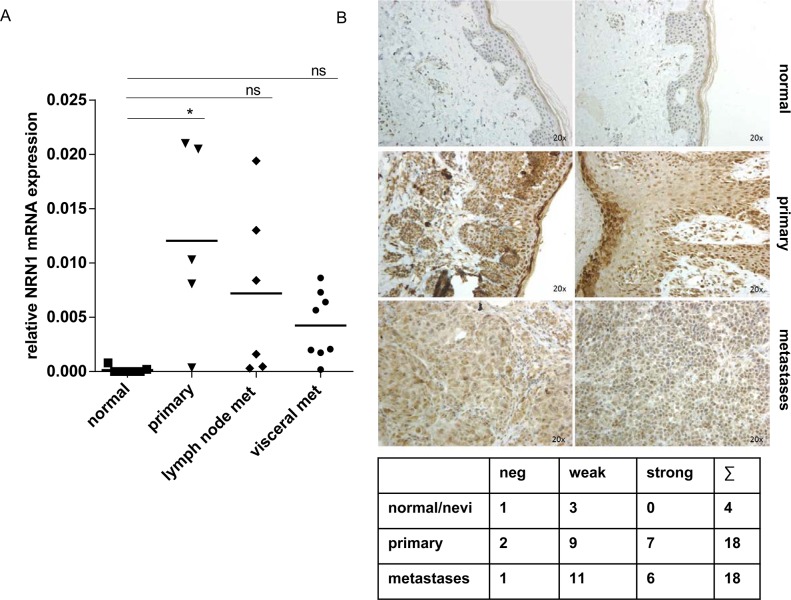
The neurotrophin Neuritin1 (NRN1; cpg15) belongs to the candidate plasticity gene (CPG) family and is expressed in postmitotic-differentiating neurons of the developmental nervous system and neuronal structures associated with plasticity in the brain of human adult.Our newest findings document that NRN1 deregulation could contribute also to disease development and have impact on malignant melanoma. Our analyses displayed the over-expression of NRN1 in melanoma in vitro and in vivo, shown by immunohistochemistry and qRT-PCR on microdissected melanoma tissue; furthermore, soluble NRN1 was detectable in tissue culture supernatant and serum of melanoma patients.To investigate the role of NRN1 in melanoma we performed knockdown, over-expression and recombinant-NRN1-treatment experiments affiliated by functional assays. Our results show that migration, attachment independent growth and vasculogenesis were affected after manipulation of NRN1 on endogenous and extrinsic level. Interestingly, high NRN1 serum levels correlate with low MIA serum levels (< 10ng/ml). Therefore, we speculate that NRN1 could be a marker for early melanoma stages, in particular.In summary, we detected an overexpression of NRN1 in melanoma patient. In functional cell culture experiments we found a correlation between NRN1 expression and the cancerous behavior of melanoma cells.
神经营养因子神经突素1(NRN1;cpg15)属于候选可塑性基因(CPG)家族,在发育中的神经系统有丝分裂后分化的神经元以及与成年人类大脑可塑性相关的神经元结构中表达。我们最新的研究结果表明,NRN1失调也可能导致疾病发展,并对恶性黑色素瘤产生影响。我们的分析显示,通过对微切割的黑色素瘤组织进行免疫组织化学和定量逆转录聚合酶链反应(qRT-PCR),NRN1在体外和体内的黑色素瘤中均过度表达;此外,在黑色素瘤患者的组织培养上清液和血清中可检测到可溶性NRN1。为了研究NRN1在黑色素瘤中的作用,我们进行了基因敲低、过表达和重组NRN1处理实验,并辅以功能分析。我们的结果表明,在内源性和外源性水平上对NRN1进行操作后,迁移、非贴壁依赖性生长和血管生成均受到影响。有趣的是,高NRN1血清水平与低黑色素瘤抑制素(MIA)血清水平(<10ng/ml)相关。因此,我们推测NRN1可能特别是早期黑色素瘤阶段的一个标志物。总之,我们在黑色素瘤患者中检测到NRN1的过表达。在功能性细胞培养实验中我们发现NRN1表达与黑色素瘤细胞的癌性行为之间存在关联。