Fang Xiaoguang, Zhou Wenchao, Wu Qiulian, Huang Zhi, Shi Yu, Yang Kailin, Chen Cong, Xie Qi, Mack Stephen C, Wang Xiuxing, Carcaboso Angel M, Sloan Andrew E, Ouyang Gaoliang, McLendon Roger E, Bian Xiu-Wu, Rich Jeremy N, Bao Shideng
Department of Stem Cell Biology and Regenerative Medicine, Lerner Research Institute, Cleveland Clinic, Cleveland, OH 44195.
Institute of Pathology and Southwest Cancer Center, Southwest Hospital, Key Laboratory of Tumor Immunopathology, Ministry of Education of China, Chongqing 400038, China.
J Exp Med. 2017 Jan;214(1):245-267. doi: 10.1084/jem.20151673. Epub 2016 Dec 6.
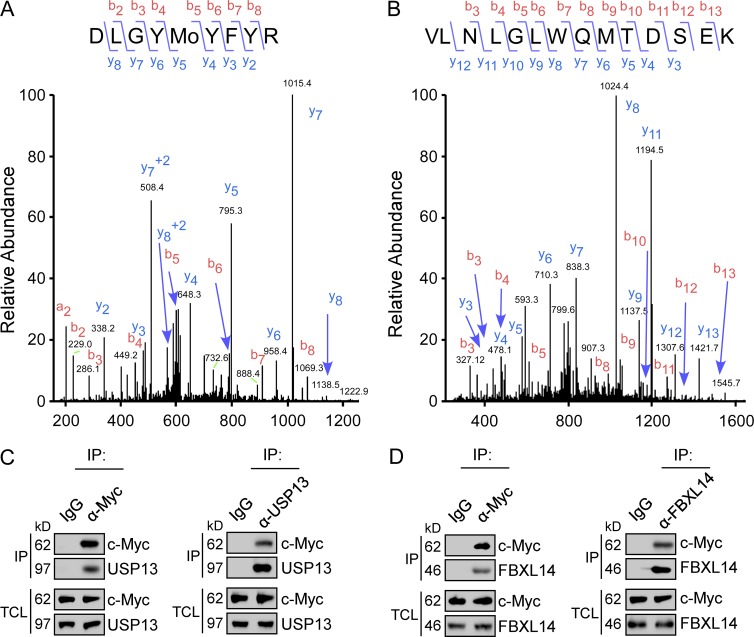
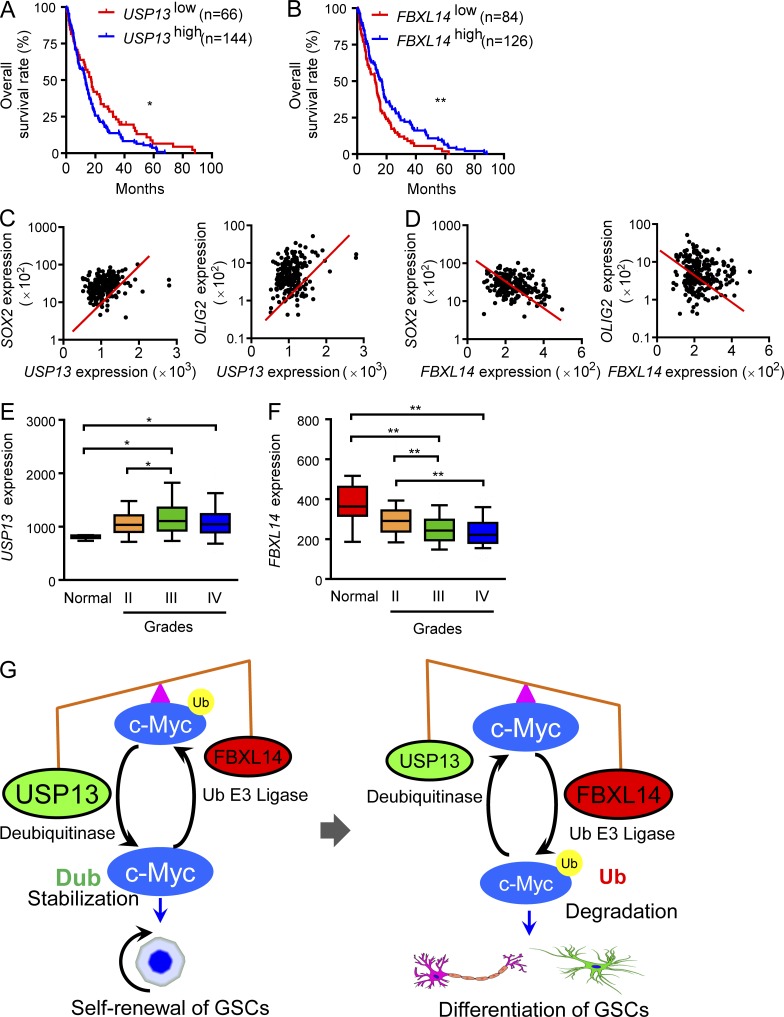
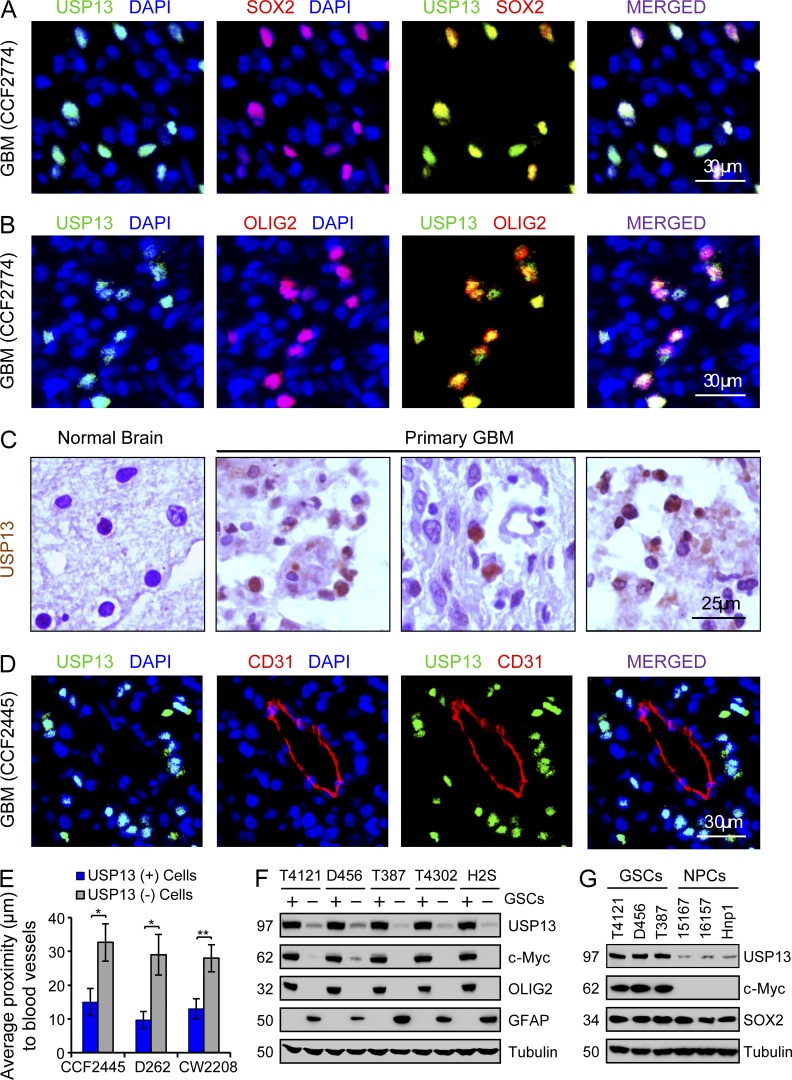
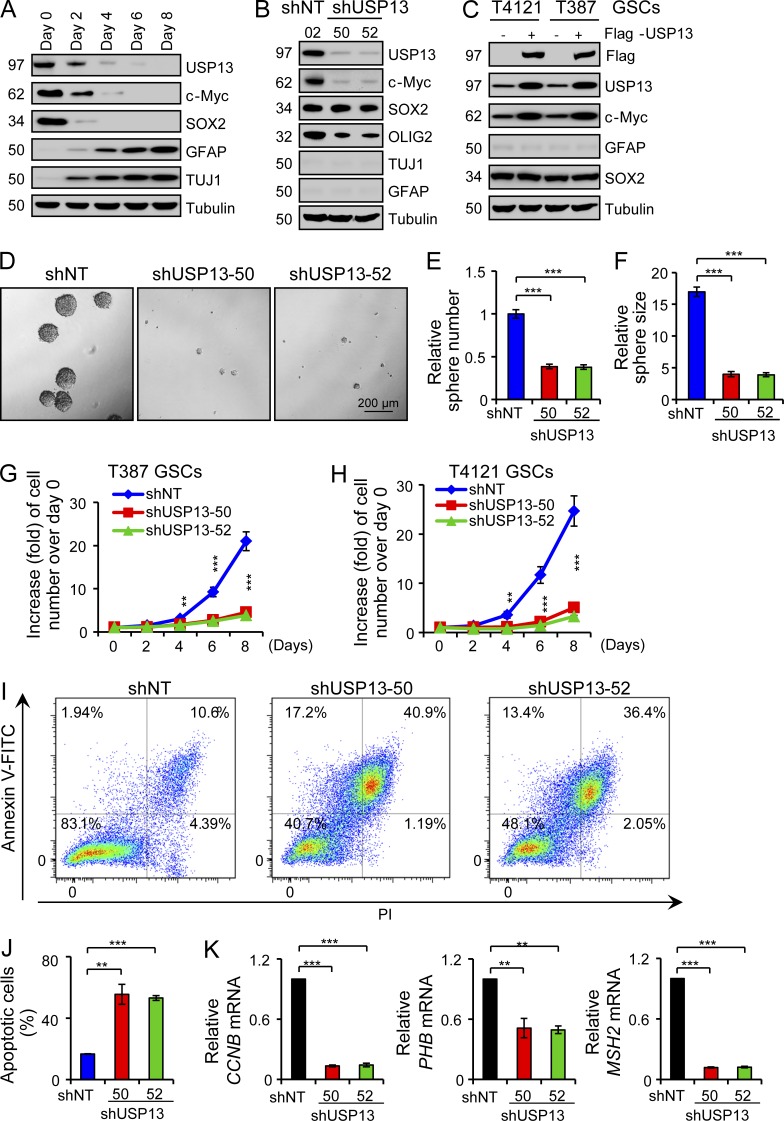
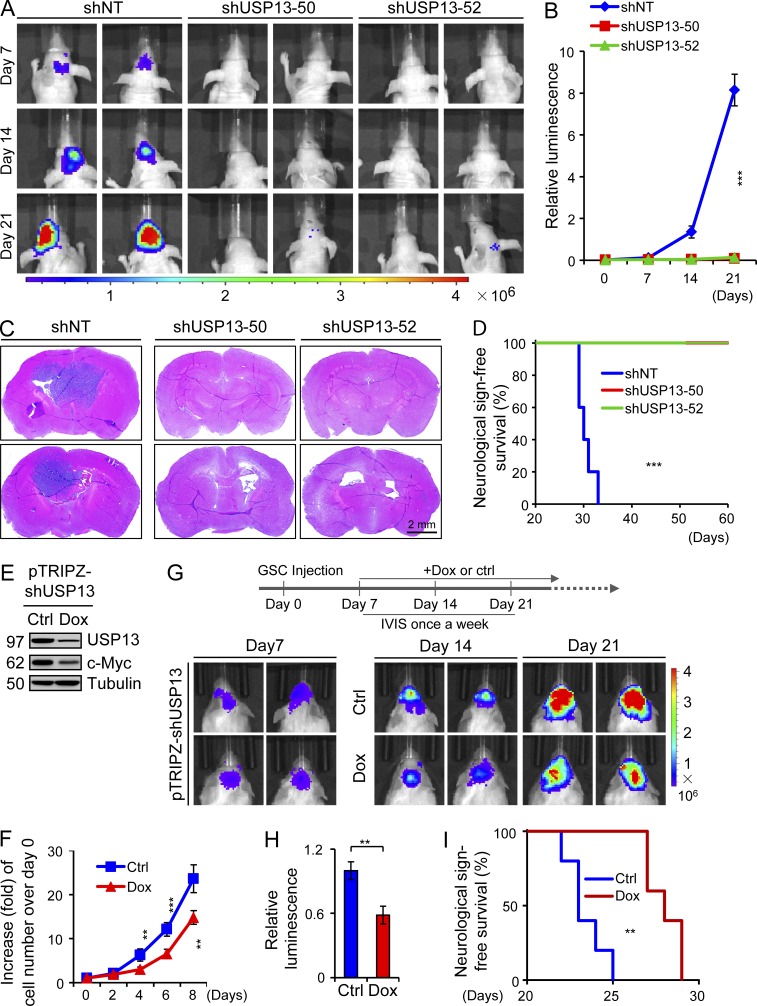
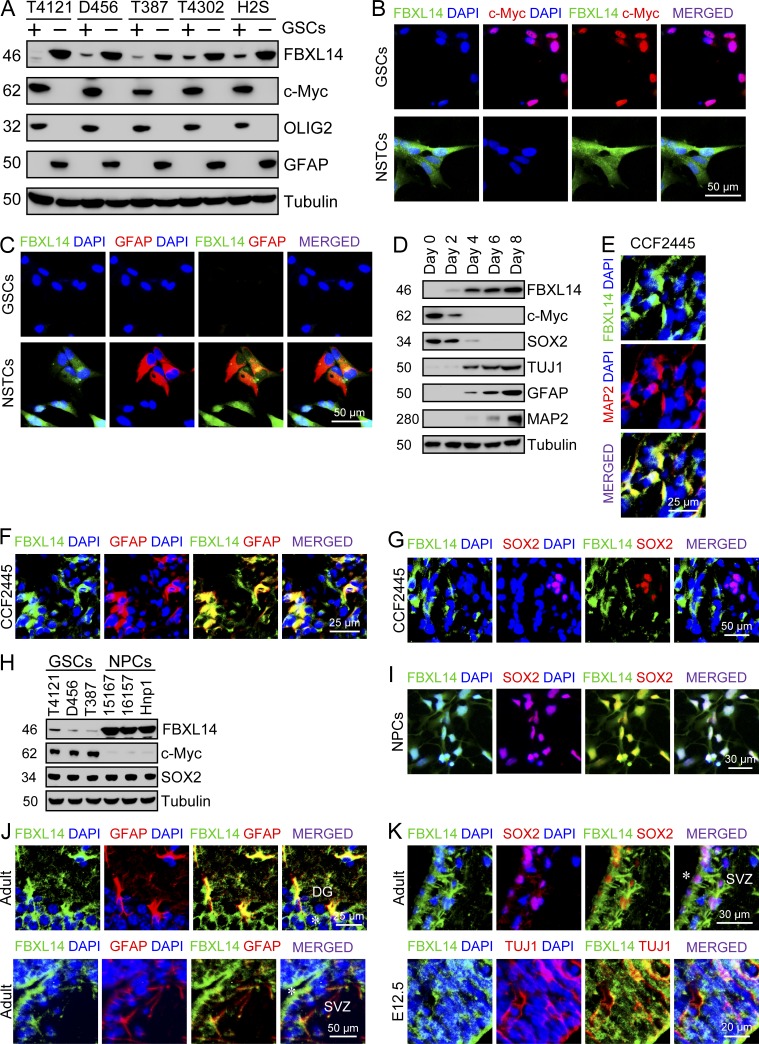
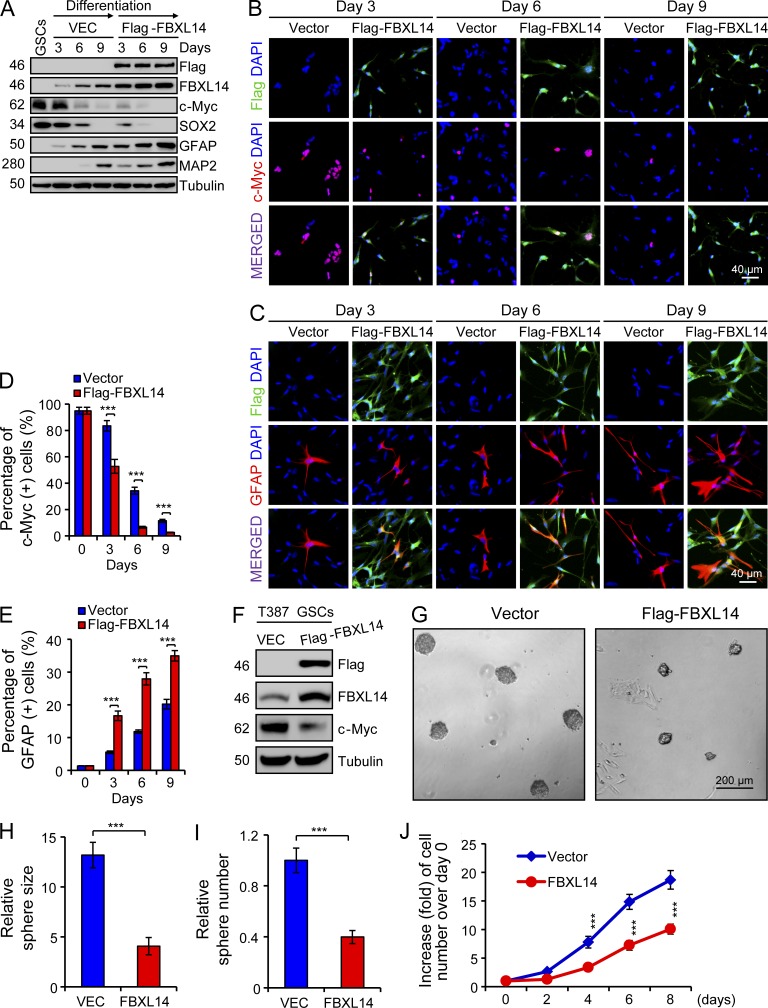
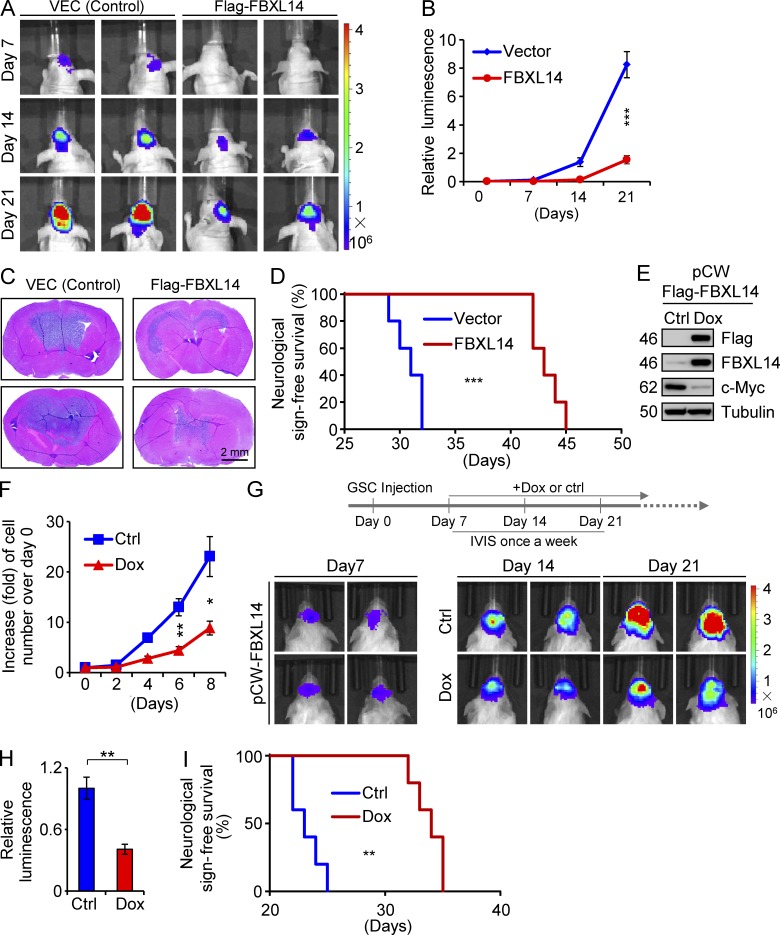
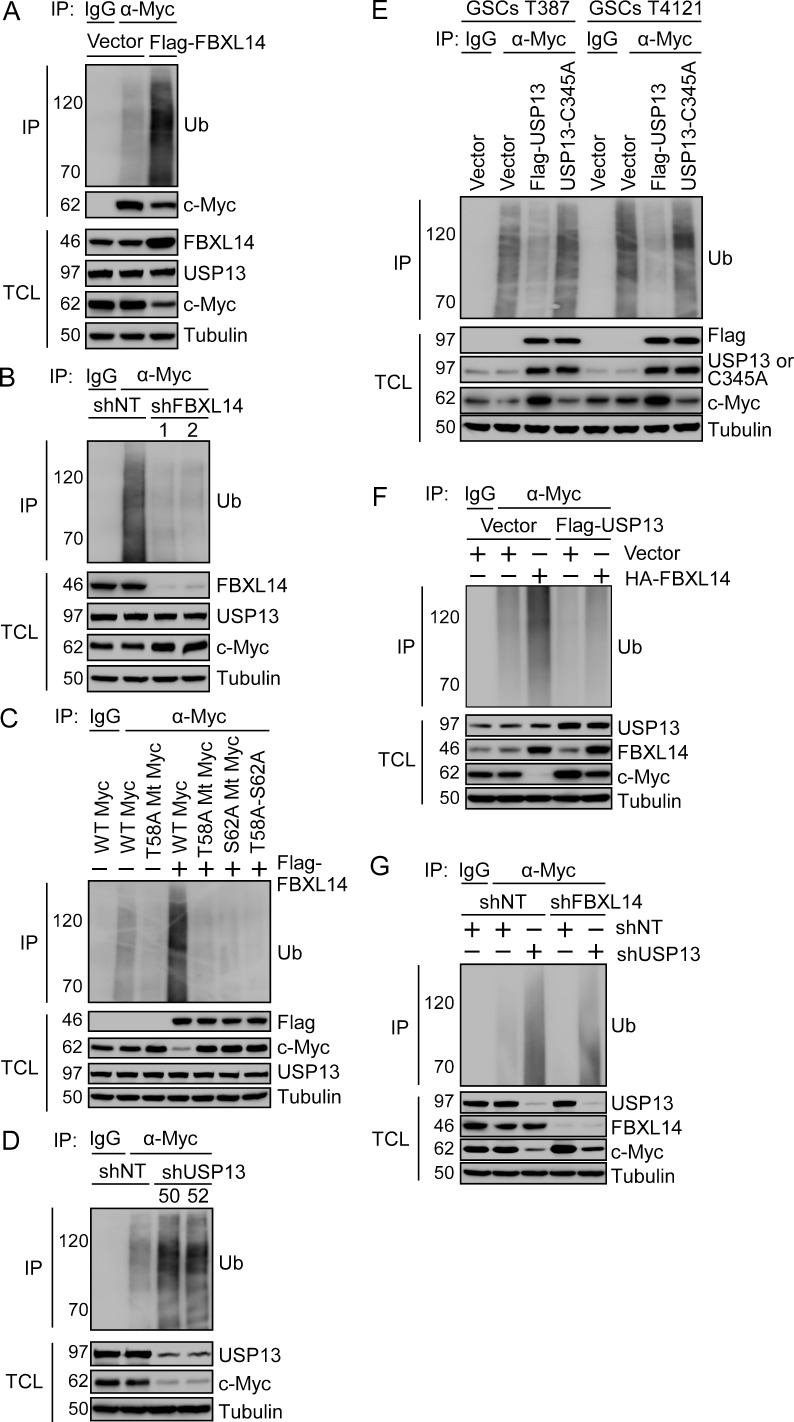
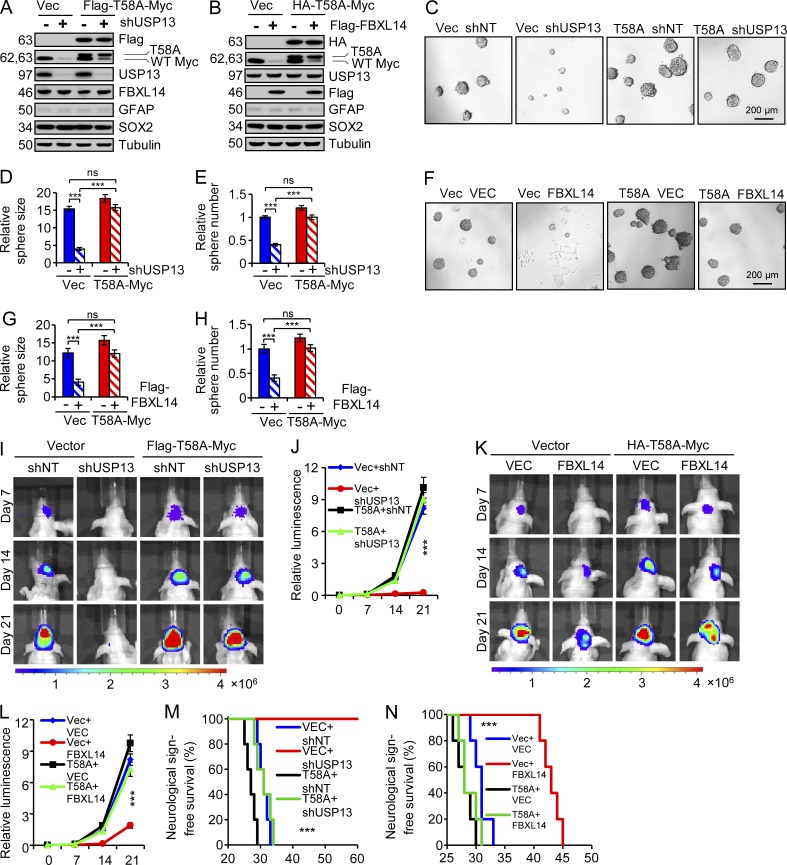
Glioblastoma is the most lethal brain tumor and harbors glioma stem cells (GSCs) with potent tumorigenic capacity. The function of GSCs in tumor propagation is maintained by several core transcriptional regulators including c-Myc. c-Myc protein is tightly regulated by posttranslational modification. However, the posttranslational regulatory mechanisms for c-Myc in GSCs have not been defined. In this study, we demonstrate that the deubiquitinase USP13 stabilizes c-Myc by antagonizing FBXL14-mediated ubiquitination to maintain GSC self-renewal and tumorigenic potential. USP13 was preferentially expressed in GSCs, and its depletion potently inhibited GSC proliferation and tumor growth by promoting c-Myc ubiquitination and degradation. In contrast, overexpression of the ubiquitin E3 ligase FBXL14 induced c-Myc degradation, promoted GSC differentiation, and inhibited tumor growth. Ectopic expression of the ubiquitin-insensitive mutant T58A-c-Myc rescued the effects caused by FBXL14 overexpression or USP13 disruption. These data suggest that USP13 and FBXL14 play opposing roles in the regulation of GSCs through reversible ubiquitination of c-Myc.
胶质母细胞瘤是最致命的脑肿瘤,含有具有强大致瘤能力的胶质瘤干细胞(GSCs)。GSCs在肿瘤增殖中的功能由包括c-Myc在内的几种核心转录调节因子维持。c-Myc蛋白受到翻译后修饰的严格调控。然而,GSCs中c-Myc的翻译后调控机制尚未明确。在本研究中,我们证明去泛素化酶USP13通过拮抗FBXL14介导的泛素化来稳定c-Myc,以维持GSC的自我更新和致瘤潜能。USP13在GSCs中优先表达,其缺失通过促进c-Myc的泛素化和降解有力地抑制了GSC增殖和肿瘤生长。相反,泛素E3连接酶FBXL14的过表达诱导c-Myc降解,促进GSC分化,并抑制肿瘤生长。泛素不敏感突变体T58A-c-Myc的异位表达挽救了由FBXL14过表达或USP13破坏引起的效应。这些数据表明,USP13和FBXL14通过c-Myc的可逆泛素化在GSCs的调控中发挥相反作用。