Blumberg Benjamin J, Flynn Sean P, Barriere Sylvain J, Mouchati Philippe R, Scott Rod C, Holmes Gregory L, Barry Jeremy M
Department of Neurological Sciences, University of Vermont College of Medicine, Burlington, Vermont.
Department of Neurology, Institute of Child Health, University College London, London, United Kingdom.
Physiol Rep. 2016 Dec;4(23). doi: 10.14814/phy2.13048.
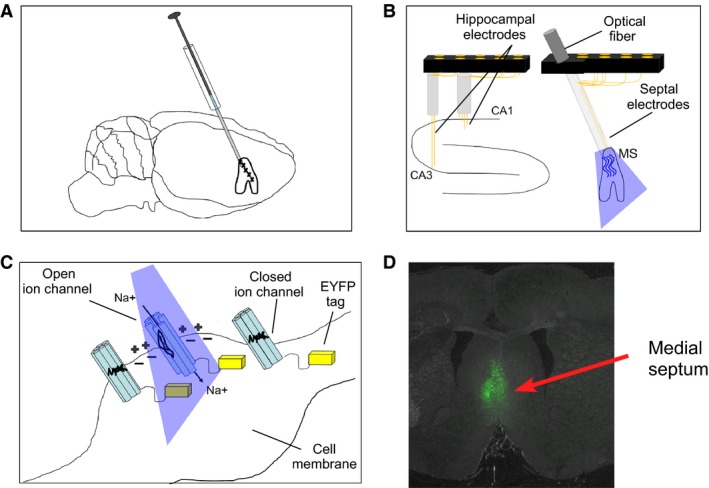
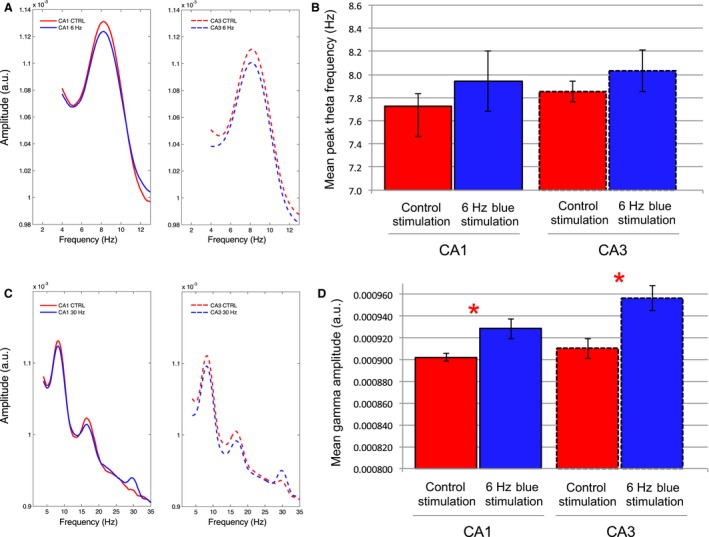
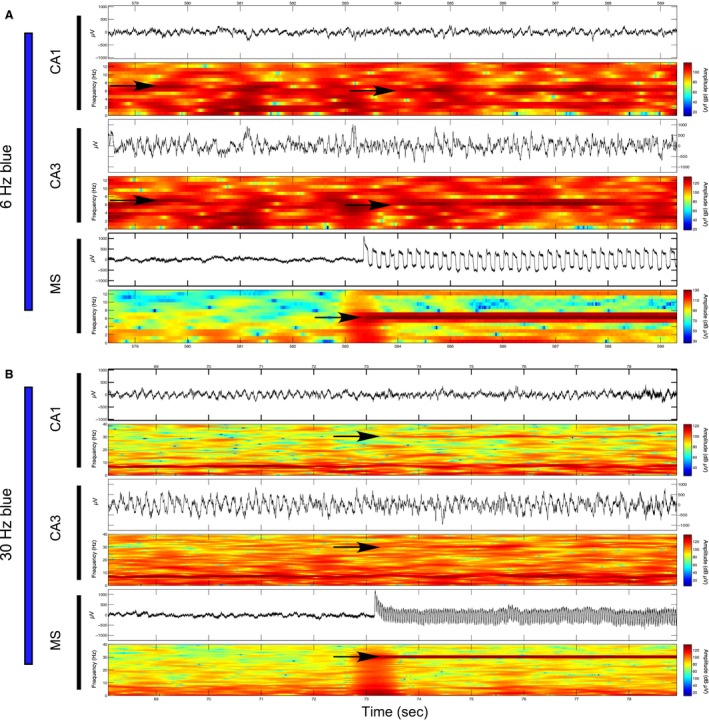
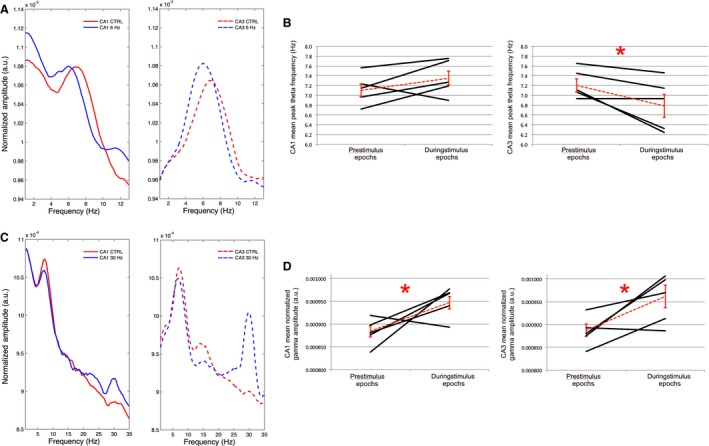
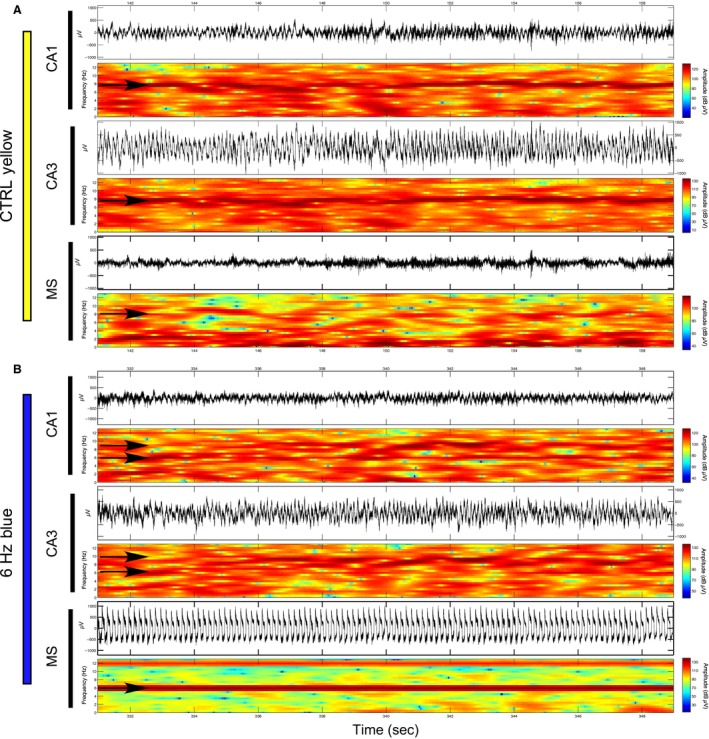
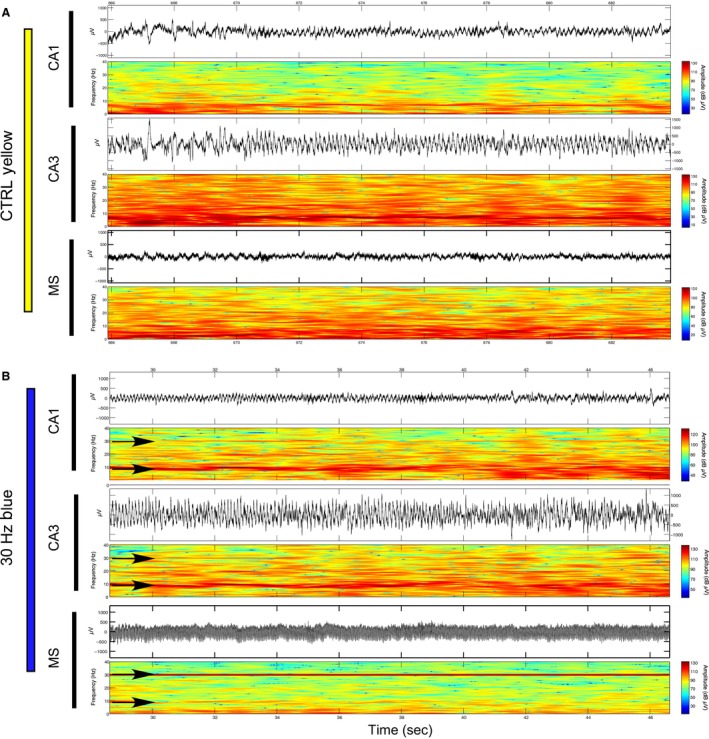
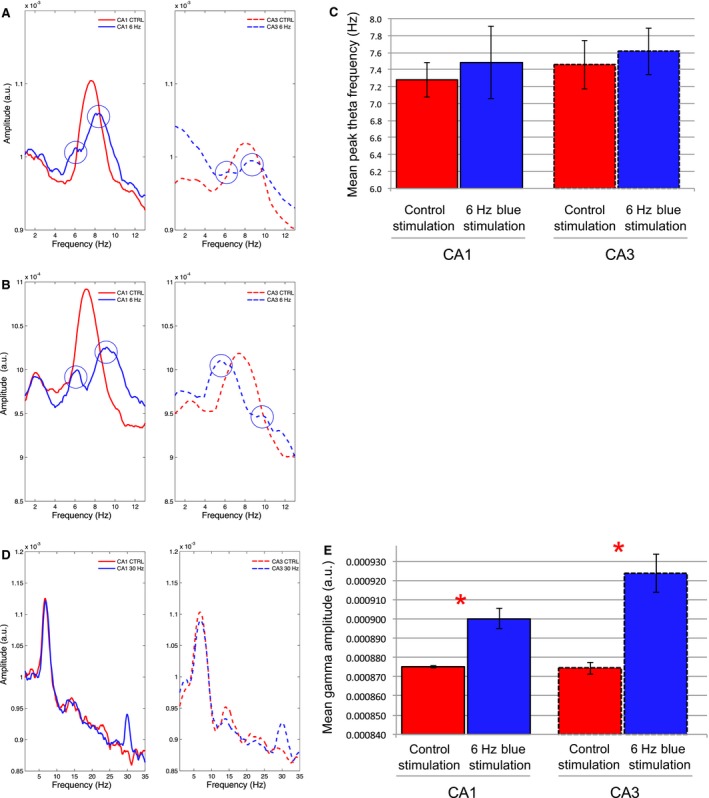
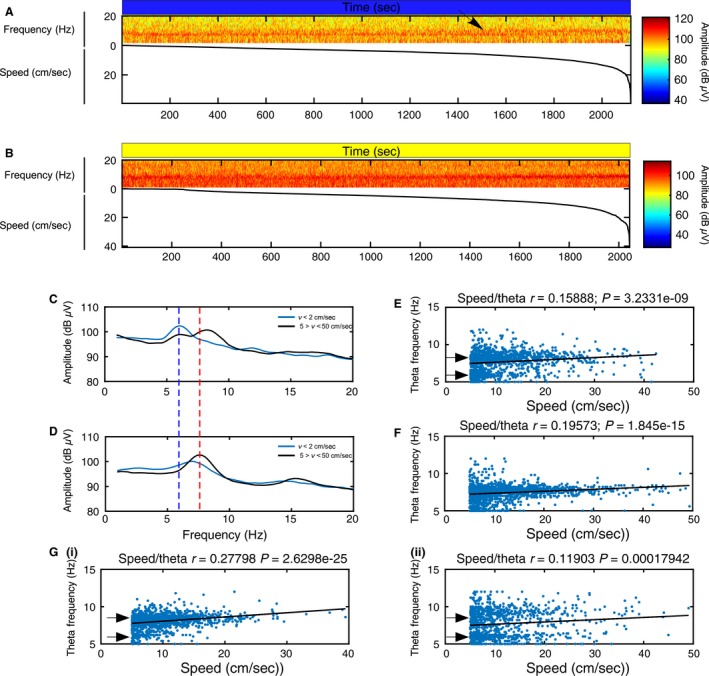
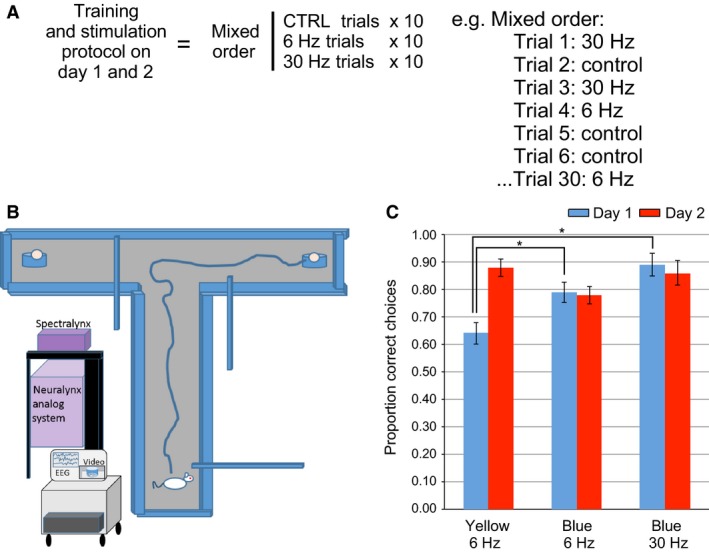
Optogenetics holds great promise for both the dissection of neural circuits and the evaluation of theories centered on the temporal organizing properties of oscillations that underpin cognition. To date, no studies have examined the efficacy of optogenetic stimulation for altering hippocampal oscillations in freely moving wild-type rats, or how these alterations would affect performance on behavioral tasks. Here, we used an AAV virus to express ChR2 in the medial septum (MS) of wild-type rats, and optically stimulated septal neurons at 6 Hz and 30 Hz. We measured the corresponding effects of these stimulations on the oscillations of the MS and hippocampal subfields CA1 and CA3 in three different contexts: (1) With minimal movement while the rats sat in a confined chamber; (2) Explored a novel open field; and (3) Learned and performed a T-maze behavioral task. While control yellow light stimulation did not affect oscillations, 6-Hz blue light septal stimulations altered hippocampal theta oscillations in a manner that depended on the animal's mobility and speed. While the 30 Hz blue light septal stimulations only altered theta frequency in CA1 while the rat had limited mobility, it robustly increased the amplitude of hippocampal signals at 30 Hz in both regions in all three recording contexts. We found that animals were more likely to make a correct choice during Day 1 of T-maze training during both MS stimulation protocols than during control stimulation, and that improved performance was independent of theta frequency alterations.
光遗传学对于剖析神经回路以及评估以支撑认知的振荡的时间组织特性为核心的理论而言,具有巨大的前景。迄今为止,尚无研究考察光遗传学刺激在自由活动的野生型大鼠中改变海马体振荡的效果,或者这些改变将如何影响行为任务的表现。在此,我们使用腺相关病毒(AAV)在野生型大鼠的内侧隔区(MS)中表达通道视紫红质2(ChR2),并以6赫兹和30赫兹的频率对隔区神经元进行光刺激。我们在三种不同情境下测量了这些刺激对MS以及海马体子区域CA1和CA3振荡的相应影响:(1)大鼠坐在密闭腔室中且活动极少时;(2)探索一个新的开放场地时;(3)学习并执行T迷宫行为任务时。虽然对照黄光刺激不影响振荡,但6赫兹蓝光隔区刺激以一种依赖于动物活动能力和速度的方式改变了海马体θ振荡。虽然30赫兹蓝光隔区刺激仅在大鼠活动受限期间改变了CA1中的θ频率,但在所有三种记录情境下,它都使两个区域中30赫兹的海马体信号幅度显著增加。我们发现,与对照刺激相比,在两种MS刺激方案期间,动物在T迷宫训练的第1天更有可能做出正确选择,并且行为表现的改善与θ频率改变无关。