Shimanovich Avital A, Buskirk Amanda D, Heine Shannon J, Blackwelder William C, Wahid Rezwanul, Kotloff Karen L, Pasetti Marcela F
Department of Microbiology and Immunology, University of Maryland School of Medicine, Baltimore, Maryland, USA.
Center for Vaccine Development, University of Maryland School of Medicine, Baltimore, Maryland, USA.
Clin Vaccine Immunol. 2017 Feb 6;24(2). doi: 10.1128/CVI.00412-16. Print 2017 Feb.
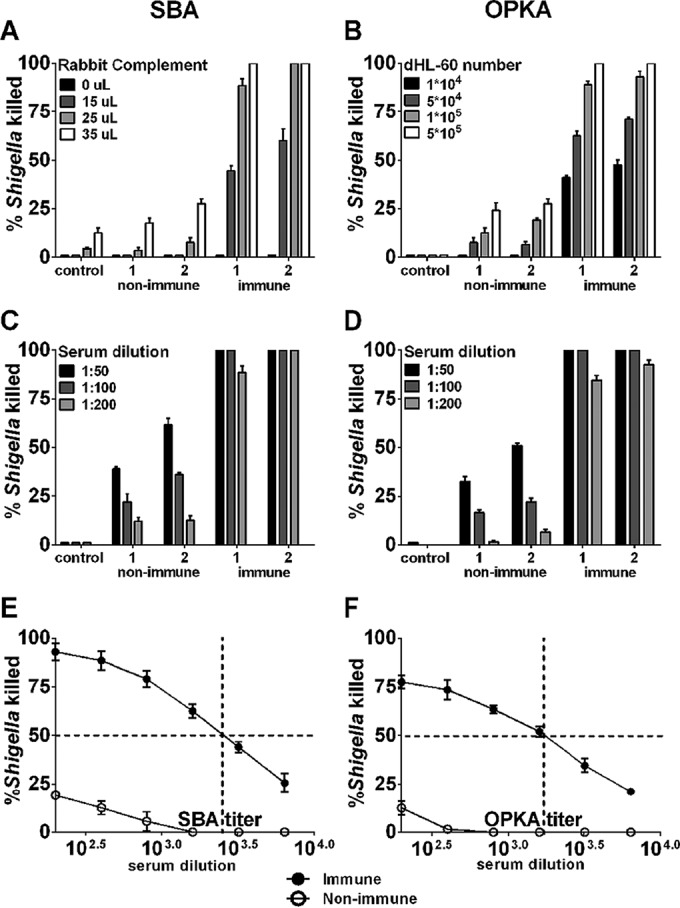
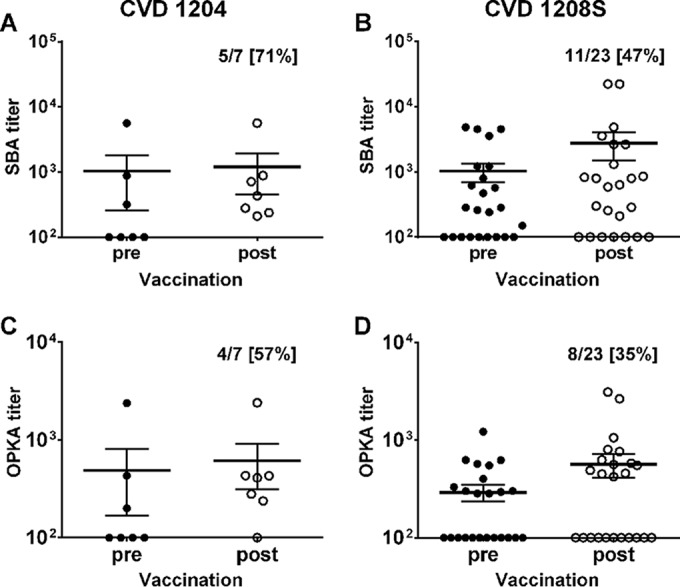
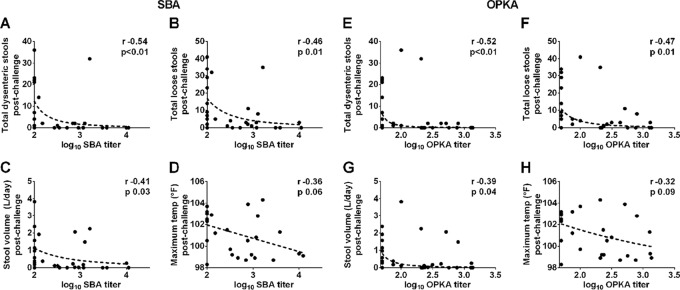
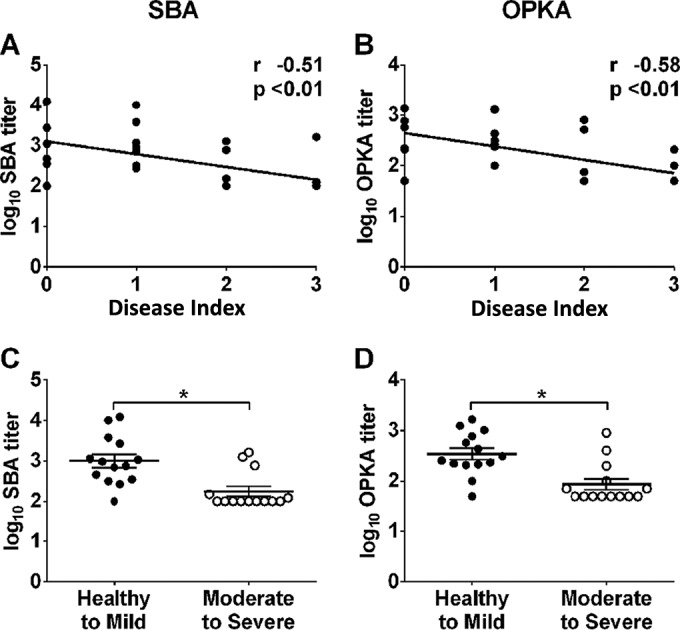
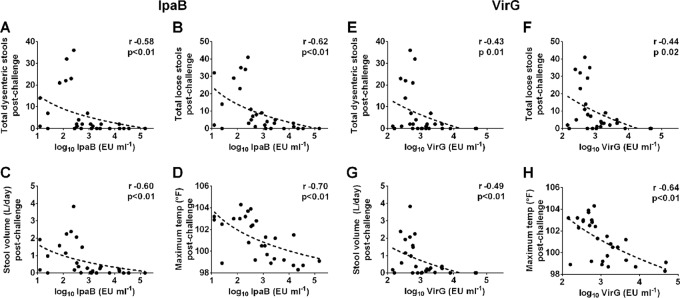
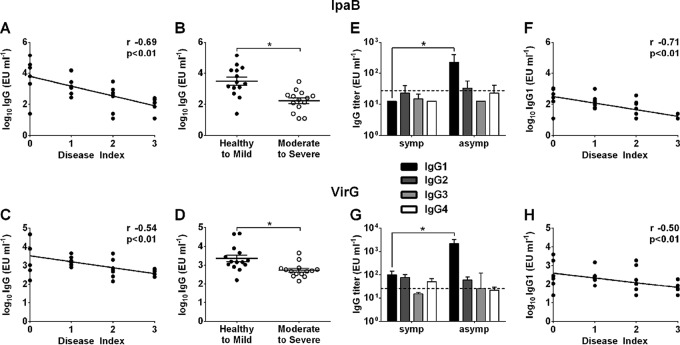
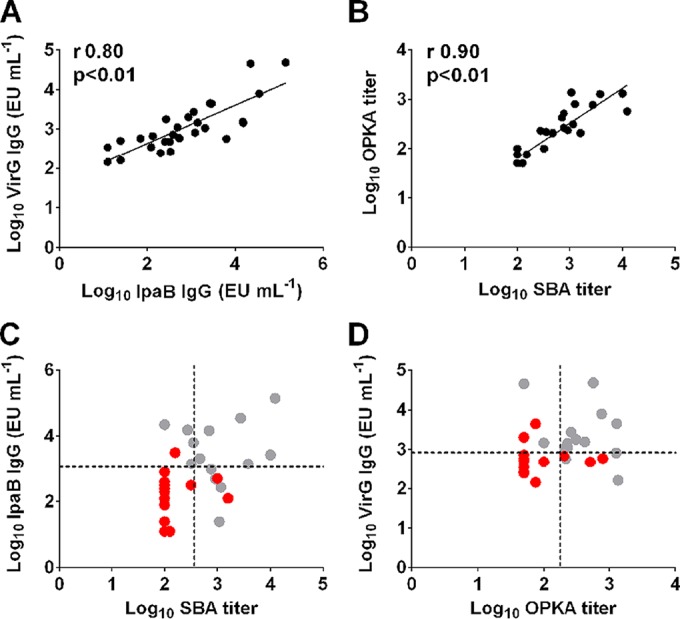
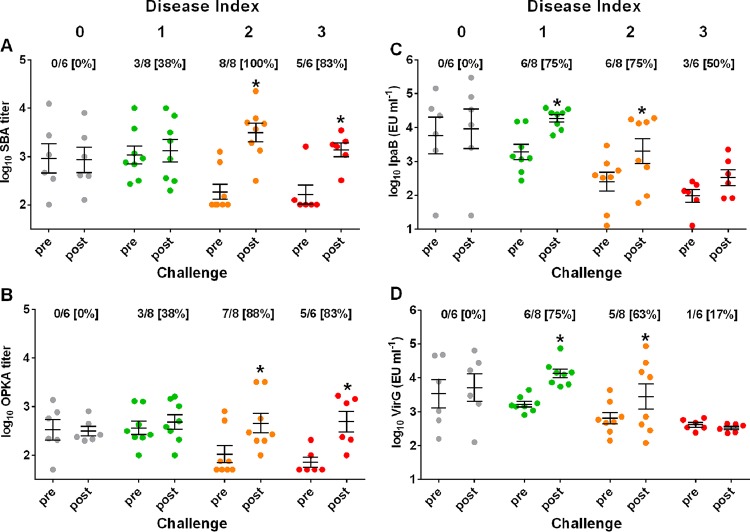
Shigella is an important cause of diarrheal disease in young children living in developing countries. No approved vaccines are available, and the development of vaccine candidates has been hindered by the lack of firm immunological correlates of protection, among other reasons. To address this gap in knowledge, we established quantitative assays to measure Shigella-specific serum bactericidal antibody (SBA) and opsonophagocytic killing antibody (OPKA) activities and investigated their potential association with protection against disease in humans. SBA, OPKA, and Ipa-, VirG (IscA)-, and Shigella flexneri 2a lipopolysaccharide-specific serum IgG titers were determined in adult volunteers who received Shigella vaccine candidate EcSf2a-2 and in unvaccinated controls, all of whom were challenged with virulent Shigella flexneri 2a. Prechallenge antibody titers were compared with disease severity after challenge. SBA and OPKA, as well as IpaB- and VirG-specific IgG, significantly correlated with reduced illness. SBA and OPKA assays were also used to evaluate the immunogenicity of leading live attenuated vaccine candidates Shigella CVD 1204 and CVD 1208S in humans. A single oral immunization with CVD 1204 or CVD 1208S resulted in SBA seroconversion rates of 71% and 47% and OPKA seroconversion rates of 57% and 35%, respectively. Higher functional antibody responses were induced by CVD 1204, which is consistent with its lower attenuation. This is the first demonstration of SBA, OPKA, and IpaB- and VirG-specific IgG levels as potential serological correlates of protection against shigellosis in humans. These results warrant further studies to establish their capacity to predict protective immunity and vaccine efficacy.
志贺氏菌是发展中国家幼儿腹泻病的一个重要病因。目前尚无获批的疫苗,除其他原因外,保护的明确免疫相关指标的缺乏阻碍了候选疫苗的研发。为填补这一知识空白,我们建立了定量检测方法来测量志贺氏菌特异性血清杀菌抗体(SBA)和调理吞噬杀伤抗体(OPKA)活性,并研究它们与人类疾病预防的潜在关联。在接受志贺氏菌候选疫苗EcSf2a-2的成年志愿者以及未接种疫苗的对照者中测定了SBA、OPKA以及Ipa、VirG(IscA)和福氏志贺氏菌2a脂多糖特异性血清IgG滴度,所有这些人都受到了强毒性福氏志贺氏菌2a的攻击。将攻击前的抗体滴度与攻击后的疾病严重程度进行比较。SBA和OPKA以及IpaB和VirG特异性IgG与疾病减轻显著相关。SBA和OPKA检测还用于评估主要减毒活疫苗候选株志贺氏菌CVD 1204和CVD 1208S在人体中的免疫原性。单次口服CVD 1204或CVD 1208S导致SBA血清转化率分别为71%和47%,OPKA血清转化率分别为57%和35%。CVD 1204诱导了更高的功能性抗体反应,这与其较低的减毒程度一致。这是首次证明SBA、OPKA以及IpaB和VirG特异性IgG水平作为人类预防志贺氏菌病的潜在血清学相关指标。这些结果值得进一步研究以确定它们预测保护性免疫和疫苗效力的能力。