Department of Pediatrics, Center for Vaccine Development and Global Health, University of Maryland School of Medicine, Baltimore, MD, United States.
Blantyre Malaria Project, University of Malawi College of Medicine, Blantyre, Malawi.
Front Immunol. 2021 Oct 15;12:725129. doi: 10.3389/fimmu.2021.725129. eCollection 2021.
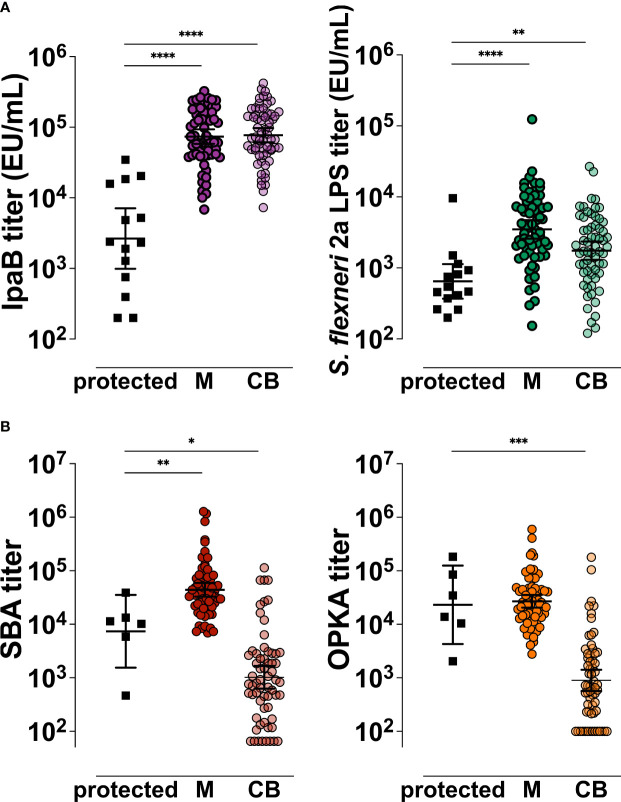
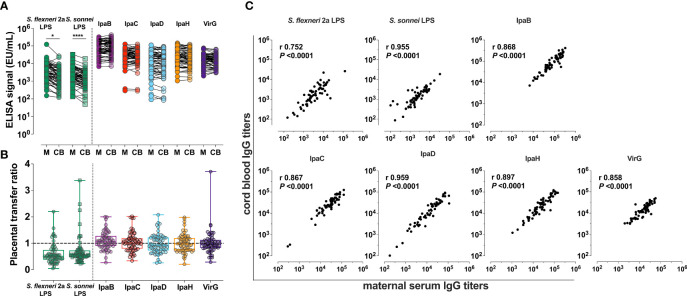
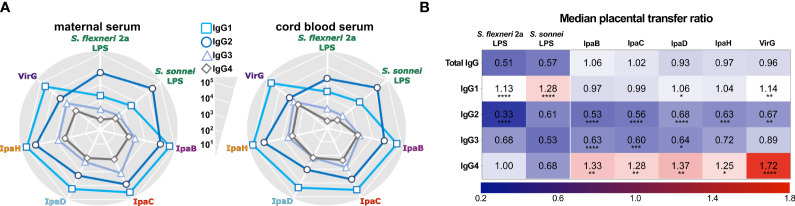
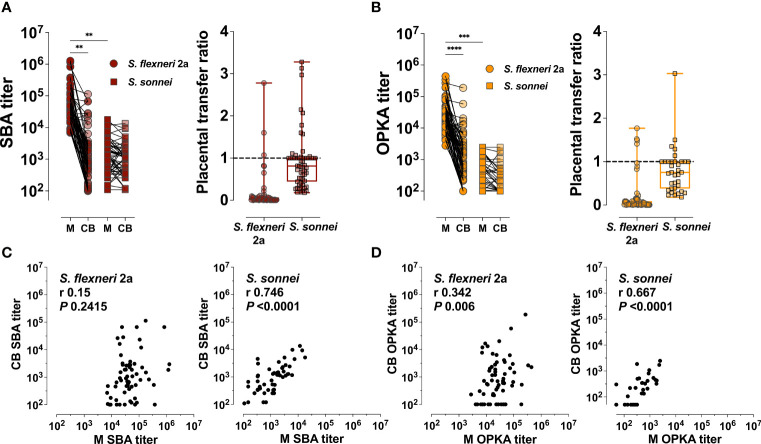
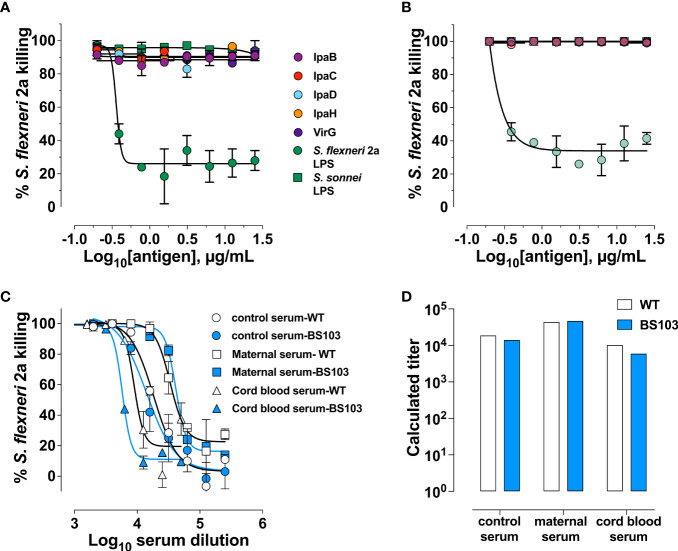
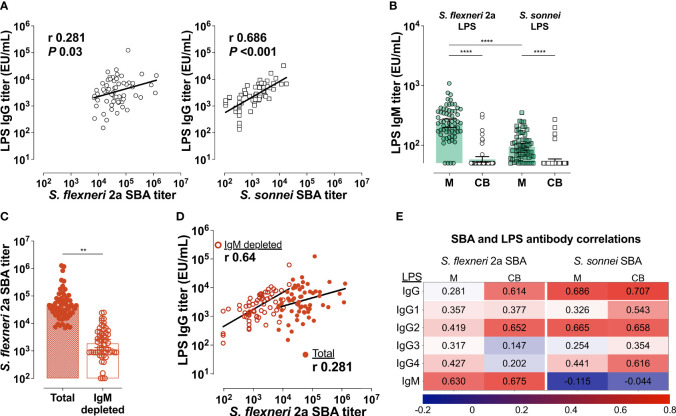
is the second leading cause of diarrheal diseases, accounting for >200,000 infections and >50,000 deaths in children under 5 years of age annually worldwide. The incidence of -induced diarrhea is relatively low during the first year of life and increases substantially, reaching its peak between 11 to 24 months of age. This epidemiological trend hints at an early protective immunity of maternal origin and an increase in disease incidence when maternally acquired immunity wanes. The magnitude, type, antigenic diversity, and antimicrobial activity of maternal antibodies transferred placenta that can prevent shigellosis during early infancy are not known. To address this knowledge gap, specific antibodies directed against the lipopolysaccharide (LPS) and virulence factors (IpaB, IpaC, IpaD, IpaH, and VirG), and antibody-mediated serum bactericidal (SBA) and opsonophagocytic killing antibody (OPKA) activity were measured in maternal and cord blood sera from a longitudinal cohort of mother-infant pairs living in rural Malawi. Protein-specific (very high levels) and LPS IgG were detected in maternal and cord blood sera; efficiency of placental transfer was 100% and 60%, respectively, and had preferential IgG subclass distribution (protein-specific IgG1 > LPS-specific IgG2). In contrast, SBA and OPKA activity in cord blood was substantially lower as compared to maternal serum and varied among serotypes. LPS was identified as the primary target of SBA and OPKA activity. Maternal sera had remarkably elevated 2a LPS IgM, indicative of recent exposure. Our study revealed a broad repertoire of maternally acquired antibodies in infants living in a -endemic region and highlights the abundance of protein-specific antibodies and their likely contribution to disease prevention during the first months of life. These results contribute new knowledge on maternal infant immunity and target antigens that can inform the development of vaccines or therapeutics that can extend protection after maternally transferred immunity wanes.
志贺菌是导致腹泻病的第二大原因,每年导致全球 5 岁以下儿童 >20 万例感染和 >5 万例死亡。在生命的第一年,志贺菌引起的腹泻发病率相对较低,但会大幅增加,在 11 至 24 个月龄时达到峰值。这种流行病学趋势暗示了母体来源的早期保护性免疫,以及当母体获得的免疫力减弱时,疾病发病率的增加。通过胎盘传递的母体抗体的数量、类型、抗原多样性和抗微生物活性,这些可以在婴儿早期预防志贺菌病,但目前尚不清楚。为了解决这一知识空白,我们在马拉维农村的母婴纵向队列中,测量了针对脂多糖(LPS)和毒力因子(IpaB、IpaC、IpaD、IpaH 和 VirG)的特异性抗体,以及抗体介导的血清杀菌(SBA)和调理吞噬杀伤抗体(OPKA)活性,在母婴血清中检测到了蛋白特异性(非常高水平)和 LPS IgG;胎盘转移效率分别为 100%和 60%,并具有优先的 IgG 亚类分布(蛋白特异性 IgG1 > LPS 特异性 IgG2)。相比之下,与母体血清相比,脐带血清中的 SBA 和 OPKA 活性要低得多,并且在不同血清型之间存在差异。LPS 被鉴定为 SBA 和 OPKA 活性的主要靶标。母体血清中显著升高的 2a LPS IgM,表明最近有接触。我们的研究揭示了在志贺菌流行地区生活的婴儿中广泛存在的母体获得性抗体,并强调了蛋白特异性抗体的丰富性及其可能对生命最初几个月疾病预防的贡献。这些结果为母婴免疫提供了新知识,并确定了可用于开发疫苗或治疗剂的目标抗原,以在母体转移的免疫力减弱后延长保护。