Yamashita Tomoya
Division of Cardiovascular Medicine, Department of Internal Medicine, Kobe University Graduate School of Medicine.
J Atheroscler Thromb. 2017 Feb 1;24(2):110-119. doi: 10.5551/jat.38265. Epub 2016 Dec 7.
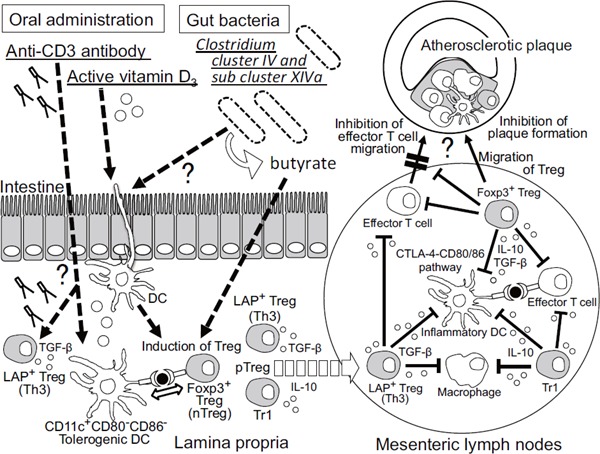
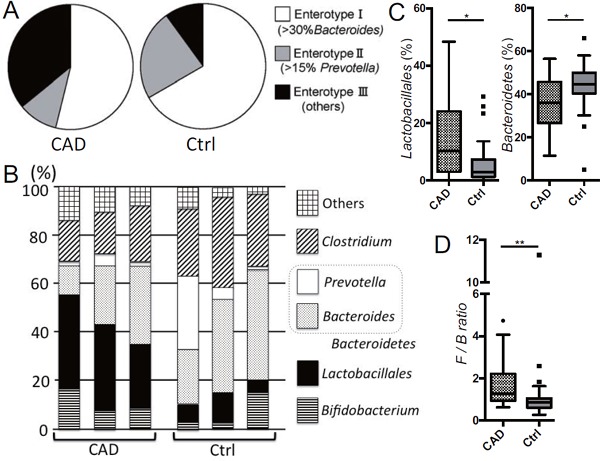
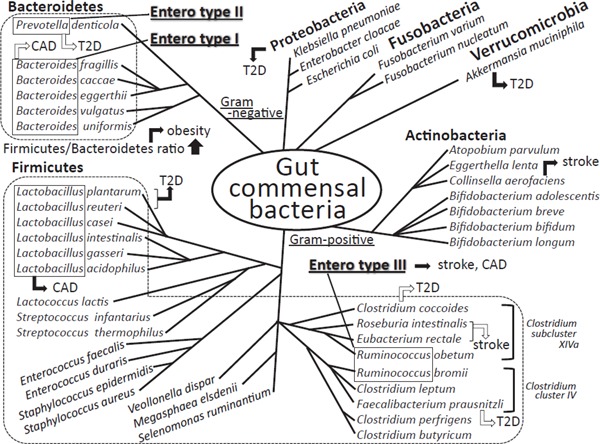
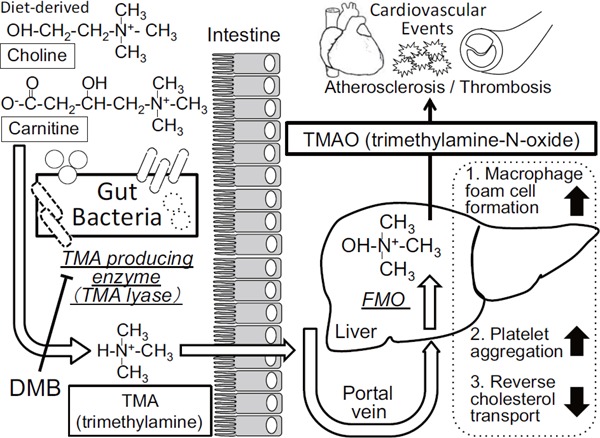
Atherosclerosis is a chronic inflammatory disease. Interventions targeting the inflammatory process could provide new strategies for preventing atherosclerotic cardiovascular diseases (CVD). Previously, we have reported that oral administration of anti-CD3 antibodies, or active vitamin D, reduced atherosclerosis in mice via recruiting regulatory T cells and tolerogenic dendritic cells to the gut-associated lymphoid tissues. From this, it is reasonable to propose that the intestine could be a novel therapeutic target for prevention of atherosclerotic CVD. Recently, the association between cardio-metabolic diseases and gut microbiota has attracted increased attention. Gut microbiota, reported to be highly associated with intestinal immunity and metabolism, were shown to aggravate CVD by contributing to the production of trimethylamine-N-oxide (TMAO), a pro-atherogenic compound. We have also previously investigated the relationship between patient susceptibility to coronary artery disease (CAD) and gut microbiota. We found that the order Lactobacillales was significantly increased and the phylum Bacteroidetes was decreased in CAD patients compared with control patients. In this review article, we discuss the evidence for the relationship between the gut microbiota and cardio-metabolic diseases, and consider the gut microbiota as new potential diagnostic and therapeutic tool for treating CVD.
动脉粥样硬化是一种慢性炎症性疾病。针对炎症过程的干预措施可为预防动脉粥样硬化性心血管疾病(CVD)提供新策略。此前,我们报道口服抗CD3抗体或活性维生素D可通过将调节性T细胞和耐受性树突状细胞募集至肠道相关淋巴组织来减轻小鼠的动脉粥样硬化。据此,有理由提出肠道可能是预防动脉粥样硬化性CVD的新治疗靶点。最近,心脏代谢疾病与肠道微生物群之间的关联受到了越来越多的关注。据报道,肠道微生物群与肠道免疫和代谢高度相关,通过促进促动脉粥样硬化化合物氧化三甲胺(TMAO)的产生而加重CVD。我们之前还研究了患者对冠状动脉疾病(CAD)的易感性与肠道微生物群之间的关系。我们发现,与对照患者相比,CAD患者中乳杆菌目显著增加,拟杆菌门减少。在这篇综述文章中,我们讨论了肠道微生物群与心脏代谢疾病之间关系的证据,并将肠道微生物群视为治疗CVD的新潜在诊断和治疗工具。